In the final hours before his dramatic victory in Michigan’s Senate race this week, Abdul El-Sayed engaged in a heated exchange with a British television journalist that quickly gained viral attention. As James Matthews of Sky News attempted to pose a question, El-Sayed responded with visible intensity, placing his hands on the reporter’s shoulders while demanding to know why he would care to converse with a British media figure.
El-Sayed told Matthews that he aimed to receive zero votes in the United Kingdom and was not running for office there. He stated that he did not care what the journalist thought or what questions he asked. The video of the interaction has been viewed more than 13 million times on the social media platform X, highlighting the senator elect’s pugnacious style.
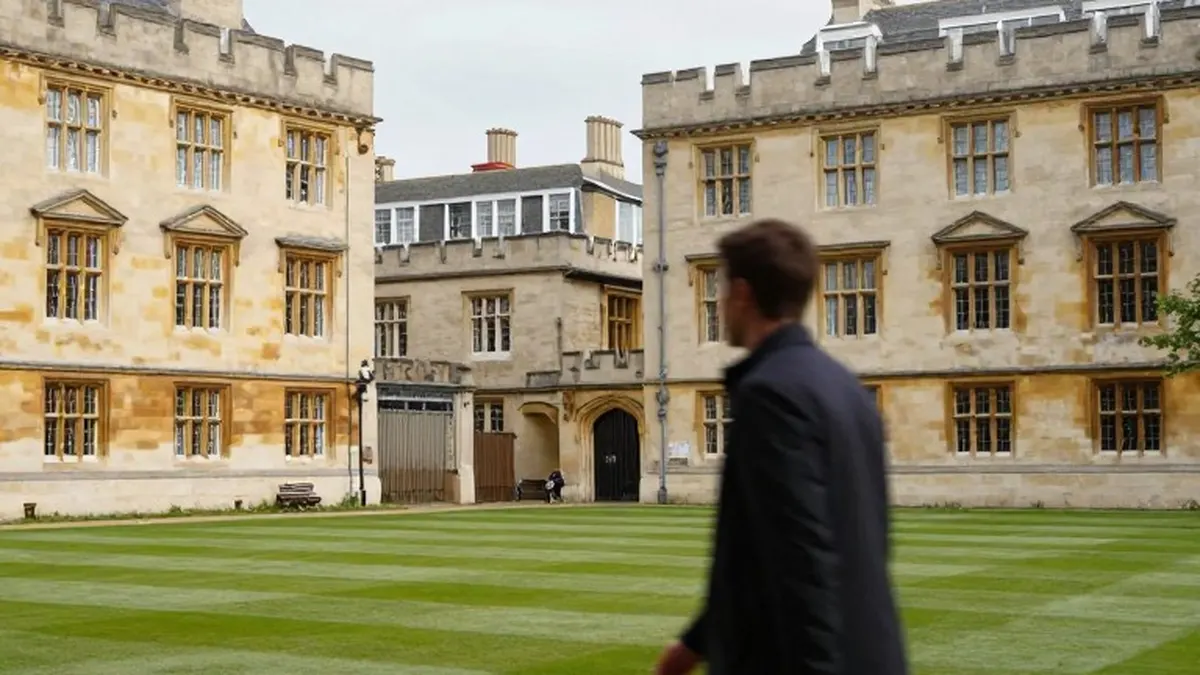
However, this dismissive attitude toward British politics marks a significant shift from his earlier views. In May 2010, a 25-year-old doctoral student at Oxford University wrote an article for The Guardian in which he argued that UK democracy had the upper hand over its American counterpart. At the time, El-Sayed was a Rhodes scholar who had recently attended a Labour Party hustings event in Bethnal Green and Bow, east London.
The young scholar described the meeting as a ceremony of communal self-determination that he had not seen in any federal American electoral institution. He noted that, as an American who had been taught his country’s democracy was the greatest in the world, he was initially skeptical of this foreign model. Yet, the experience left him envious of the British approach to politics.
In his 2010 piece, El-Sayed highlighted that the smaller size of British constituencies allowed minority groups to make their voices heard more easily than in US electoral districts. He also praised the larger number of competing parties, which he said turned elections into a community exercise in cohesiveness and solidarity, contrasting this with the American electoral climate. Voters, he observed, were focused on local concerns rather than being distracted by the election of a head of state.
El-Sayed’s recent campaign in Michigan was marked by a barrage of racism and Islamophobia. President Donald Trump mocked his name, called him a jihadist lunatic, and joked that the Senate would need a special metal detector for him if he were elected. Additionally, Haley Stevens, the Democrat congresswoman he narrowly defeated for the nomination, endorsed his Republican rival at the last minute.
The candidate also made headlines for his campaign appearances, where he wore tight black T-shirts to display a physique described by the BBC’s North America editor, Sarah Smith, as jacked. This image stands in stark contrast to his earlier days in Bethnal Green, where he questioned the odds of an American casting a vote in a local British election.
El-Sayed returned to the United States in 2011 after completing his doctorate in public health. During his time at Oxford, he also captained the lacrosse team in a match against Cambridge, where he received a yellow card. In a final article for The Guardian in January 2011, the son of Egyptian immigrants challenged President Barack Obama over his response to the Arab spring, urging him to support freedom fighters who had risen against Hosni Mubarak.
Following his election on Tuesday, El-Sayed addressed Trump with a quip from the campaign trail. He acknowledged that the President had struggled with his name and suggested that after JD Vance swears him in in January, Trump can simply call him senator.