The influence of Palestine Action, a UK-based protest group, has expanded significantly across the globe since its formal proscription in July 2025. Despite being designated a terrorist organisation in the United Kingdom and facing sanctions from the United States, the movement has inspired numerous offshoots in countries including Italy, France, Spain, Ireland, the Netherlands, Germany, and Canada.
These international groups have adopted the core strategy of direct action, physically targeting companies that supply weapons to Israel. This approach contrasts with traditional methods of pressure such as lobbying, voting, or legal negotiation. Activists argue that disrupting the global supply chain of the Israeli weapons industry is essential to challenging the war machine.
In Italy, the local branch, Palestine Action Italy, has grown from a small movement to a significant force with tens of thousands of social media followers. The group was inspired by earlier protests at Leonardo, an Italian weapons manufacturer, in November 2023. Since then, activists have staged several occupations of Leonardo’s facilities and collaborate with other European groups to hold training sessions on direct action tactics.
Luca, a representative for the Italian group, stated that the movement is the closest way to oppose the war by destroying the weapons being created. The group also works with Global Sumud Flotilla Italia, which recently intercepted a container ship carrying military cargo destined for the Sigonella naval base. Police detained the activists, accusing them of disrupting public order, though the group views these arrests as evidence of their effectiveness.
In France, the movement is similarly active. Last week, more than 20 activists blocked access to the headquarters of Safran Data Systems in Les Ulis. The company, which has ties to Israel’s military, was forced to evacuate employees and lost nearly three hours of work. Stop Arming Israel France, one of the organisers, aims to disrupt the business activities of what they call merchants of death.
The French spokesperson noted that while they support various forms of protest, the actions of Palestine Action inspire many to take more direct steps. Occupation is a commonly used tactic because it can disrupt services with lower risks than property damage, though it still carries the possibility of legal challenges, including terrorism charges.
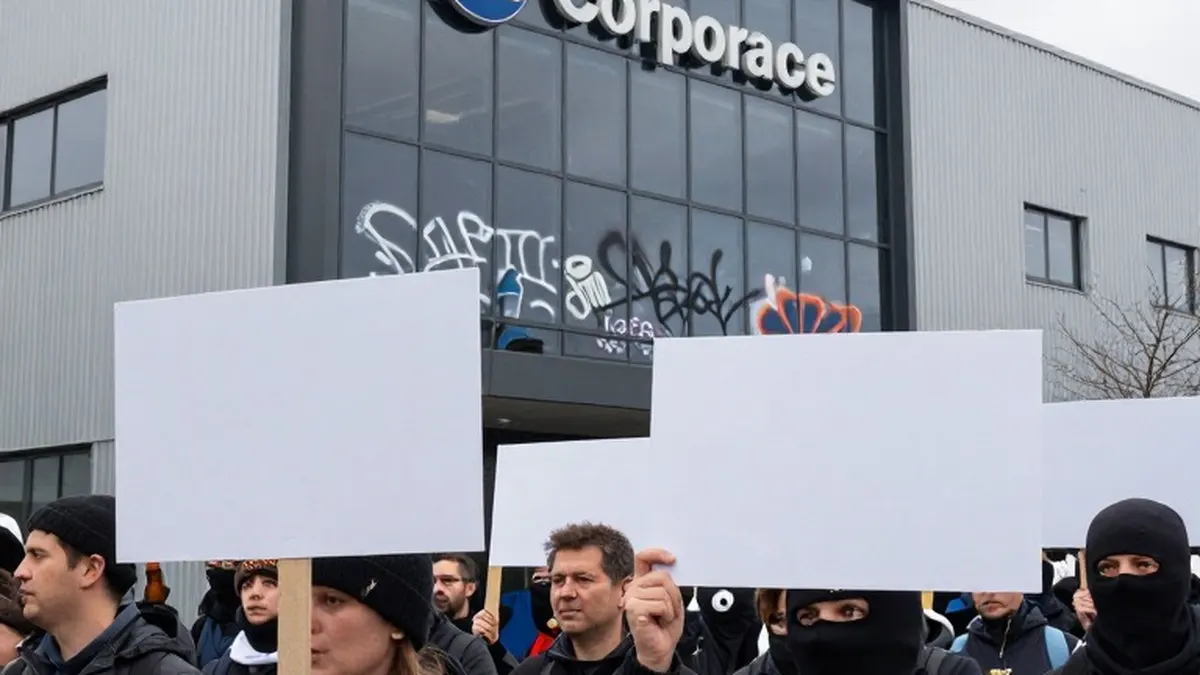
In Canada, a subsidiary of Elbit Systems, the largest Israeli weapons manufacturer, was raided and spray-painted by activists last week. This follows a 2024 action where protesters occupied a Scotiabank branch in Montreal to protest investments in Elbit. That group recently had charges dropped, and the bank divested from Elbit Systems in February.
Since the UK ban, at least 4,000 people have been arrested on related charges. This includes peaceful demonstrators arrested for holding signs in support of the group. Huda Ammori, a cofounder of Palestine Action, believes that repression shows how effective direct action is in threatening the military-industrial complex.
The UK-based group is currently in court to challenge the ban. Meanwhile, in August 2026, the United States sanctioned Palestine Action and other pro-Palestine organisations. This move caused Palestine Action Italy to lose access to its US-based donation platform. Luca of the Italian group expects that other governments may follow the UK’s lead, and the group is preparing for the potential shift from being seen as activists to being considered terrorists.
The global spread of these tactics highlights a growing preference for tangible, disruptive actions among pro-Palestine activists. As the movement continues to organize across continents, it faces increasing legal scrutiny and state responses, yet it maintains a strong presence in public discourse and on the ground.