
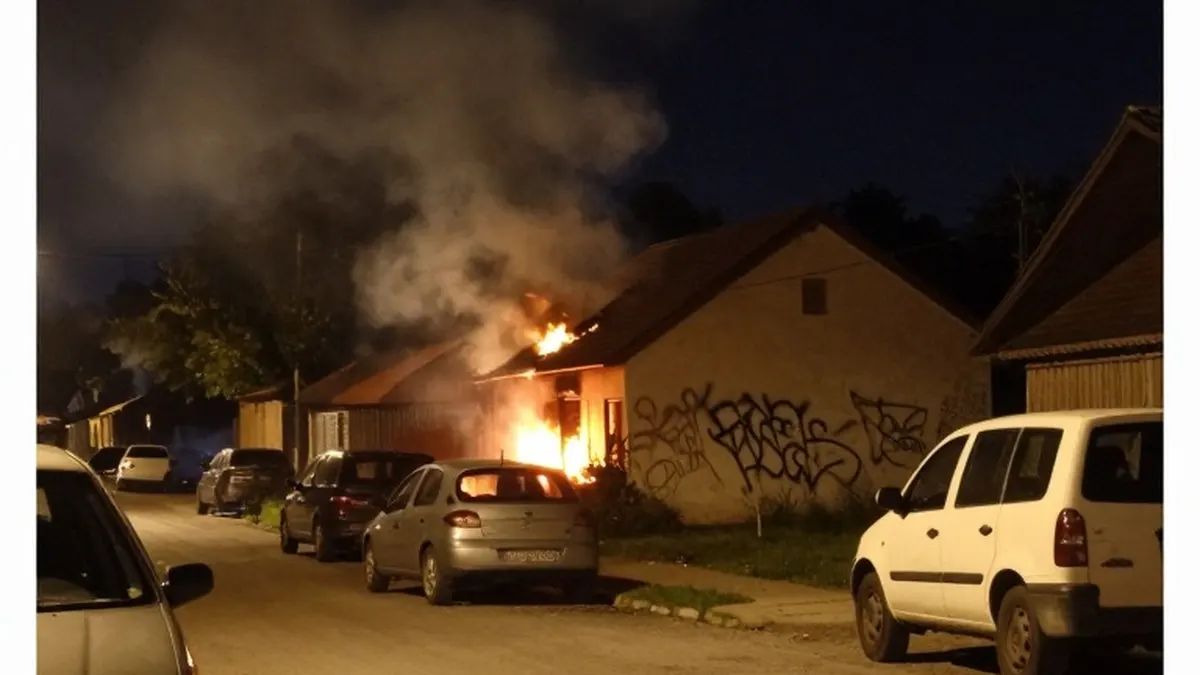
Israeli settlers set fire to at least a dozen vehicles and several homes in five Palestinian villages across the occupied West Bank over the weekend. The attackers spray-painted the words “Revenge” and “Greetings from Susya” on the damaged property, a reference to the recent evacuation of an outpost near that village. Local media reported that police have opened investigations into the incidents, although no arrests have been made as of the latest updates.
In online chat groups, some settlers joked about the coordinated nature of the attacks, with one user noting that the Jewish festival of Hanukkah is only two weeks away and that they are in suspense. The surge in violence has drawn unusually sharp condemnation from Prime Minister Benjamin Netanyahu’s political rivals within Israel.
Gadi Eisenkot, a former army chief who is seeking to form a new government, described the events as “Jewish terrorism in every sense of the word.” He placed the blame on far-right ministers Itamar Ben-Gvir and Bezalel Smotrich. Former Prime Minister Naftali Bennett accused the current government of enabling the attacks, while Yair Lapid labeled them “pogroms.”
This domestic criticism coincides with new international measures. Britain has frozen the assets of eight Israeli settlement firms, and Australia has imposed sanctions on specific settlers and their organizations. The diplomatic pressure adds to a growing list of grievances regarding settler conduct in the West Bank.
The recent arson attacks are part of a broader pattern of violence that has restricted the olive harvest. According to the United Nations Humanitarian Country Team, more than 400 attacks causing casualties or damage have occurred since September. These incidents have targeted activists, journalists, and diplomats in addition to local residents.
In the occupied West Bank, settler violence has taken various forms. Shootings and beatings have injured farmers and journalists, while road sieges have blocked access to villages such as al-Mughayyir and Burqa. Land and crops have been damaged, with the UN reporting that over 4,000 trees and saplings have been destroyed this season. Demolitions have also continued, including the complete removal of structures at Khirbet Samra in the northern Jordan Valley.
In Gaza, the health crisis continues to deepen as the death toll rises. The Gaza Ministry of Health reported that the number of deaths since the October 2025 ceasefire reached 1,679 on November 23. This brings the total number of deaths in the war since October 2023 to 74,746. Israeli forces recently crossed the Yellow Line in central Gaza for the first publicly announced ground push since the ceasefire began.
Hospitals in Gaza are facing shortages of medical supplies and an increase in diseases such as meningitis, which is linked to damaged sewage networks. Aid efforts remain limited, with the Beit Hanoon crossing reopening for about 20 trucks per day. International observers have criticized the current peace plan for failing to deliver adequate aid and reconstruction.
Back in Israel, coalition talks between Netanyahu’s Likud party and Eisenkot’s Yashar party ended without a deal on November 22. The negotiations stalled over questions of who would lead the country and whether Ben-Gvir would join the new government. Eisenkot has indicated that he may rely on outside support from Arab parties to form a minority government if a broad coalition cannot be reached.
The political landscape remains tense as leaders weigh the impact of settler violence on their negotiations. Foreign Minister Gideon Saar condemned a handful of extremists while promising countermeasures in response to the new sanctions. Meanwhile, the attorney general has frozen the E1 settlement tender until a new government is sworn in.





