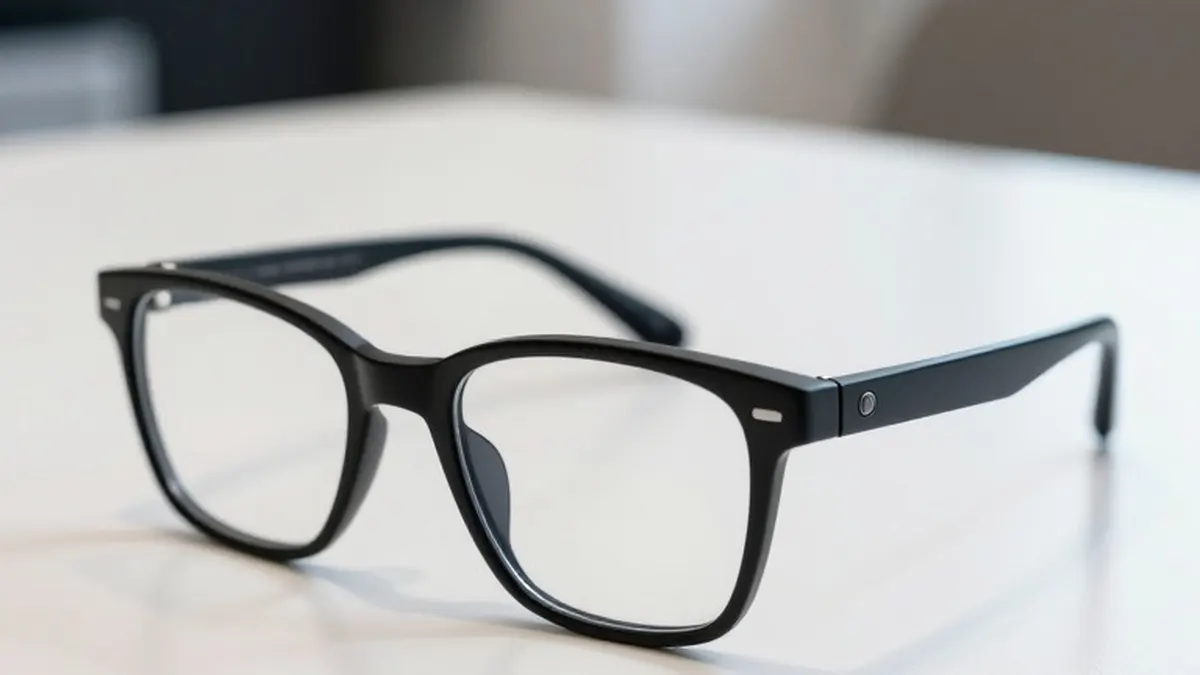
The term pervert glasses has been selected as the Macquarie dictionary word of the year for 2026, highlighting a significant cultural shift in how Australians view emerging technology. The phrase, which also secured the people's choice award for the same year, refers to smart eyewear devices equipped with cameras, microphones, and artificial intelligence assistants. The selection underscores a growing public anxiety regarding privacy in an increasingly connected world.
The backlash against these devices has been both swift and severe in recent months. Popular models, such as Meta's Ray-Bans, have faced restrictions in public spaces. Some swimming pools and playgrounds across Australia have banned their use, citing concerns that the built-in sensors may constitute an invasion of privacy. The core of the controversy lies in the fear that these gadgets are being used to record individuals, particularly women, without their knowledge or consent.
The committee of word experts described the coinage as a succinct reflection of the state of the world in 2026. They noted that the term captures the massive acceleration in AI capabilities and the products that integrate this technology. At the same time, the nickname mirrors widespread calls to slow down what many view as unchecked development. The committee argued that while marketers may label these items as smart or camera glasses, pervert glasses offers a more apt description of the current moment.
The experts stated that the name represents a year defined by AI, the manosphere, and increasing surveillance in everyday locations like supermarkets. They emphasized that the term resonates because it encapsulates the complex relationship between innovation and societal discomfort. The committee viewed the phrase as a linguistic triumph that captures the collective experience of navigating these new technological tools.
Other contenders on the shortlist included terms that reflect similar trends in digital life. Nudify, which refers to AI-generated pornography, and AI;DR, a shorthand for AI; didn't read, also featured prominently. These entries illustrate how language is evolving to describe the specific challenges and behaviors associated with the rapid adoption of artificial intelligence in daily communication and media consumption.
The committee also recognized several other terms with honourable mentions. PMOS, or polyendocrine metabolic ovarian syndrome, was noted for its role in spreading awareness of medical misogyny. The term agentic was included for its description of the ability of AI systems to make independent decisions. Additionally, the Marrickville pause, a colloquial reference to a temporary halt in conversation for people under Sydney's flight path, was acknowledged for its local cultural significance.
In the people's choice category, digital dementia received an honourable mention. The term refers to short-term memory loss attributed to a heavy reliance on technology and AI. Although the committee noted that it is not a formal medical diagnosis, they observed that the fear of such cognitive impacts resonates deeply with the public. Many people report struggling to navigate without digital maps or remember plans without digital calendars.
The selection process for the word of the year involves choosing from new entries included in the annual update of the Macquarie dictionary online. The people's choice winner is determined by public votes cast on the dictionary's website. Last year, the term AI slop was named the word of the year, a choice that the committee said embodied a major aspect of societal change. This year's selection continues that tradition of identifying linguistic markers for significant cultural shifts.
As the debate over smart glasses continues, the adoption of the term pervert glasses into the dictionary signals a permanent place for the concept in the English language. It serves as a reminder that the integration of AI into personal devices is not just a technical development, but a social phenomenon that is reshaping how people interact in public spaces and perceive their own privacy.