The effort to impeach Pentagon chief Pete Hegseth effectively ended this week when the House of Representatives voted to send the articles of impeachment to the Judiciary Committee. The measure passed by a narrow margin of 211 to 204, a procedural move by Republicans that is widely viewed as a way to kill the bid rather than advance it. Had the House voted directly on impeachment without the committee referral, the outcome could have been different, potentially making Hegseth only the third Cabinet secretary in history to face such a vote.
House Republicans strategically blocked a straightforward up-or-down vote on the impeachment. Instead, they forced a vote on referring the articles to committee, where they would likely languish. This maneuver relied on a tight margin that was threatened by an attendance problem among the Republican caucus. At one point during the tally, the count stood at 204 to 204. Under House rules, a tie vote fails, which would have compelled the chamber to proceed to an actual vote on impeachment.
The final result hinged on a handful of late-arriving Republicans. While several Democrats were absent, a few more Republicans trickled into the chamber before the presiding officer, Rep. Dan Newhouse of Washington, closed the roll call. The final tally of 211 yeas to 204 nays was sufficient to send the articles to committee. Eleven Democrats missed the crucial roll call, a factor that significantly altered the mathematical odds of the impeachment succeeding.
If the attendance had been different, the outcome might have flipped. If four votes had changed, Hegseth would have been impeached by a single vote, 208 to 207. Had all eleven absent Democrats made it to the Capitol, the House likely would have impeached him 215 to 211. Even if only eight of them had voted, the margin would have been 212 to 211 in favor of impeachment. The failure to impeach has since sparked frustration within the Democratic caucus, with members criticizing their colleagues for missing such a significant vote.
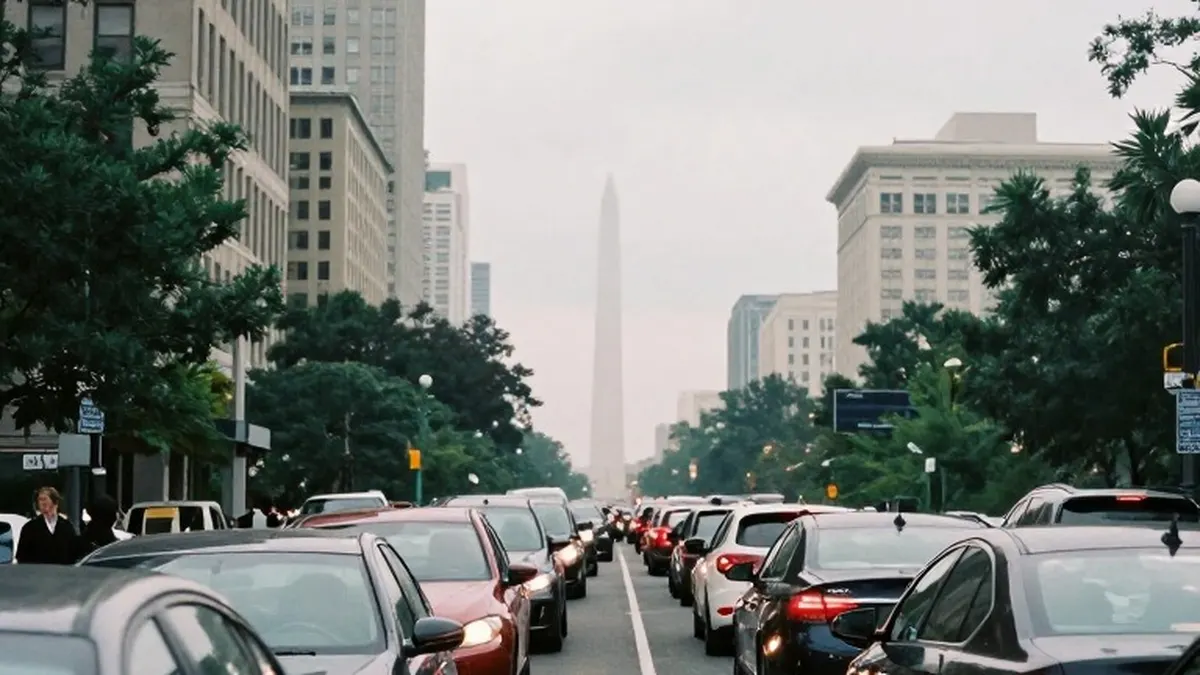
Several Democrats cited traffic congestion in the District of Columbia as the primary reason for their absence. Rep. Melanie Stansbury of New Mexico, a vocal critic of Hegseth, explained that she was trapped in her vehicle at a street corner because a police motorcade had shut down traffic to move buses off the Capitol campus. She stated that she was physically unable to move despite attempting to arrive earlier. Other members, including Reps. Jonathan Jackson of Illinois and Laura Gillen of New York, also reported being stuck in traffic.
The issue of traffic interfering with parliamentary procedure is not new. The Constitution’s Speech or Debate clause often exempts lawmakers from police interference while traveling to and from the Capitol for official sessions. In recent years, members like Rep. Don Beyer of Virginia have invoked this clause to bypass police blockades. This week, the congestion was caused by a major incident involving a man named Matt Lambert, who killed one person at a gym, shot six others, and engaged in a standoff with police. The incident led to a city-wide lockdown that stalled traffic and prevented several members from reaching the chamber for both the impeachment vote and a subsequent veterans bill vote.
The impact of the weather and traffic on the legislative process was further highlighted by Rep. Eric Sorensen of Illinois, a former meteorologist who was present for the procedural vote on the veterans bill. As he left the Capitol, Sorensen engaged reporters in a detailed discussion about the local weather, noting increasing showers and cooler temperatures for the weekend. He used the occasion to discuss the challenges of communication in Congress, comparing his previous career in television meteorology to his current role in politics.
Sorensen described the political atmosphere for the Democratic caucus as a low-pressure system, suggesting a period of volatility. He emphasized the need for the party to improve its communication strategies to connect with the public. The combination of physical barriers like traffic and internal party dynamics has created a complex environment for Democrats as they look toward the next Congress. The recent events serve as a reminder that logistical challenges in the capital can have significant political consequences.
As the House moved on to other business, the focus shifted from the failed impeachment to ongoing legislative work. The veterans bill passed with a wider margin, though still with notable absences due to the same traffic conditions. For now, the impeachment of Pete Hegseth remains in committee, where it is unlikely to see further action. The incident has added another layer of complexity to an already contentious political landscape, highlighting the unpredictable nature of legislative proceedings in Washington.