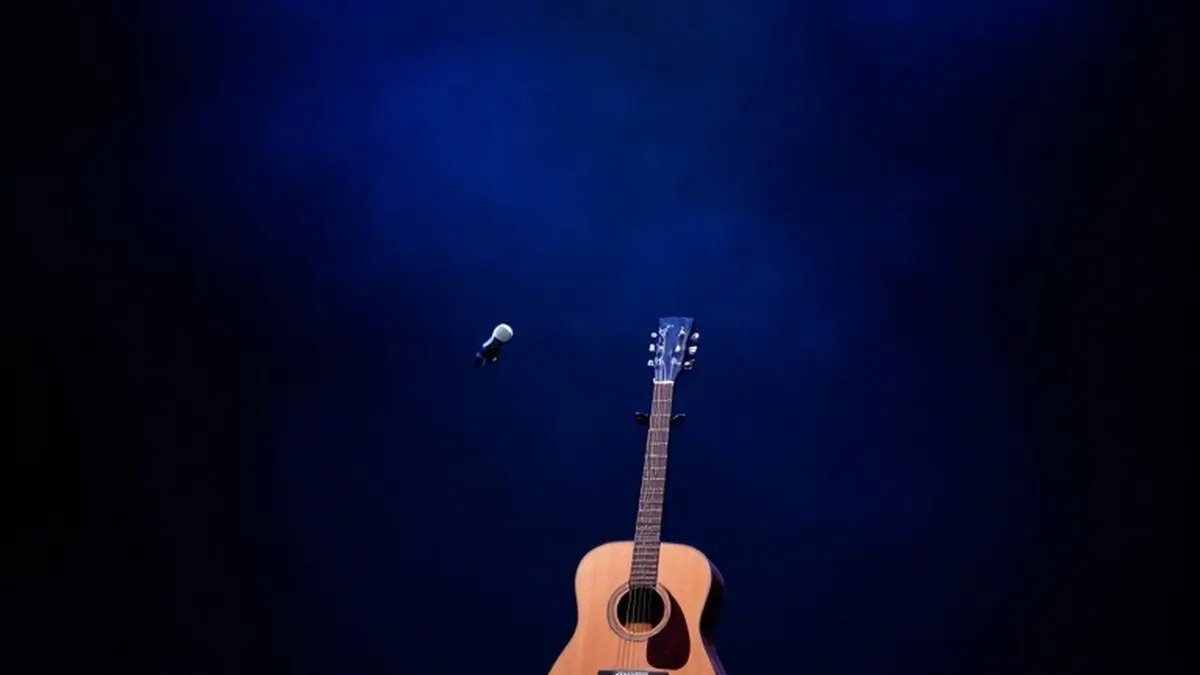
Phoebe Bridgers returned to 'Saturday Night Live' on Saturday night for her first appearance as a solo musical guest since 2021, and she did not need to break any guitars to leave a mark. Performing 'Still Standing' alone with an acoustic guitar, she closed the song with a reveal no one saw coming: her face suddenly appearing as a skull on viewers' screens.
'Still Standing' is a deeply personal song about the death of Bridgers' father, and the visual twist arrived at a key moment near the end of the performance. What might have looked like a belated Halloween stunt in almost any other musical number instead gave an extra jolt to a song already heavy with grief.
The transformation was a practical effect, not a digital one. Bridgers had been wearing UV-sensitive skull makeup beneath her regular makeup for her entire time on the broadcast, including the number that preceded it. Black lights made the hidden skull suddenly come alive, and the changeover was so abrupt it played almost like a jump cut.
The track, a standout on her recent album, has also held a central place on the tour of U.S. arenas she recently completed. Each night, Bridgers would sit on the B-stage and confide a few thoughts about her father's death before singing it, remarks that never reached social media because audience members' phones were locked up.
The lyric deals casually and yet joltingly with a history of family abuse, physical and psychological, as well as indifference, all seen through a child's eyes, with mixed emotions surfacing at nearly every turn. 'You tried to make me afraid / We were both shining,' she sings at one point. The final stanza refuses to sentimentalize anything: 'Sometimes I want you back / But not today,' she admits, before concluding, 'I can't imagine you dead / But you are every day / Thank you for everything.'
Bridgers countered the saddest song in her set with one of her happiest, 'Bobby,' performed with a lively band in tow. The track is fueled by the ebullience of a growing relationship, with Bo Burnham widely understood to be the Bobby in question. The performance stayed close in spirit to the recording but came with considerably more yelling, at moments approaching the release of 'I Know the End,' the song where she and her audiences traditionally let it all out. 'This could be the end of wanting,' she sang in the refrain, then simply 'This could be the end,' over and over, this time landing as a promise rather than a threat.
Together, the two songs captured the full range of her recent work, the darkness of losing one of the most crucial figures in her life set against the joy of a new beginning. No instruments were harmed this time around. The impact landed somewhere else, less like a shock to the ears than a chill down the spine.