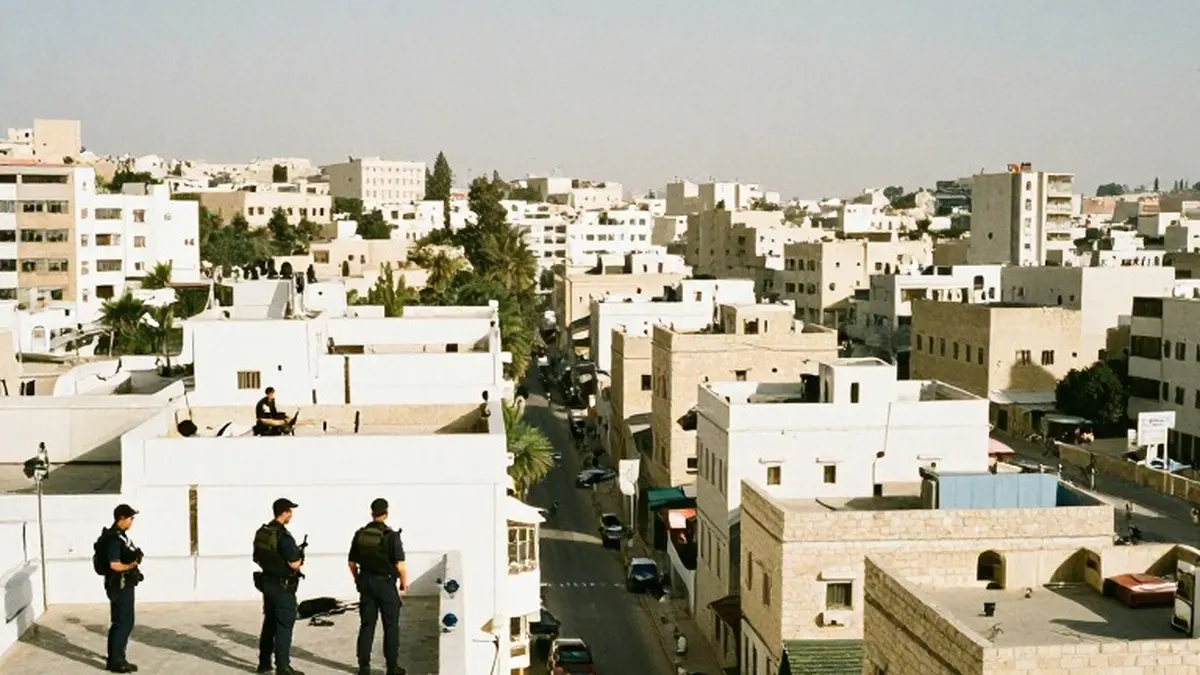
In a significant escalation of security measures, the Israel Police announced on Friday that they have positioned snipers on the rooftops of Rahat, a Bedouin city located in southern Israel. This unusual tactical deployment is part of a broader effort to control persistent gunfire and violence that have plagued the area in recent weeks.
The decision to station snipers follows a period of intense activity, during which heavy gunfire was heard throughout the day for approximately one month. During this time, police forces also discovered numerous weapons caches within the city. According to police statements, one of the primary roles for the snipers is to neutralize gunmen who open fire, thereby reducing the immediate threat to residents.
Rahat Mayor Talal al-Kernawi highlighted the severity of the situation, noting that for the past month, clashes involving six families have occurred in three different areas of the city. He reported that two young people were killed during these conflicts. Kernawi emphasized that in recent days, nonstop gunfire has endangered innocent civilians who are not directly involved in the disputes.
The mayor explained that residents had begun seeking personal security from the municipality. In response, the local government requested intervention from the police commissioner and the district commander. Following these requests, police deployed additional forces and technological equipment, including a helicopter. Kernawi stated that these initial measures caused the shooting to almost completely stop, reinforcing the view that deterring illegal gunfire is a core duty of the police.
Police officials confirmed that forces from the southern district are actively working to identify criminal elements and bring them to justice. Their goal is to reduce the frequency of shooting incidents and restore stability to the community. The deployment of snipers is seen as a visible show of force intended to discourage further outbreaks of violence.
However, local security sources have expressed a more cautious outlook. While acknowledging that the heightened police presence is welcomed if it can prevent shooting for a few days, one source told Haaretz that the solution is temporary. The source noted that there is no guarantee the gunfire will not return once the police withdraw. They argued that the approach needs to change, suggesting that arrests are more effective and sustainable than the presence of a sniper, who typically does not remain in position for more than three days.
The current surge in violence continues a concerning trend in Arab society in Israel. According to data from the Abraham Initiatives group, nearly 200 Arabs have been killed in the country since the beginning of 2026. This figure continues an upward trajectory that began in 2025, when a record 252 people lost their lives in crime-related killings.
Historical data shows that the homicide rate in Arab society doubled in 2023. The rate continued to rise in the subsequent years, with only a short dip observed in 2024 before climbing again in 2025. This massive increase has alarmed community leaders, many of whom attribute the sharp rise to the ineffectiveness or neglect of law enforcement agencies.
The timing of the uptick has coincided with the start of Itamar Ben Gvir’s term as national security minister. This correlation has intensified scrutiny on the government's handling of crime and public safety in Arab communities. As police continue their operations in Rahat, the focus remains on whether the temporary deployment of snipers can lead to a lasting reduction in violence.
The situation in Rahat underscores the ongoing challenges faced by local authorities in balancing immediate security needs with long-term criminal justice strategies. As the community waits for further developments, the presence of snipers on the rooftops serves as a stark reminder of the efforts being made to protect residents from the dangers of gun violence.