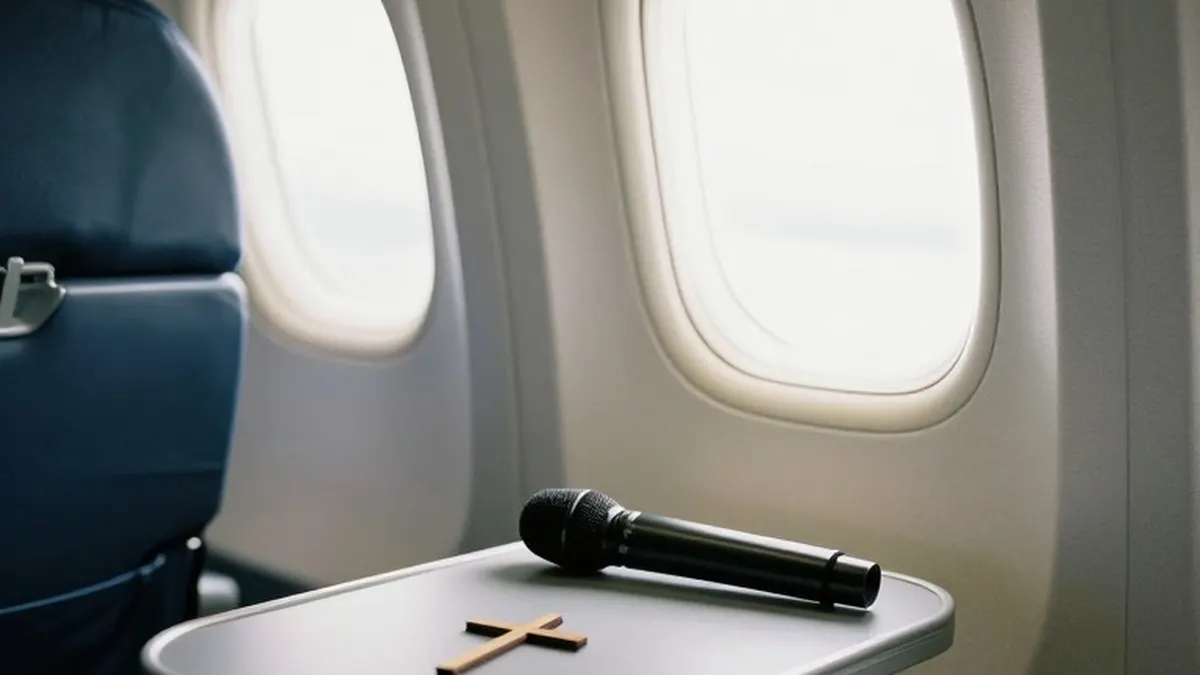
Pope Leo XIV used his return flight to Rome after a tour of Latin America to appeal for calmer politics in the United States, calling for reduced polarization following the recent midterm elections.
"I would like to see a greater capacity for dialogue, building bridges, reconciliation, less controversy, less war, less division," the pontiff told reporters traveling with him. "I know this is also a dream, but I know it is possible, so we shall see."
Leo revealed that he had cast a ballot in the 2026 midterms, saying he was proud to "exercise my right" and describing voting as the duty of all American citizens. Reflecting on his roots, he called himself "a gringo in many ways" and said his identity shapes his outlook. "My deep faith in democracy, of democratic participation, is also part of being a North American," he said.
The pope suggested his American background also explained his willingness to speak publicly about his health, something he noted is less customary elsewhere. "When I speak in general, I am very direct. I say things as they are," he said. "The issue of my health and the fact of openly speaking about it … it's not so typical in many countries and cultures. In U.S. society, it is a bit more of a common attitude."
Updating reporters on his condition, Leo said: "I'm not at 100%, but I'm doing quite well." He credited his doctors, prayers and personal determination for his recovery, describing stamina as "one of the gifts the Lord gave me."
The pontiff underwent surgery in October after doctors discovered a tumor on his lung during a routine annual examination and diagnosed him with cancer. His medical team said the disease was confined to a lobe of one lung, which was removed, and that no further treatment was required. "The initial news was a surprise," Leo said. "I had no symptoms and felt fine." He added that he moved quickly with the operation because he was determined to keep his Latin American travel plans, setting off on the trip just 24 days after the procedure, and said the diagnosis changed neither his agenda nor his priorities.
Asked whether he had signed a conditional resignation letter to take effect in the event of permanent incapacity, as some of his predecessors did, Leo said he had not. "For now, I don't see the need," he said.
Leo also weighed in on one of the Catholic Church's most contentious questions, the ordination of married men as priests. He acknowledged that married clergy could ease severe shortages in remote regions such as the Amazon, but warned the matter was "complicated" and risked splitting the church. "It's a solution which, in certain areas of the church, can cause division because there is not universal, if you will, acceptance, of that concept," he said. While not ruling out change entirely, he signaled it was unlikely soon: "It may be in the future that some things will change. However, for right now, what I believe, an important part of my ministry of the church is to heal, bring people together."
The pope closed his airborne news conference on a lighter note, joking about being struck in the face by a flying rosary during his final mass in Lima. "The affection of Peruvians, including that person who, with great faith, simply wanted to offer me a rosary, these are things one carries in one's heart, perhaps in one's eye," he quipped.