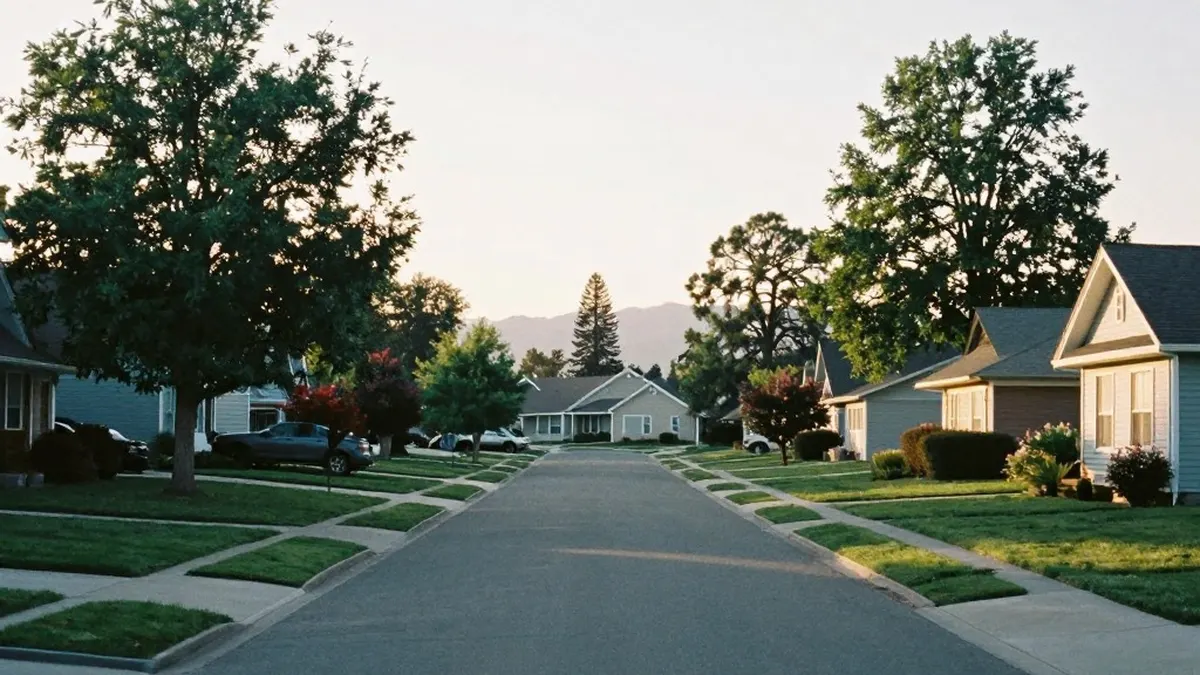
San Francisco has historically been defined by aggressive bidding wars, where sellers often set low asking prices to trigger multiple offers. However, the market has intensified this year, driven by concerns over the impact of artificial intelligence initial public offerings in a city that already suffers from low housing inventory. Properties are increasingly selling for significantly more than their list prices, a trend that has become alarming across various price points, from entry-level homes to luxury mansions on the city's north side.
Recent data from Compass indicates a sharp rise in competitive activity. Last month, 86% of single-family homes sold for more than their asking price, marking the highest October level recorded since 2020. On average, these homes sold for 28% above their list prices and were under contract within just 14 days. Buyers are likely to face continued competition in the near term, leading many to believe that the highest cash offer will ultimately prevail. However, industry experts suggest that specific strategies can help bidders gain an advantage.
One effective tactic is submitting a preemptive offer before the official deadline. The standard protocol for listing a highly desirable home involves a broker tour, followed by open houses, and finally a designated offer date. Bellings, a local agent, argues that writing a strong offer ahead of this date limits the seller to considering only one bid. He recently helped a client secure a $2.2 million property in the Inner Richmond by offering $500,000 over the asking price, a move that likely saved the buyer from a higher final price.
While preemptive offers are powerful, they should not be used if the listing agent explicitly states that the seller is not interested in early bids. Most listings have a window before the first open house where agents gauge interest, which is an ideal time to present a certain offer. Bellings recently listed two homes in the Richmond on a Thursday, held private showings on Friday, and closed deals before the Saturday open houses, satisfying both buyers and sellers.
Another critical piece of advice is to trust professional guidance over personal research. As more buyers utilize platforms like Redfin and Zillow, a do-it-yourself mentality has emerged, which can be detrimental in a competitive market. Rogan, an agent, notes that buyers often create artificial spending limits based on perceived values before viewing the property. She recently advised a client who had been hesitant for two years to take action, resulting in an over-asking offer and entry into escrow just days later.
For new developments, the choice of lender can be decisive. Goldberg, who works with new condo projects, observes that while cash offers are strong, financed bids backed by banks that have already underwritten the building tend to win. These trusted lenders provide faster approvals, typically within a week of acceptance, compared to other institutions. Developers prefer these bids because they reduce the risk of financing delays in a multiple-bid scenario.
Buyers should also avoid playing hard to get. Risman-Jones emphasizes the importance of showing genuine enthusiasm to listing agents during open houses. He notes that buyers who openly express their interest are often favored over those who remain reserved. Additionally, reading all disclosure packets thoroughly signals seriousness and reduces the likelihood of post-offer surprises, making a buyer more attractive to sellers.
Finally, being prepared for various property types, such as tenancies-in-common, can uncover better deals. Johnson, a specialist in these hybrid properties, notes that they are generally 20% cheaper than similar condos and face less competition. To remain competitive, she advises buyers to obtain preapprovals for both conventional and TIC financing. A non-contingent offer backed by a lender capable of closing quickly significantly increases the chances of winning the bid.