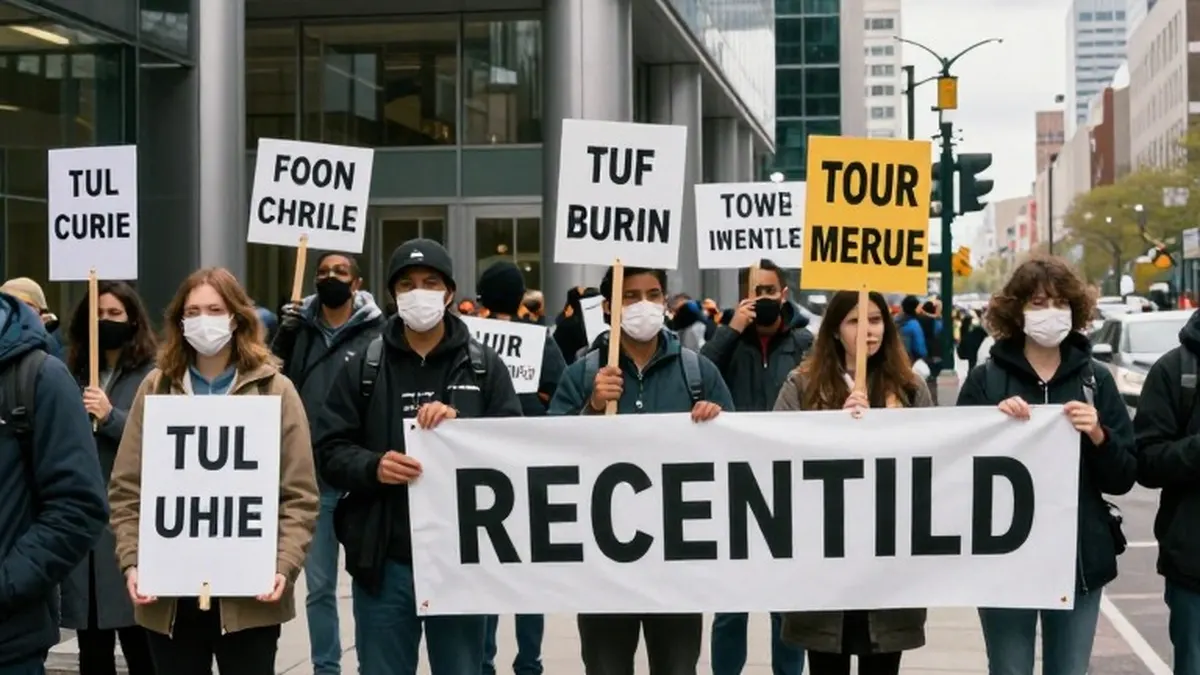
The government's strategy to reduce prison overcrowding through early releases faced a major challenge on Friday when probation officers across England and Wales voted in favor of strike action. The decision stems from disputes over compensation and the increasing burden of work associated with the new release schemes.
Members of the Napo union, which represents staff in probation offices and family courts, approved measures to restrict overtime and other forms of action that fall short of a full strike. A formal strike is anticipated to commence on 23 November, with further action planned for later in the year.
The union initiated the ballot after ministers offered a 5% pay rise, which members described as inadequate given their current circumstances. This offer fell well short of the 12% increase that Napo had originally sought to address the gap in pay compared to other staff within the HM Prison and Probation Service.
Pressure on the workforce has intensified since the introduction of the latest early release scheme in October. These officers are tasked with monitoring offender behavior, overseeing rehabilitation, checking electronic tags, and recalling individuals to prison for breaches of license conditions, such as entering restricted zones designed to protect victims.
Under the current scheme, approximately 2,500 offenders are expected to be released by the end of the year. This group includes sex offenders, domestic abusers, and stalkers, adding significant complexity to the supervision duties already being performed by an overstretched team.
Ian Lawrence, the general secretary of Napo, stated that the high turnout and the result of the vote validated the union's campaign. He noted that the outcome reflects deep anger regarding the state of workloads, which were already in a crisis before the new release scheme was implemented.
The union highlighted that probation wages have remained stagnant since 2010. Reception staff are currently earning salaries just above the minimum wage, making them the lowest paid in the civil service. In the pay ballot, 85% of members supported action short of a strike, while 74% voted for a full strike. In the workload ballot, 87% supported action short of a strike and 75% supported a strike.
The Ministry of Justice is currently recruiting 1,300 additional trainee probation officers for the 2026-27 financial year. This recruitment drive is part of a 700 million pound investment package that will extend through 2028-29. However, the Institute for Government noted that slow progress in hiring means practitioners remain ill-equipped to handle the additional demand.
Staff shortages have persisted for several years, with officer numbers consistently 25 to 30 percent below target levels. As of March 2026, nine probation delivery units, representing 8 percent of the total, had vacancy rates exceeding 40 percent.
A Ministry of Justice spokesperson described the new pay offer as the largest increase in over a decade. The department expressed disappointment at the vote but maintained that its primary responsibility remains protecting the public. The ministry stated it has robust contingency plans in place to ensure that offenders continue to receive rigorous supervision despite the industrial action.