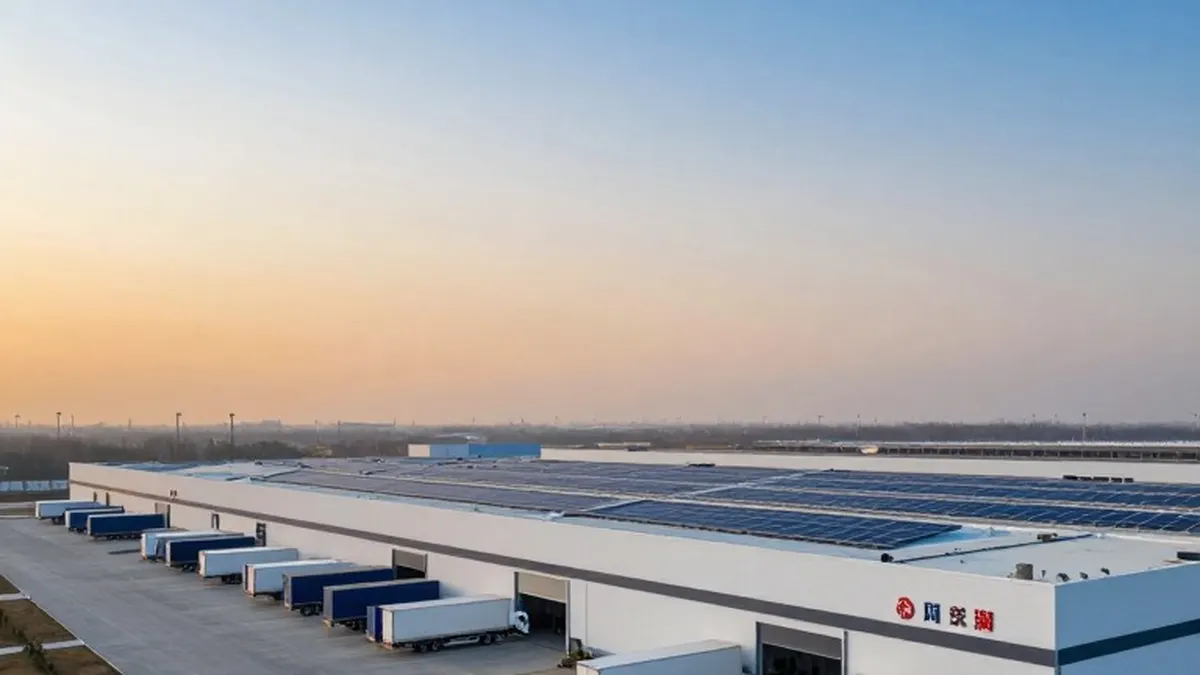
While the need for large centralized warehouses persists, the logistics industry is undergoing a significant transformation. Companies are increasingly rethinking their distribution networks to accommodate faster delivery times and more resilient energy supplies. This shift is driven by changing consumer expectations and the growing influence of artificial intelligence on supply chain operations.
A recent survey conducted by Prologis in partnership with the Harris Poll highlights this pivot. The study surveyed more than 1,800 business leaders across the United States, United Kingdom, Germany, India, China, and Mexico. Ninety-one percent of these leaders stated that retailers and logistics providers urgently require more decentralized fulfillment networks to meet current delivery standards.
Dan Letter, CEO of Prologis, explained that the company's strategy has narrowed its focus to specific consumption and population centers. The goal is to position facilities closer to end consumers. Letter noted that the focus is on identifying specific submarkets within dynamic cities to ensure proximity to rooftops, which is critical for meeting speed targets.
The survey data indicates a move away from maintaining static global footprints. The percentage of companies planning to keep their existing global footprint has dropped by 14 percentage points over the past year, falling to just 36 percent. Speed is now the primary competitive advantage, surpassing price. Consequently, the share of companies offering same-day delivery has doubled since 2019.
In response to these trends, companies are adopting varied relocation strategies. More than half of the respondents are both diversifying and regionalizing their operations. Additionally, about one-third are engaging in nearshoring and reshoring activities to streamline their supply chains.
Prologis has adjusted its portfolio to align with these customer needs. Letter stated that the company has sold a significant amount of property over the last 15 years when customers indicated that certain locations did not align with their long-term visions. Despite holding 1.3 billion square feet of space, Prologis has sold over 200 million square feet to better match customer expectations.
Energy infrastructure is becoming a critical factor in logistics decisions. Power reliability ranks as the top concern in location selection, largely due to the energy demands of artificial intelligence. Just over a quarter of executives expect industrial landlords and developers to lead or fund on-site energy resilience infrastructure, which includes solar power, energy storage, and fleet charging stations.
Prologis began focusing heavily on energy infrastructure approximately five years ago, turning it into a distinct business unit. The company now generates over 1.4 gigawatts of power from its solar and storage operations. Letter also highlighted efforts to help customers electrify their vehicle fleets as part of this broader energy strategy.
Artificial intelligence is playing an increasingly vital role in logistics and warehousing. Survey respondents identified demand forecasting and agentic AI systems as some of the most transformative technologies for reshaping supply chains over the next three years. Three-quarters of those surveyed plan to make significant investments in AI-driven demand forecasting and inventory replenishment systems.
Letter emphasized that Prologis is investing alongside its customers to understand future needs. By going deeper into AI integration, the company aims to stay ahead of market trends and support its clients in their digital transformation efforts.