A coalition of Israeli students, activists, and academics has issued a call for the immediate release of a Palestinian undergraduate who has been held without charge since his arrest earlier this month. Mahdi Tunsi, a 26-year-old student of sociology and criminology at the Hebrew University of Jerusalem, was taken into custody by Israeli police from his university dormitory. He appeared in an Israeli court in the city on Tuesday for a hearing conducted behind closed doors.
Israeli police officials stated that Tunsi was arrested in connection with ties to an act of terrorism. The authorities have requested administrative detention, a legal mechanism that permits the state to hold individuals indefinitely based on secret evidence that the detainees cannot view. Dr. Yael Berda, one of Tunsi's professors at the university, characterized the arrest as a political move. She noted that Tunsi, a resident of occupied East Jerusalem, has worked with prominent Jewish-Palestinian campaign groups.
The detention occurred a month after Israel’s general election, in which Arab-led parties secured a record nineteen seats in the Knesset. Prime Minister Benjamin Netanyahu’s right-wing coalition lost its majority in that election. Following the vote, Dr. Berda observed an intensifying campaign against Palestinian rights. She highlighted that Tunsi, while not an Israeli citizen and thus unable to vote, was engaged in the political process and supportive of the Arab parties.
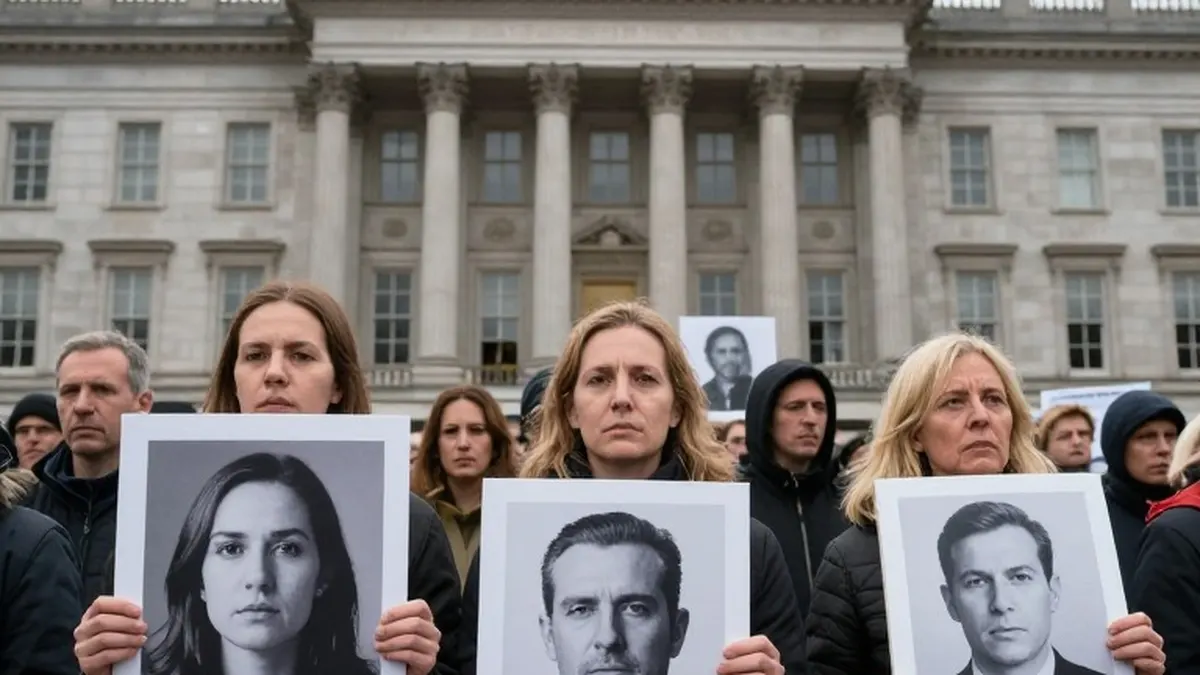
Outside the Jerusalem District Court on Tuesday, demonstrators gathered to voice their opposition. They waved placards featuring a black-and-white image of Tunsi and chanted the word shame in unison. Dr. Ofer Cassif, a member of the Knesset representing the Arab-led Joint List alliance, criticized the use of administrative detention. He described it as a sugar-coated term for being kidnapped and held as a hostage, urging the public to stand firm against such practices.
Since the Hamas-led attack on Israel on October 7, 2023, which triggered the Gaza war, the number of people in administrative detention has more than doubled. According to figures from the Israel Prison Service published by the rights group HaMoked, more than 3,100 individuals were in administrative detention as of October, with the majority being Palestinians from the occupied West Bank. The Israeli government maintains that this policy is a necessary preventative measure to combat terrorism and is compliant with international law.
During his court appearance, Tunsi participated via video link from prison. Witnesses noted that his hair and beard had been shaved off. His friends reported that he was without his medication and glasses, despite a judge’s request for them to be provided. The Israel Prison Service stated that it acted in accordance with court rulings and that the detainee's lawyer was informed he could pass the eyeglasses to Tunsi subject to security procedures.
Dr. Berda attempted to enter the courtroom but was denied access. She stated that Tunsi had not been told of the evidence against him. The judge indicated that more time was needed to consider the state's request for administrative detention, with a decision expected in the coming days. In a statement, Israeli police said they would not elaborate further regarding the investigation. The Hebrew University said it was notified of the arrest only minutes before it occurred and expressed concern for Tunsi's well-being.
Tunsi resides in Silwan, a neighborhood in East Jerusalem where Palestinians have faced evictions in recent years due to properties deemed illegally built by Israeli authorities. Noga Kaplan, a fellow student, described Tunsi as having a pure heart and being passionate about his studies. She explained that political organization had decreased after October 7 due to fear of consequences, leading Tunsi to use his studies as a way to speak about the issues. The university stated it is not a party to the legal proceedings and hopes the matter will be resolved promptly.
Dr. Berda demanded that the authorities either present their evidence or release Tunsi. She advocated for his immediate release or a move to a criminal track where he could defend himself. Tunsi's case has drawn significant attention from the academic community and human rights advocates who are monitoring the judicial process closely.