The emergency medical treatment given to a Spanish soccer player who died after an on-field collision is coming under examination, even as the country grieves his death.
Tenerife forward Jesus de Miguel died on Tuesday, one day after taking a heavy hit from the opposing goalkeeper during a second division match and being rushed to hospital. The 30-year-old suffered a cardiac arrest after collapsing on the pitch on Monday.
Spain's National Police has opened an investigation into possible involuntary manslaughter, a standard step for a non-natural death. Investigators are expected to weigh whether the challenge by Andorra goalkeeper Jesus Owono went beyond the normal course of play.
Attention has also turned to the care De Miguel received in the moments after he went down, including how quickly CPR was started and whether medics used a defibrillator. Elvira Gonzalez, president of Spain's Association of Nurses, Emergency Medics and Caregivers, told The Associated Press on Wednesday that her organization was seeking more information.
"We can't say if they acted correctly or incorrectly, but we can demand that all the emergency procedures follow international standards of correct practice," Gonzalez said.
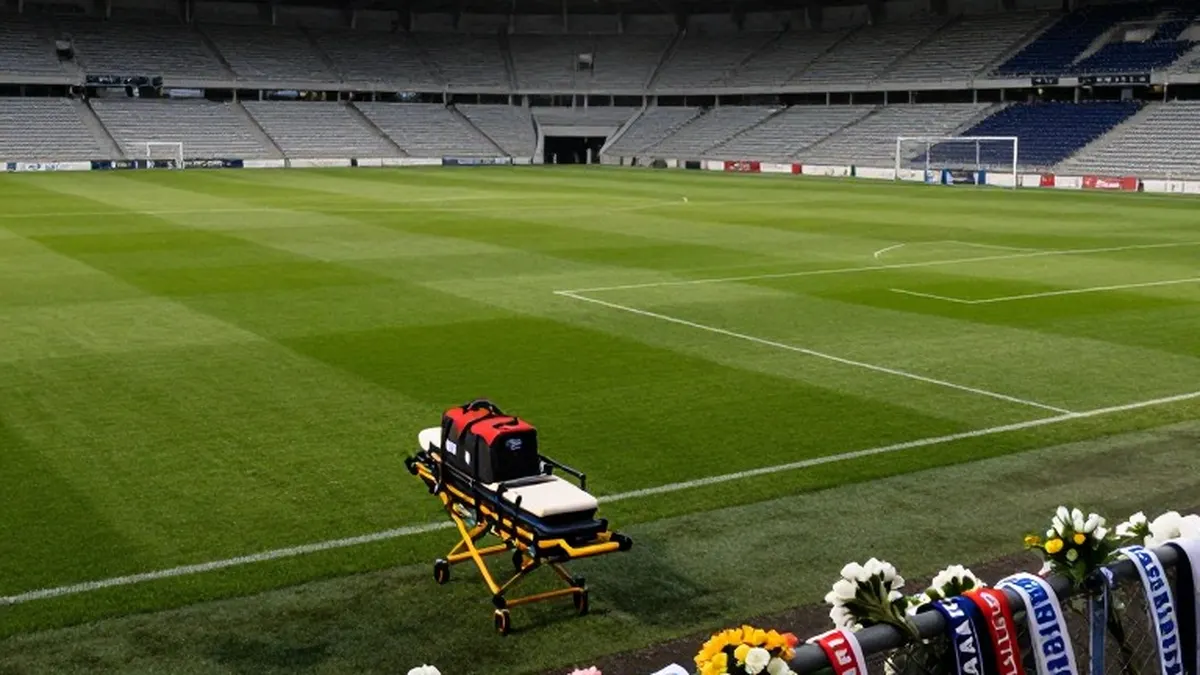
Team medical staff reached De Miguel 20 seconds after he collapsed following a mid-air clash with Owono as the two contested a high ball late in the game. Emergency workers followed quickly, bringing a stretcher to the scene in under a minute. What treatment he received during the roughly five minutes he lay on the pitch before being moved to a waiting ambulance remains unclear. Some Spanish media reported he received CPR in the ambulance and recovered a pulse, while others said CPR was performed on the field. Whether a defibrillator was used has not been established.
"There is contradictory information," Gonzalez said. "The first thing we need to know is where and when he supposedly recovered a pulse." She stressed that CPR must begin from "minute 1" and that defibrillator use is crucial. "The first minutes are critical. You can only move a person once a pulse is restored," she said.
Swift on-field treatment has saved other athletes, including Danish soccer player Christian Eriksen, whose heart stopped during a European Championship game in 2021, and Buffalo Bills safety Damar Hamlin, who received CPR and defibrillation on the field after suffering cardiac arrest in 2023. Both survived.
Some local media reported the police probe is also examining the immediate medical response at Tenerife's stadium. The National Police in Madrid and in Tenerife declined to comment on that to AP, and the Tenerife club did not answer repeated calls and an email seeking details. Tenerife's largest shareholder, Rayco Garcia, told Spanish radio station Cadena Ser on Tuesday that the medical team followed protocol and "were fast to get on the field," but added, "I would like to know through the investigation if there is something we don't know so that this doesn't happen again." He said he preferred to wait for the autopsy. Asked why the ambulance did not enter the field, Garcia said the club's medical service did not order it to approach. Spanish soccer federation regulations require the home team to have at least one doctor on site and an ambulance equipped with life support, including a defibrillator, at the ready. La Liga did not respond to a request for comment.
De Miguel's death stunned the soccer community in Spain and beyond, with teams across Europe paying tribute before Champions League games on Tuesday and fans leaving flowers in a makeshift shrine outside Tenerife's stadium. Owono issued a statement through his club on Wednesday offering condolences to De Miguel's family. "These are the most difficult days of my life," the goalkeeper said. "I feel an immense pain over the loss of Jesus." De Miguel is survived by his wife and 1-year-old daughter, who were at Monday's game. The team will travel to the mainland for a funeral Garcia said is tentatively set for Thursday in the central province of Toledo.