For about 20 years, Britain could not fit a barrel to its tanks without buying one from abroad. That reliance on allies seemed sensible during the relatively secure years after the cold war, at least for wealthy nations. Russia's full-scale invasion of Ukraine in 2022 upended that thinking and set off a scramble to rearm across Europe, the UK included.
The latest sign of it came on Thursday in Shropshire, where UK defence secretary Wes Streeting opened a hastily built factory run by Germany's Rheinmetall. The Telford site makes barrels for artillery and for British tanks. Streeting said it was not enough to out-innovate those who wish Britain harm. "We must also out-produce them too," he said, adding that advantage increasingly belongs to those who can manufacture at scale and field capability fastest.
The speed of the project was striking. Rheinmetall chief executive Armin Papperger said the company began investing "off the back of a handshake" before Christmas last year with Gen Sir Roly Walker, the chief of the general staff, without waiting for a formal contract. Eight months later, the first barrels are being produced. Papperger said he is also in talks about making more ammunition in the UK, with a decision expected within six to eight months.
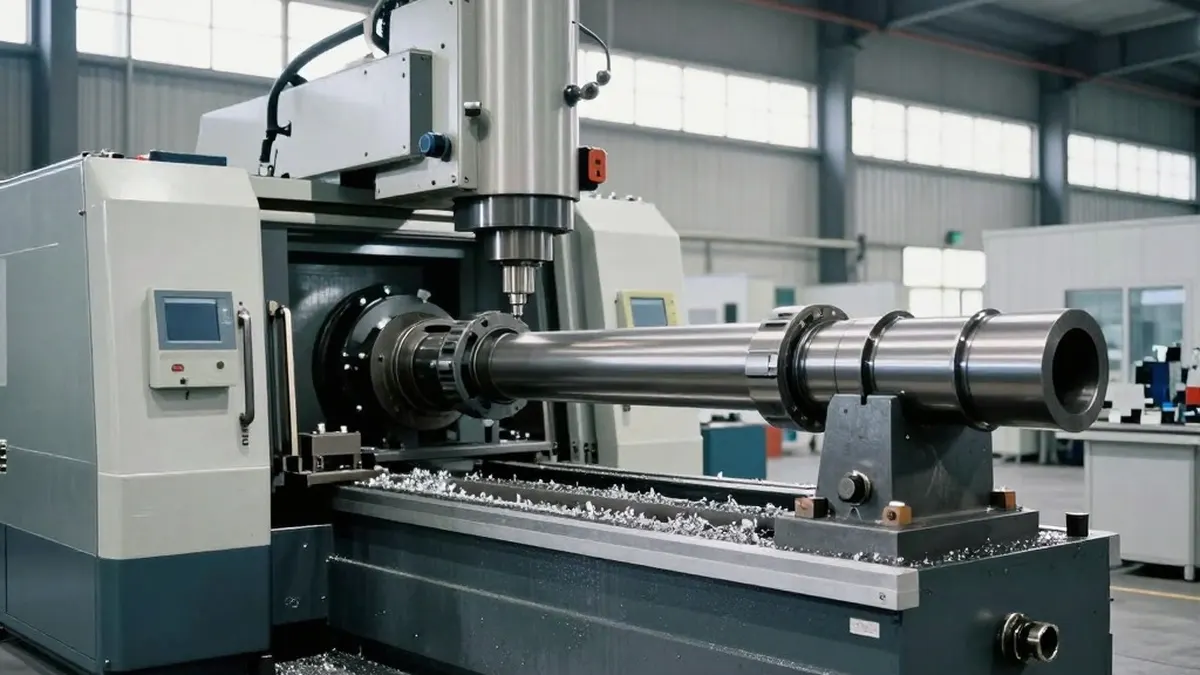
The process starts with a 3.2 tonne, 8-metre cylinder of specialised steel alloy. A hole is drilled through it, the surfaces are honed to remove imperfections, and a turning tool cuts spiral rifling to improve accuracy. A specialised machine, one of only two in the world, then raises the pressure inside the barrel to about 15,000 times the air at sea level. That hardens it to withstand the force needed to send shells as far as 30km (18 miles).
Walker argued that drones, for all the attention they have received in Ukraine, cannot match traditional weapons for sheer firepower. Both sides there fire tens of thousands of artillery rounds a day, he said, creating a weight of fire and lethality that drones alone cannot replicate. He called it "sad" that the UK had been unable to continue centuries of artillery manufacture, much of it done at the Royal Arsenal in Woolwich, which opened in the 17th century. Production there ceased in 1967 and the work was scattered around the country and sometimes abroad.
The gun hall will initially produce barrels for German-made, self-propelled, remote-control howitzers that use Nato-standard 155mm ammunition. Later it will also make slightly smaller barrels for 120mm rounds, used by the Challenger 3 tank, which is in final testing, and by a British version of the howitzer planned for after May 2028. Capacity is 245 barrels a year plus 50 breeches, the part at the base of the barrel. Papperger said that could theoretically rise to as many as 1,000 within four or five years if orders arrive, and exports may be considered.
Papperger said Nato allies can manage with lower output than Russia and its client states because their equipment lasts longer. He said a Russian barrel can fire about 500 times before breaking, while Telford's products should survive as many as 4,000 shots.
The investment followed a 2024 agreement between then prime minister Keir Starmer and German counterpart Olaf Scholz, part of a broad pact for Europe's two biggest military spenders to cooperate more closely. Rheinmetall employs about 685 people in Telford, but only 35 will work in the gun hall, rising to 100 at full capacity. Most of the site's workers build Challenger and Boxer armoured vehicles in a joint venture with BAE Systems.
Rheinmetall has been among the biggest winners from Europe's surge in defence spending and arms supplies to Ukraine. Its market value has climbed from about €4.2bn (£3.5bn) before the invasion to €47bn on Wednesday, though that is down from a peak nearly twice as high last year. Papperger said more governments want control over their own weapons production, which he suggested could help placate US president Donald Trump. "To be a strong partner, you need strong armies," he said. "But on the other side, you need a strong industry."