
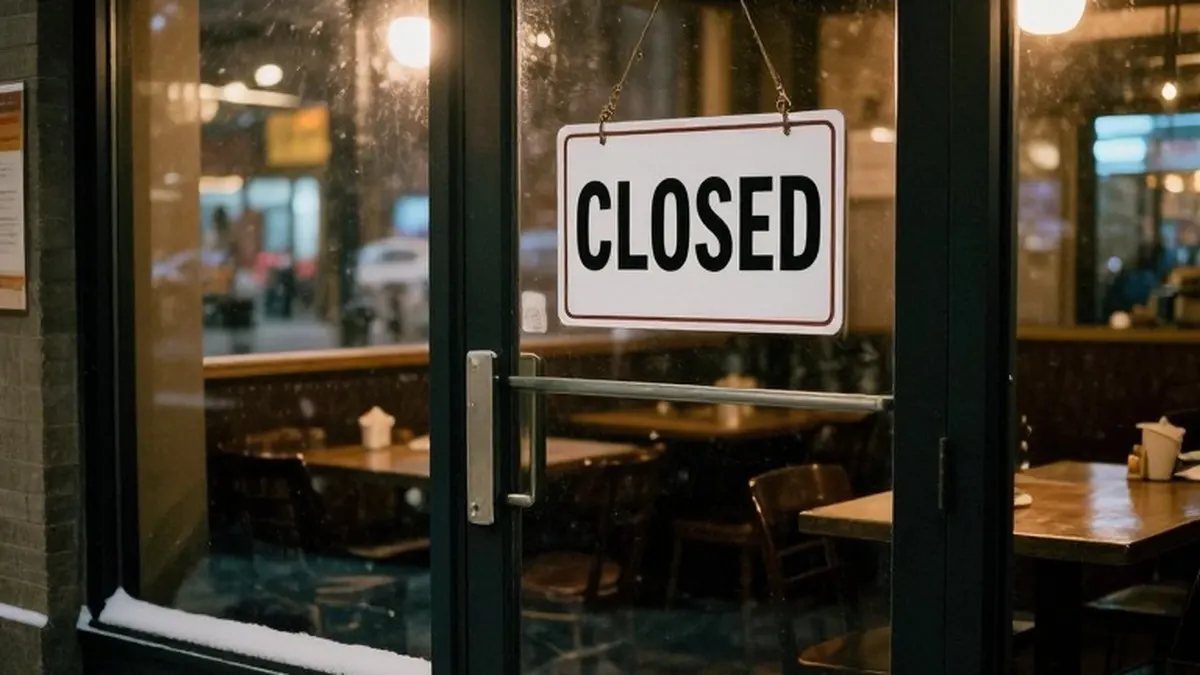
A significant number of catering establishments in Kyiv have ceased operations over the past several months. The closures are attributed to a combination of declining customer traffic, frequent power outages, and other operational challenges stemming from the ongoing conflict.
Signs indicating temporary or seasonal closure have become increasingly common at the entrances of cafes and restaurants across the capital. Analysts point to a sharp drop in footfall as a primary driver. According to data from Poster, a company that tracks restaurant revenues in Ukraine, visits to venues in the city have decreased by 20 percent compared to the same period last year. This decline is partly due to residents leaving the city because of persistent Russian strikes.
Business owners are struggling to maintain profitability despite rising prices. The average bill in these establishments has increased by 15 percent, a figure that proves insufficient to offset the loss in revenue caused by fewer customers. Simultaneously, operating costs have surged. Power outages force many venues to rely on generators, while new requirements mandate that businesses provide adequate shelter space for patrons during air raids.
Dmytro Pohrebitskyi, a restaurateur with the Pesto Cafe chain, described the current operating conditions as critical. He noted that his restaurants were previously open for ten to fourteen hours daily but have faced significant disruptions. The chain, which operated twenty locations in Kyiv before the war, has already suspended four of its outlets. The business has reported losses amounting to millions of hryvnia.
Similar trends are observed across other major chains. Dmytro Kostrubin, development director for the Chornomorka seafood restaurant group, stated that visitor numbers across their outlets have dropped by approximately 20 percent year over year. To manage these financial pressures, many restaurateurs are cutting staff, simplifying menus, and hiring less experienced workers to reduce labor costs.
The approaching winter adds further strain to the industry. Russian attacks on energy infrastructure have intensified power cuts, making generator operation a major expense. Diesel fuel prices, which power these backup systems, have nearly doubled in Ukraine over the past year. This energy crisis is compounding the financial difficulties already faced by venue owners.
Olena Borysova, an entrepreneur with 25 years of experience in the service sector, described the current period as one of the most difficult in her career. She stated that her company, Gastro Family, had completely exhausted its financial reserves in 2025. She highlighted the new government regulations requiring business owners to ensure customer access to shelters as a particularly burdensome change.
Borysova expressed frustration that the responsibility for shelter safety had been shifted to entrepreneurs who are already struggling. She noted that with more than 50 venues, each manager bears the risk of liability if a customer is harmed during a strike, especially when sirens do not sound. This uncertainty has led to a wave of resignations among her management staff.
In response to criticism from the hospitality sector, the Ukrainian government has revised the timeline for equipping venues with compliant shelter facilities. The deadline for full implementation has been extended from December 2026 to April 2027. However, industry leaders warn that if requirements are not further eased, up to half of Kyiv's dining venues could close under current conditions.
The broader impact of the conflict on the food service industry is evident in other recent developments. McDonald's in Ukraine recently switched to a reduced menu following a drone attack on a logistics partner's warehouse. Additionally, the fast-healthy restaurant chain Salateira, which was among the top ten restaurant companies by revenue in 2023, has ceased operations entirely.





