Rivian Automotive marked its fifth anniversary as a public company on November 10, 2026. Five years ago, founder and CEO RJ Scaringe rang the Nasdaq opening bell from the company's facility in Normal, Illinois, while vehicles were displayed in Times Square. That period of excitement for electric vehicle makers has since cooled. Rivian's share price has fallen by more than 80 percent since its debut at $78 per share in November 2021. This decline includes a nearly 30 percent drop over the last year.
Despite internal challenges and external headwinds, Rivian remains one of the few prominent EV manufacturers from that era still in operation. Scaringe acknowledges that supply chain issues, geopolitical tensions, and slower consumer adoption have impacted progress. However, he told CNBC in an exclusive interview that he believes 2027 will serve as a catalyst for the business. He described the coming year as an inflection point where the company can demonstrate its full potential to investors.
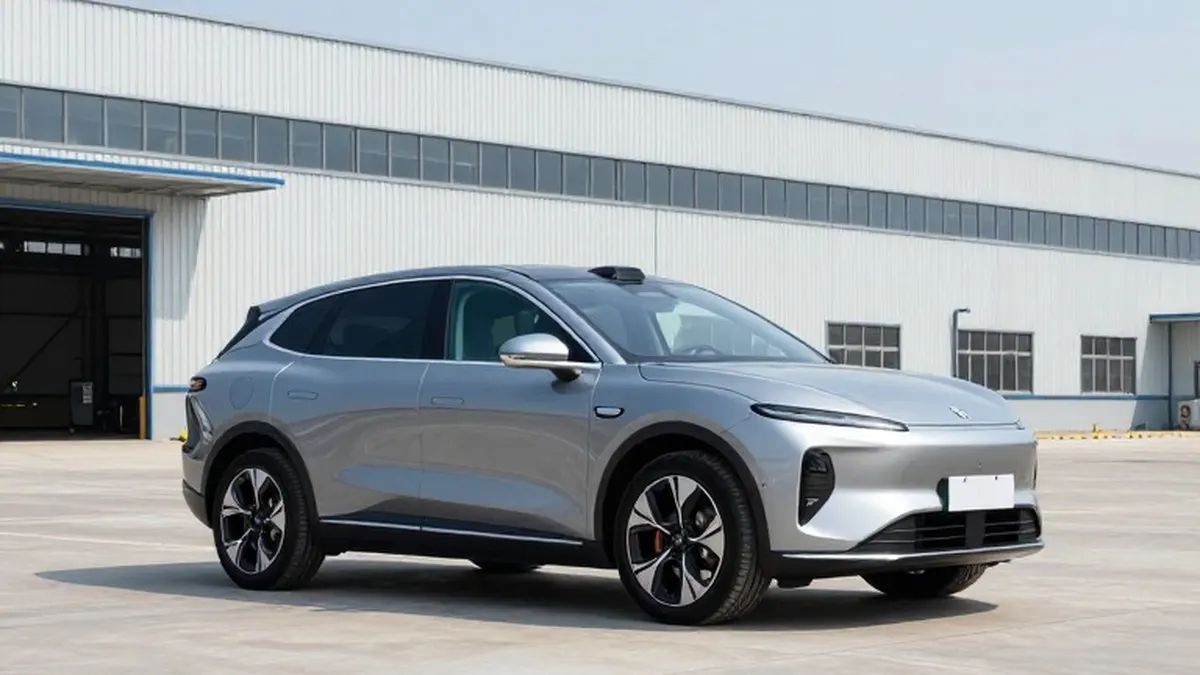
The optimism centers on the ramp-up of the midsize R2 SUV, which aims to bring the brand to the mainstream market. With an entry-level price of approximately $45,000, the R2 is positioned as the core vehicle for showcasing new technologies. In the third quarter of 2026, Rivian delivered a record 19,248 vehicles, a 46 percent increase from the same period last year. The R2 has already become the company's best-selling model by volume, outpacing the R1 flagship and commercial vans.
Scaringe emphasized that the path to profitability and significant revenue growth is built around the R2 and its future variants. Financial metrics show improvement in manufacturing efficiency. The automotive cost of goods sold per vehicle improved by more than $12,000 in the most recent quarter, aided by a higher mix of R2 units and better fixed-cost leverage. While the overall automotive business posted an $80 million gross loss, the software and services unit generated $256 million in gross profit with a 42 percent margin.
To support future growth, Rivian is constructing a new multibillion-dollar factory in Georgia. The current plant in Illinois has an annual capacity of 215,000 vehicles. The new Georgia facility is expected to reach an initial capacity of 300,000 units per year by late 2028. This expansion requires substantial capital investment. Scaringe stated that the company is simultaneously pursuing profitability and deep investment in technology, particularly autonomy.
Wall Street analysts note that while early R2 demand is encouraging, rising investment requirements pose challenges. Deutsche Bank analyst Edison Yu observed in a recent note that a multi-year path to cash flow breakeven may be less attractive to investors. Rivian reported ending the third quarter with $5.5 billion in cash, cash equivalents, and short-term investments. The company expects total available future liquidity to be around $13 billion when including credit lines, partnerships with Volkswagen and Uber, and a $4.5 billion loan from the U.S. Department of Energy for the Georgia plant.
Scaringe indicated that Rivian will remain opportunistic regarding additional capital raises to maintain its investment pace. The company is also advancing its autonomy technology, which Scaringe refers to as physical artificial intelligence. Rivian plans to release point-to-point driving capabilities in the coming weeks and months. This feature will allow vehicles to drive independently between destinations, with the driver acting as a monitor. Currently, Tesla is the only automaker offering such features.
Rivian aims to exceed Tesla's capabilities by utilizing multiple sensor types to improve visibility in inclement weather. Scaringe described this release not as a finish line, but as a starting point for a more direct comparison with competitors. Autonomous vehicles operating with Uber are expected by 2028. The CEO believes these technologies will become a top purchase consideration for the majority of buyers in the coming years.
Rivian plans to unveil more details about its AI and autonomous plans at an investor technology event on December 9. TD Cowen analyst Itay Michaeli viewed this event as a potential positive catalyst for vehicle demand and software revenue in 2027. Currently, the stock is rated overweight with a target price of $17.70, representing a roughly 26 percent increase from its recent closing price, though it remains far below its initial offering price.