
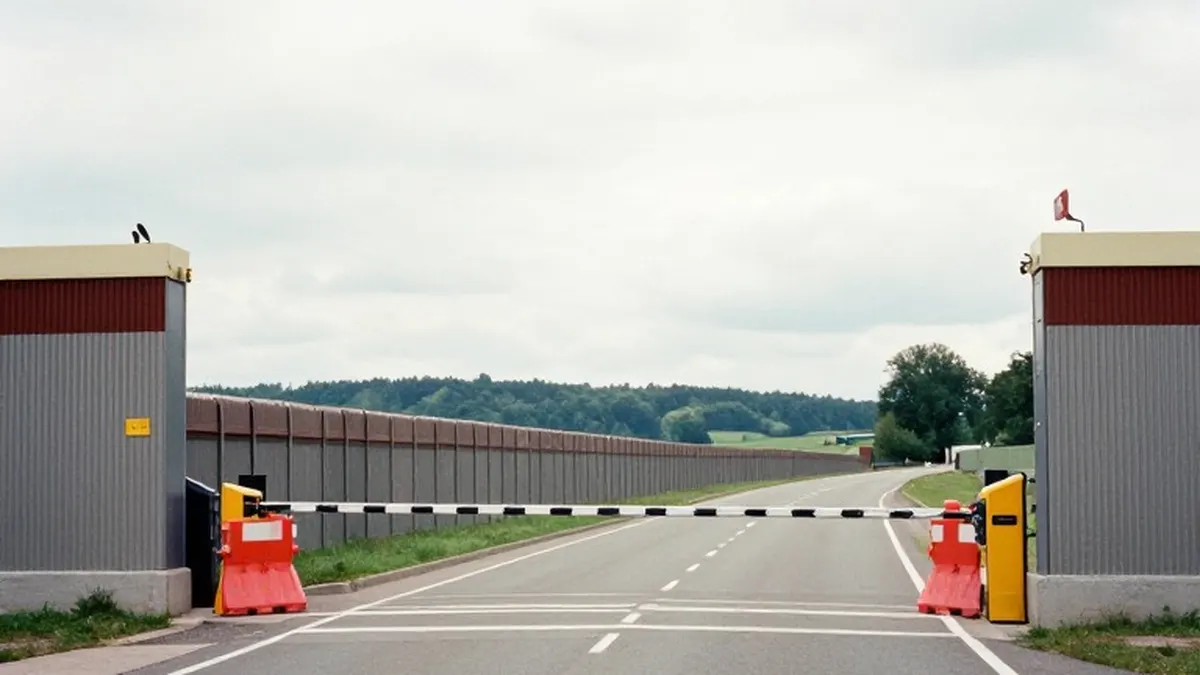
The Russian Foreign Ministry has issued a strong rebuke against the government of Estonia, labeling the Baltic nation's recent moves as a series of hostile actions. Moscow claims these steps have placed the relationship on the brink of open war. This sharp increase in diplomatic friction highlights the growing strain between Russia and the countries situated along NATO's eastern border. The controversy follows Estonia's announcement that it will shut its road border crossings with Russia beginning on December 1.
In a statement released on Monday, the Russian ministry confirmed that it had lodged a formal protest with Marek Uhtegi, Estonia's chargé d'affaires. The protest centered on Tallinn's decision to close the crossings and included accusations that the European Union member state was imposing a naval blockade against Moscow. The ministry described the measures taken by Estonian lawmakers as Russophobic and warned the diplomat that such dangerous provocations were leading directly toward a full-scale conflict.
Beyond the border closures, Moscow also criticized Estonia for what it called a tacit provision of its airspace for Ukrainian drone flights. The ministry took issue with a policy introduced in early October that bans the transit of Russian and Belarusian grain through Estonian territory. In response, the Estonian government quickly rejected the claim that it allowed its territory to be used for military operations by another country.
Estonian Foreign Minister Margus Tsahkna responded by suggesting that the Kremlin is attempting to divert attention from its own actions to undermine European security. Tsahkna pointed to several recent incidents, including Russian missiles reaching Polish territory and an assassination plot in Denmark orchestrated by Russian intelligence. He also noted the constant threat to merchant vessels in the Black Sea and a foiled arson attack on a defense company in Estonia that was planned by Russian military intelligence.
Tsahkna emphasized that these events are occurring while Russia continues its war of aggression against Ukraine. This rhetoric represents a notable escalation in the relationship between the two nations. As a strong ally of Ukraine, Tallinn has frequently warned about sabotage attempts against NATO countries that have supported Kyiv since the full-scale invasion began in February 2022.
Estonia stated earlier this month that the December 1 closure of road crossings was a direct response to Moscow's role in an attempted sabotage of one of its defense firms. While the Kremlin denies this allegation, Tallinn believes the closure will limit Moscow's capacity for hostile activities and reduce the risk of sanctions being circumvented. The two countries share a border that stretches 294 kilometers, or 183 miles.
The broader regional context includes increased Ukrainian attacks on critical Russian targets in recent weeks. These strikes have damaged the Crimea bridge, hit a cargo ship in the Baltic Sea, and destroyed a new Russian vessel in a Libyan port. The suspected attack on a military-linked cargo ship in the Gulf of Finland on Saturday led Finnish Prime Minister Petteri Orpo to warn that the war is spilling over into the immediate vicinity.
Finland, a recent addition to NATO, has also closed its land border crossings with Russia. Mario Bikarski, a senior analyst at Verisk Maplecroft, noted that Ukraine's latest strikes demonstrate its ability to hurt Moscow even without significant U.S. military support. He predicted that Kyiv will continue to target Russia's economic and geostrategic interests in regions such as the Mediterranean and the Middle East.
Despite the mounting losses and diplomatic activity, Bikarski said the prospect of an imminent peace deal remains slim. However, the recent surge in negotiations suggests that all parties have a growing appetite to reach an agreement.





