Russia struck transport infrastructure in the Ukrainian capital overnight, hitting a major bridge, while the leaders of Finland and Norway held a rare phone call with Russian President Vladimir Putin. The two leaders also spoke separately with Ukrainian President Volodymyr Zelenskyy.
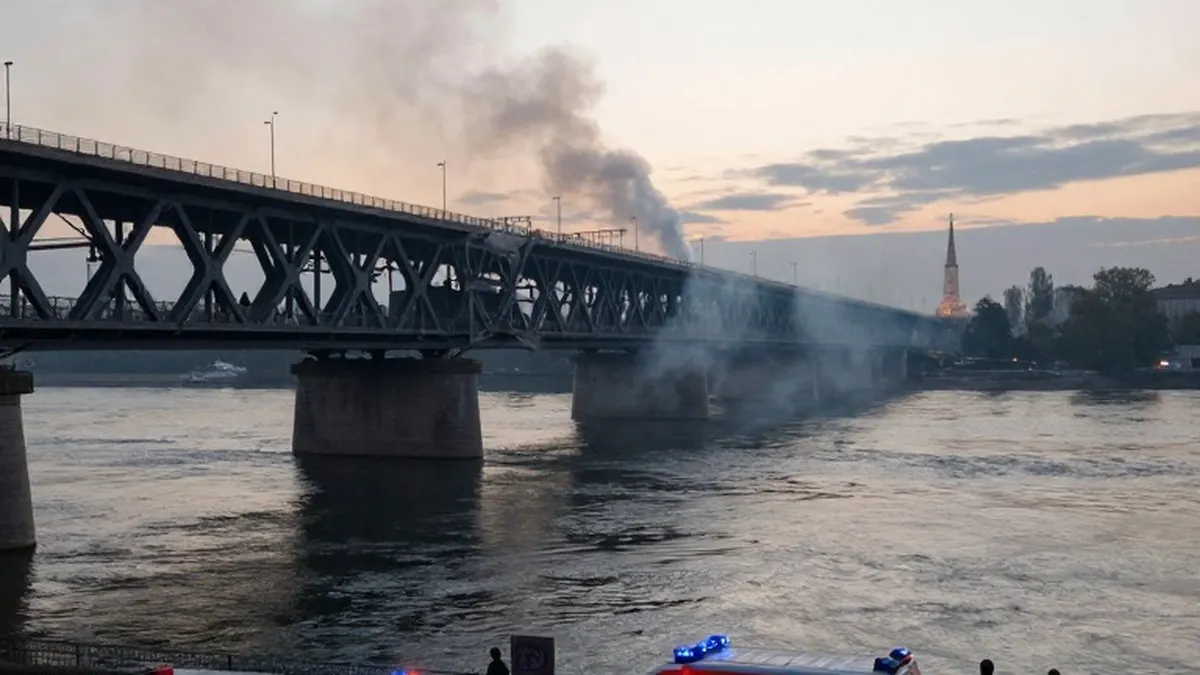
Officials in Kyiv said the South Bridge was damaged in an assault that involved 16 ballistic missiles and more than 280 drones. Zelenskyy said Russian forces struck again while emergency crews were still responding to the first wave. "This is a serious escalation in Russia's campaign targeting our logistics," he said.
Elsewhere in Ukraine, Russian attacks caused deaths and injuries in Kharkiv and Pavlohrad. Russia's Defence Ministry said on Telegram that its forces had hit transport infrastructure in Kyiv and a logistics hub in the Kharkiv region, as well as industrial sites and cargo vessels that it said served military purposes.
Officials in the Russian-controlled part of Ukraine's southeastern Zaporizhzhia region said a drone strike on a bus killed one person and injured 30 others. In the Russian city of Bryansk, near the Ukrainian border, one person was killed and six were wounded in a drone attack.
The violence comes as both sides prepare for negotiations. Kyiv and Moscow said on Friday that they had agreed to hold technical meetings mediated by the United States in Abu Dhabi in early November.
Finnish President Alexander Stubb and Norwegian Prime Minister Jonas Gahr Store called Putin from Helsinki on Tuesday to pass on messages about future negotiations, according to a joint statement from their governments. Zelenskyy, who spoke with them afterward, said on X that they had told Putin real steps were needed to reduce attacks on Ukraine's energy facilities and infrastructure. "There must be peace, de-escalation is needed, and Russia must stop dragging out the war," he said.
Stubb said the outcome of the war would directly affect the security of Finland and Norway, both of which border Russia, and of Europe more broadly. "Ending the war requires direct discussions," he said. Store said the two had stressed the importance of de-escalation during the call. Both men said they spoke for their own countries rather than for Europe, and that their support for Ukraine would continue.
Most Western European leaders have avoided direct contact with Putin since Russia launched its full-scale invasion of Ukraine in February 2022. The governments described the call, held in consultation with Ukraine, as a follow-up to talks in Oslo on October 20 with Zelenskyy and US special envoy Steve Witkoff.
Witkoff met Putin in St Petersburg the following day, after which the Kremlin said it was ready to resume US-mediated talks with Kyiv that stalled in February. Separately, US President Donald Trump has credited First Lady Melania Trump with securing a localised ceasefire in the southern Kherson region. It took effect on Tuesday to let aid reach the Russian-controlled town of Oleshky.