Families who lost loved ones in the Sandy Hook Elementary School shooting are asking the U.S. Supreme Court to uphold state and local restrictions on certain semiautomatic rifles. In a filing Wednesday, they argued that the weapons’ capacity to kill and cause devastating injuries supports keeping the bans in place.
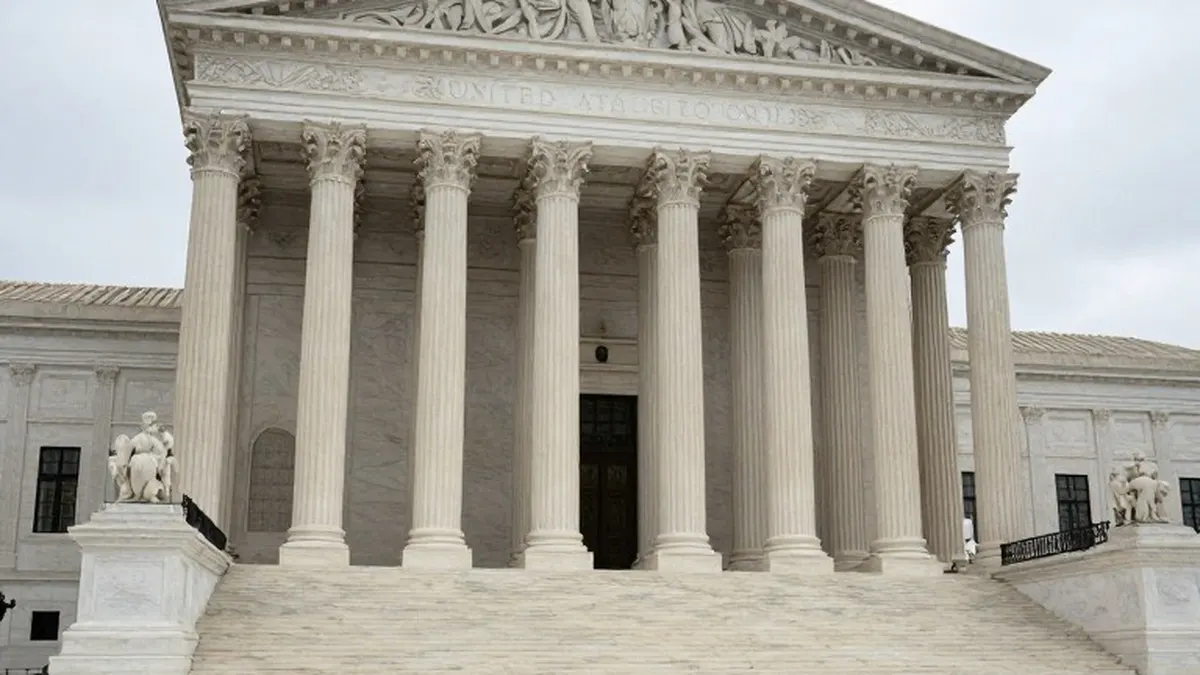
The parents of five first-graders and relatives of an educator killed in the 2012 attack submitted the friend-of-the-court brief in cases challenging laws in Connecticut and the Chicago area. The justices are scheduled to hear arguments in both cases on Dec. 2. More than 40 other individuals and organizations also submitted briefs Wednesday, with most supporting the restrictions.
The Connecticut law was enacted in 2013 after the massacre in Newtown. Adam Lanza, 20, fired his way into the locked school and discharged more than 150 rounds in roughly four minutes using a Bushmaster AR-15-style rifle and high-capacity magazines. Twenty first-graders and six educators were killed. The relatives’ brief describes the attack as evidence of the firearm’s extreme lethality and says their goal is to spare other families similar losses.
The filing included an account from Jennifer Hensel, whose 6-year-old daughter, Avielle Richman, was shot multiple times in the face. Hensel said authorities warned that she would not recognize her daughter’s body. Supporting the weapons bans, she said: “A moral imperative is truly at hand.”
Sandy Hook Promise, a gun violence prevention organization founded by Newtown families, submitted a separate brief describing the injuries suffered by 6-year-old Dylan Hockley. He was shot five times, and his mother was told not to touch his body as he lay in his coffin. Nicole Hockley, Dylan’s mother and a co-founder of the organization, urged the justices in a statement to give children’s safety and the consequences for communities serious consideration.
Those challenging the laws argue that banning semiautomatic rifles violates the Second Amendment because millions of Americans legally own them. Supporters of the restrictions contend that the rifles were developed for military use, pose unacceptable dangers in civilian hands and should face regulation comparable to that applied to machine guns.
Konstadinos Moros, director of legal research and education for the Second Amendment Foundation, said preventing school shootings requires stronger school security rather than restrictions on a category of firearm. The foundation is a plaintiff in both challenges. In an email to The Associated Press, Moros argued that attackers exploit vulnerable targets and that security measures could help deter attacks and speed responses.
The Supreme Court announced in June that it would hear the appeals concerning Connecticut and Cook County, Illinois. Cook County first adopted its ban in 1993, and lower courts have upheld both measures. Similar restrictions exist in about a dozen states. A federal assault weapons ban expired in 2004, and Democrats have backed its renewal following mass shootings.
The cases follow the court’s landmark 2022 decision expanding Second Amendment protections, which prompted challenges to gun regulations nationwide. That ruling established that firearm laws must be firmly rooted in the country’s historical traditions.