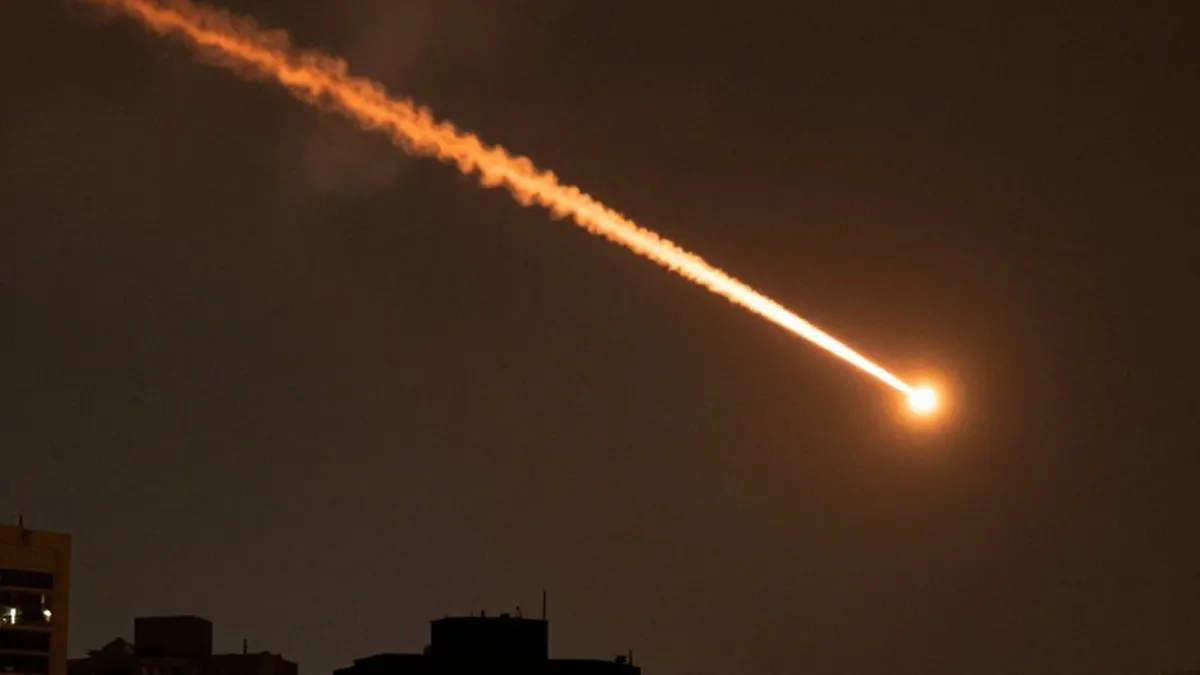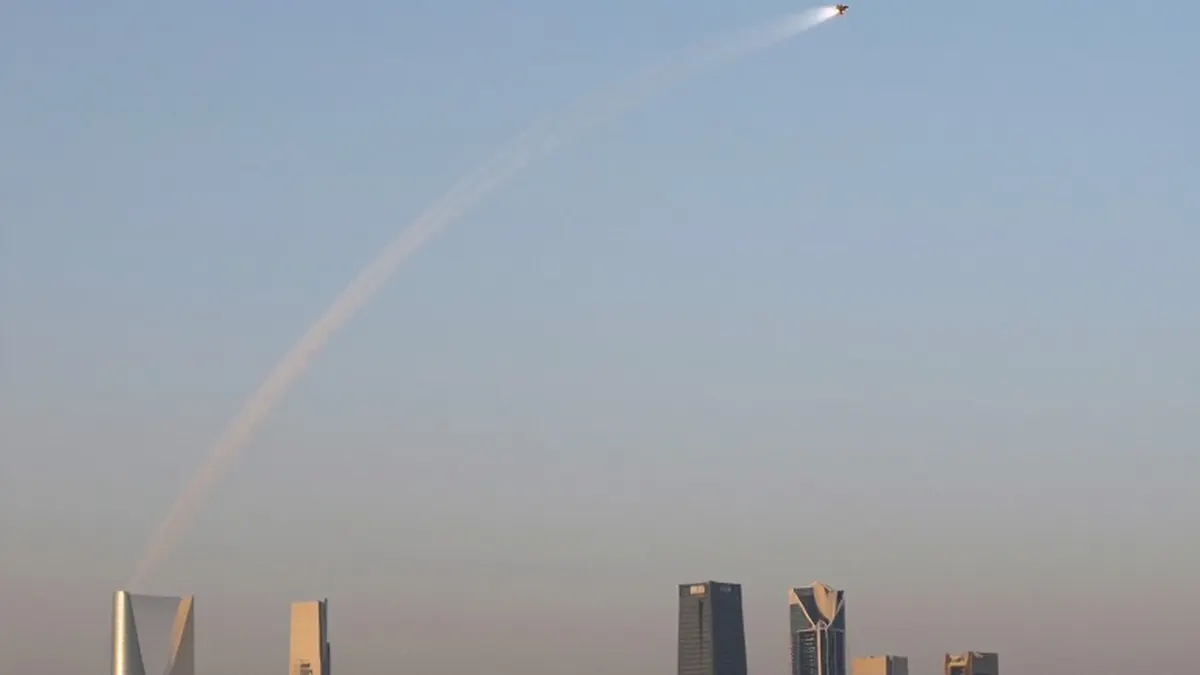
The Saudi-led coalition announced on Saturday that it successfully intercepted and destroyed three ballistic missiles launched by Yemen's Iran-aligned Houthis toward Riyadh. This defensive action marks the second significant missile attack on the Saudi capital within a matter of days. The previous incident occurred on Thursday, when a projectile struck the city's tallest skyscraper, causing damage to the structure.
A witness reported by Reuters described seeing a projectile streak across the sky in Riyadh shortly before a loud explosion was heard. The missile left a visible trail of smoke as it traveled through the atmosphere, a sight that underscored the proximity of the threat to the capital's heart.
The latest interception follows a broader pattern of cross-border strikes that intensified on Friday. During those operations, the coalition reported hitting the Red Sea port of Hodeidah. They also carried out missions aimed at degrading Houthi missile and drone capabilities in Sanaa, the de facto capital of the Yemeni region controlled by the group.
In response to the coalition's offensive, the Houthis issued several threats and claimed new strikes. They warned that Saudi Red Sea ports would be targeted and advised airlines to avoid Saudi airspace. Additionally, the militant group claimed responsibility for attacks on a power station and a port located in southern Saudi Arabia.
These developments indicate a worsening of the conflict, which has already caused a severe humanitarian crisis in Yemen and significant disruption for Saudi Arabia. The escalation is occurring in parallel with the US-led war against Iran, adding another layer of complexity to the regional security landscape.
The previous day's attack had targeted the Public Investment Fund tower, which serves as the headquarters for Saudi Arabia's sovereign wealth fund. As the tallest skyscraper in Riyadh, the building is a prominent landmark, and the damage it sustained highlighted the reach of the Houthi arsenal.
Saudi Arabia has been a close ally of the United States and has supported Yemen's internationally recognized government for over a decade. While the war reached a stalemate in 2022, fighting reignited in July of this year, leading to the current surge in hostilities.
The Houthis currently control Yemen's Red Sea coast. Their advances have forced the Saudi-backed forces, who are aligned with the internationally recognized government, to retreat. These forces are now focused on defending their temporary capital located in the southern port city of Aden.