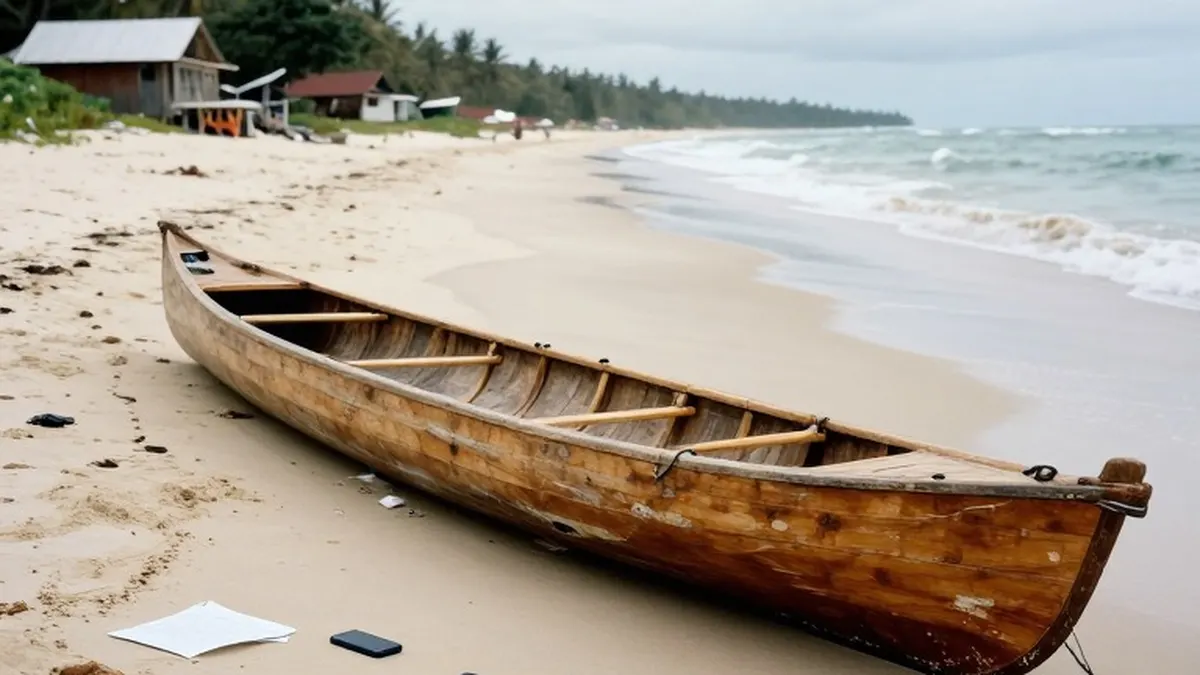
Search operations are ongoing in Senegal following the capsizing of a boat that was reportedly carrying around 100 migrants. The incident occurred off the coast of the country, with the badly damaged vessel eventually washing ashore near the village of Yenne, located south of Dakar. Personal belongings were discovered on the wreckage, confirming the presence of numerous passengers.
Early reports indicated that one person had died in the accident. However, local media outlets have since reported that at least four bodies have been recovered. Dozens of individuals remain missing as rescue teams continue their efforts. Search activities took place throughout Wednesday and were scheduled to resume on Thursday.
The tragedy strikes less than two weeks after another shipwreck off the coast of the north-western town of Thieppe. That previous disaster resulted in the deaths of at least 39 people, marking it as one of the deadliest migration incidents in Senegal's recent history.
Oumar Sow, a representative of the village chief, stated that the latest incident happened around 02:00 local time, which is also 02:00 GMT. Speaking to the AFP news agency, Sow described the scene, noting that cries could be heard coming from the pirogue, and were audible even from the beach.
A survivor who was questioned by police told investigators that there were approximately 100 people on board at the time of the capsizing. Among the passengers were five women, according to AFP. Police officers recovered various items from the wreckage, including identity documents, several mobile phones, and other personal effects. A school enrolment document was also found among the debris.
During a cabinet meeting held on Wednesday, President Diomaye Faye expressed concern over a renewed increase in irregular departures by migrants attempting to reach Europe. In response, he instructed the interior ministry to prepare a report. This report should examine the factors driving these dangerous journeys and propose measures to address the growing problem.
Following the tragedy in Thieppe last month, President Faye had urged Senegalese citizens not to risk their lives by attempting the perilous sea crossings. He highlighted the dangers associated with the routes migrants are currently taking to escape their home country.
In recent years, many thousands of people from West Africa have died or gone missing while trying to flee conflict, authoritarian rule, or poverty. The United Nations migration agency, IOM, reported last month that it had recorded at least 454 deaths and disappearances off the West African coast this year alone. The agency warned that these figures are likely an underestimate, as many boats disappear without leaving any survivors or a trace.
As it has become more difficult to reach Europe through North Africa due to tighter controls and increased cooperation with European countries, migrants are increasingly targeting Spain's Canary Islands. They often travel in wooden boats known as pirogues. These vessels are frequently overloaded and are not well suited for such long voyages across the Atlantic Ocean.
According to the UN, most migrants arriving in the Canary Islands this year are from Senegal. The IOM notes that they are driven to leave home by limited employment opportunities, family pressures, and established migration networks. On 7 November, El Hierro, one of the Canary Islands, declared a state of emergency following a surge in arrivals. The island reported that more than 3,300 people had reached its shores in about 30 boats since the beginning of the month, a number that amounts to almost a third of the island's population.