Signal, the privacy-focused messaging application, has implemented new measures to limit the ability of artificial intelligence agents to access information on users' screens. The company cited significant concerns regarding both privacy and security as the primary drivers for these changes. This move comes as AI assistants become increasingly integrated into mobile operating systems, raising questions about how much data these tools can collect.
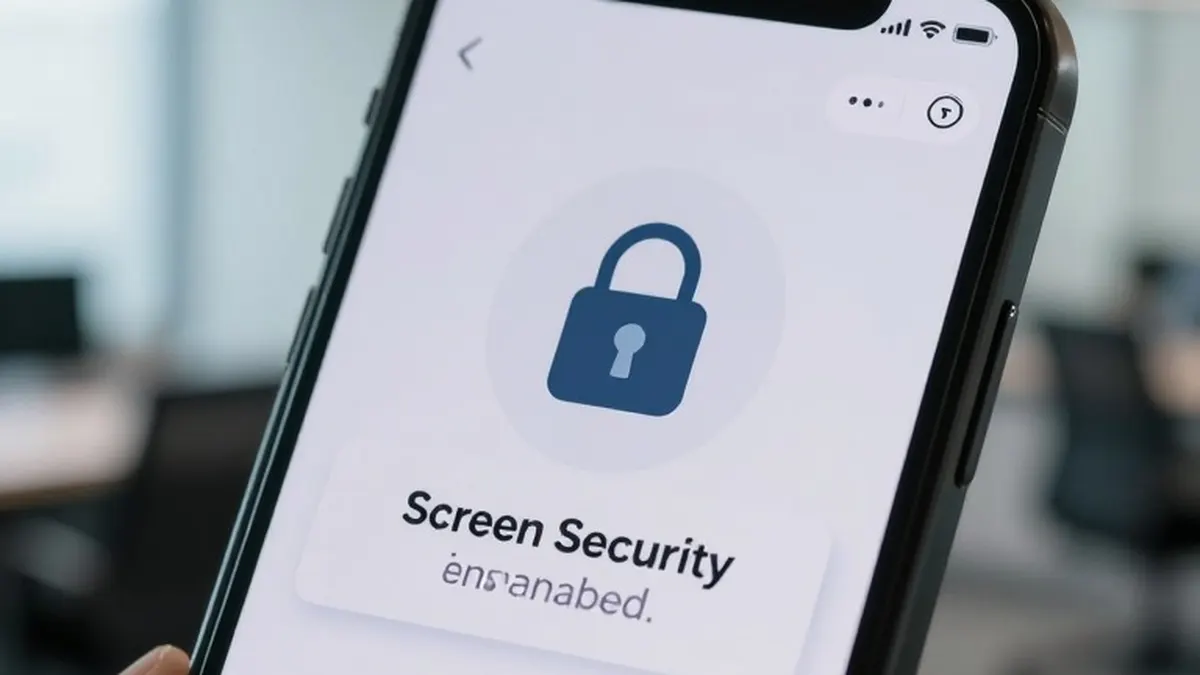
According to the company, AI agents built into systems like Google's Gemini and Apple's Siri can scan users' screens. This capability allows these agents to potentially capture and store Signal data outside the application's direct control. To mitigate this risk, Signal will now block screenshots in its iOS version. On Android devices, the app will enable screen security features whenever it detects an AI assistant attempting to read the displayed content.
Meredith Whittaker, president of the Signal Foundation, emphasized the urgency of the issue in a blog post published on Friday. She stated that it is a serious problem that Signal and other application developers lack robust tools to stop AI agents from undermining application-level privacy. This is not the first time Signal has acted against such technologies, as it introduced similar restrictions against Microsoft's Recall AI on Windows 11 last year.
Signal's latest strategy is part of a broader industry trend. Major corporations, including United Airlines, JPMorgan Chase, and Charles Schwab, have also begun to limit or block AI agents. These organizations cite security vulnerabilities and the need for better customer protection as their main reasons for these restrictions.
Despite the new protections, Whittaker noted that the measures do not address every possible method an agent might use to access data. For instance, agents could still retrieve content that is already stored on a user's device. Signal also issued warnings about third-party agents, such as Meta's Muse, which might gain access to private app content through permissions granted during the initial setup process.
Tianyi Jiang, CEO of data management firm AvePoint, highlighted the inherent challenges in this area. He argued that application-level protections will always have gaps. Therefore, data accessible to an agent must be properly classified, permissioned, and recoverable before the agent is introduced to the system. AvePoint's State of AI 2026 report supports this view, finding that 88.4% of surveyed organizations experienced at least one AI-agent-related security breach in the previous year. The survey included 750 IT leaders globally.
Whittaker continued to call on major consumer operating system providers, including Apple, Google, and Microsoft, to provide simple technical tools and accurate documentation. These resources would allow developers like Signal to effectively prevent AI agents from accessing sensitive application data.
The banking sector is also taking a cautious approach. JPMorgan Chase CEO Jamie Dimon stated in October that outside agents were too risky for the bank and its clients. Similarly, Morgan Stanley has blocked third-party agents from its platforms. Charles Schwab CEO Richard Wurster said the brokerage blocks unauthorized agents to protect both its clients and the firm itself. Singapore's OCBC Bank has also said it will not allow third-party agents to autonomously transfer money, warning customers to exercise caution.
In the travel industry, United Airlines announced on November 11 that it would restrict unauthorized agents from booking or managing tickets. The airline cited risks such as the exposure of customer information, unintended purchases, and violations of aviation rules. Mick Maleishko, an AI advocate at identity verification platform Sumsub, explained that agents require email, account, and payment details to perform tasks like booking flights. This level of access creates a risk of account hijacking because actions taken by the agent may appear authorized to retailers or banks.
Not all companies are taking the same approach. Singapore Airlines is an early partner of Meta's Muse, allowing users to explore travel and ticketing options through the agent. Yat Siu, executive chairman and co-founder of Animoca Brands, suggested that the industry is treating agent risk as a one-size-fits-all issue. He argued that security measures should match the actual task, noting that the risk is much higher for agents moving significant sums of money or accessing sensitive personal data compared to those making restaurant reservations. He concluded that agents require tiered safeguards, much like internet applications have done in the past.