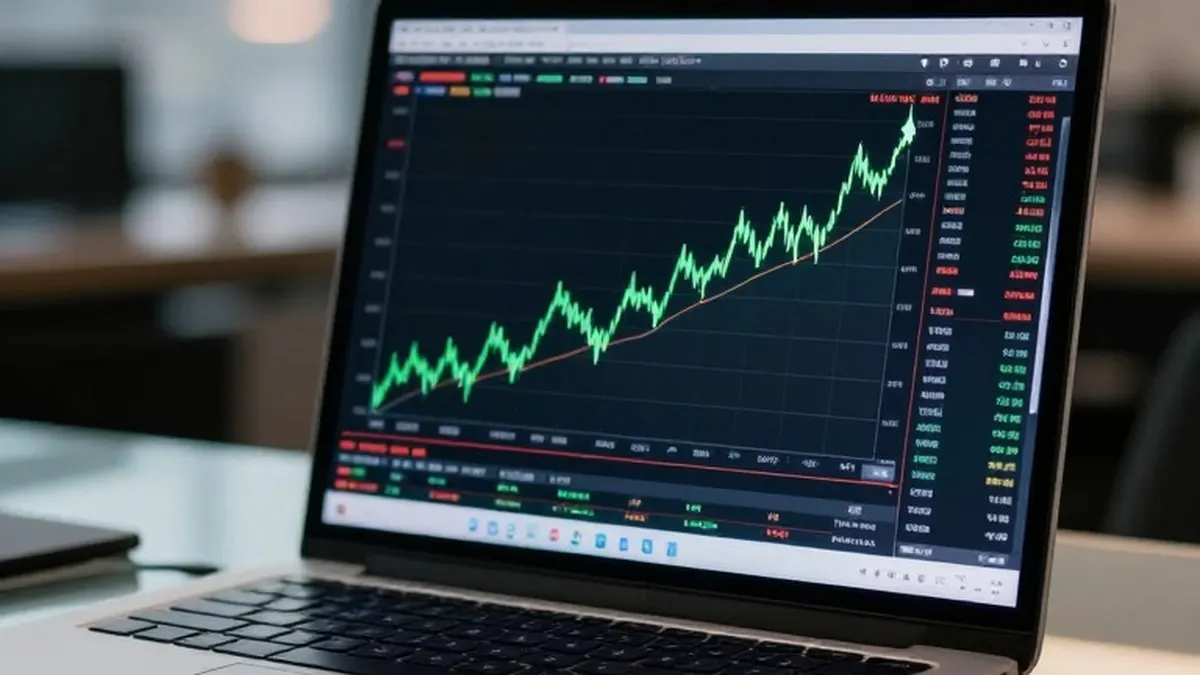
Jensen Huang has returned to his role as chief executive officer of Nvidia, a move that came as a surprise to many observers. On Monday, the company's board of directors voted unanimously to reinstate Huang. This decision marked a dramatic shift in strategy, occurring less than a week after board Chairman Harvey Jones stated that directors did not plan to bring Huang back. The reversal was met with immediate enthusiasm from the market, as Nvidia shares climbed as much as 36 percent during the trading session before closing 31 percent higher.
The stock rally helped lift the broader market. The Nasdaq Composite gained 6.5 percent, while the S&P 500 rose 4.7 percent. Both indices posted their strongest sessions since April 2025. The surge followed a period of uncertainty where Nvidia shares had fallen to $125.53 by Friday, despite the company reporting strong third-quarter results. A petition urging Huang's return had gathered more than 200,000 signatures, according to its organizers, adding to the pressure on the board.
The board indicated that its decision was informed by input from senior U.S. government officials. While the investigation into Huang's conduct will continue, the administration's involvement has raised questions about the extent of its influence. President Donald Trump said he spoke with board members and that his team provided assurances based on available information. However, the board has not publicly detailed the specific nature of the advice it received from the White House.
Congressional leaders are already preparing to examine the situation closely. Senator Jack Reed, a member of the Senate Banking Committee, asked Treasury Secretary Scott Bessent and Commerce Secretary Howard Lutnick to appear before the committee. Reed cited reports that intelligence officials, including then-National Security Adviser Marco Rubio, briefed Trump before he supported Huang's return. Representative Gabe Amo, vice ranking member of the House Foreign Affairs Committee, argued that the reinstatement broadens the scope of congressional inquiry. He stated that lawmakers should examine administration officials involved in decisions affecting Nvidia and chip sales to China.
National security concerns remain a central focus for legislators. Lawmakers are seeking answers regarding the alleged smuggling of Nvidia products to China and the potential diversion of those chips for military use. The Senate Banking Committee has scheduled Huang to testify on U.S. export controls on December 3. Additionally, House lawmakers have confirmed closed-door interviews with Huang on December 1 and Nvidia General Counsel Tim Teter on December 2. Several representatives noted that the brief internal investigation does not erase the national security questions that must be addressed.
Nvidia has promised to implement new safeguards, including the hiring of a chief compliance officer and the establishment of a committee to oversee national security and export controls. Analysts are watching to see if these measures will carry meaningful authority. Gil Luria, head of technology research at D.A. Davidson, suggested that Nvidia needs a clearer succession plan. He argued that the company has a limited window to prepare for a future where a new president may be less supportive of Huang, given that Trump's term ends in two years.
From a financial perspective, analysts note that part of the recent rally reflects the recovery of earlier losses rather than new growth expectations. Bernstein restored its Outperform rating with a $200 price target, while UBS maintained its $220 target. Josh Gilbert, an analyst at eToro, pointed to Nvidia's roughly 75 percent revenue-growth forecast for the next financial year as evidence of strong demand. He added that Huang's return helps ease concerns about the longer-term outlook, as he plays a key role in securing multi-year orders from major customers.
Despite the positive sentiment, some analysts remain cautious about the sustainability of artificial intelligence spending. Stacy Rasgon of Bernstein noted that worries about AI investment were not solely caused by Huang's departure. UBS highlighted Nvidia's approximately $390 billion in supply commitments and the need to maintain demand across its ecosystem. The market will now closely monitor whether Nvidia can continue to deliver results consistent with its recent performance history.