SK hynix has decided against pursuing an initial public offering of Solidigm, its U.S.-based enterprise SSD subsidiary, saying that unfavorable stock market conditions and the recent trend in semiconductor share prices made a listing unattractive. The announcement came early on Friday, October 23.
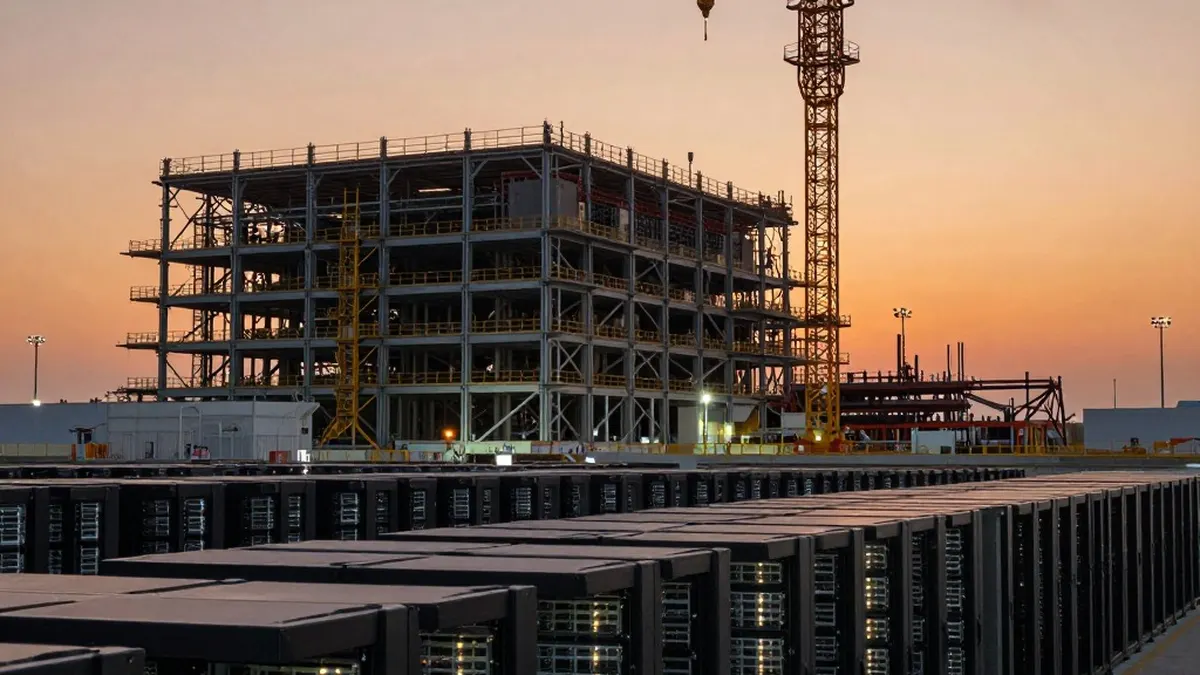
The company stressed that the decision does not change its plans for the unit's growth. SK hynix confirmed that it intends to build a new fab for Solidigm in the United States to meet rising demand for enterprise SSDs. It has not yet said how large the facility will be, how much it will cost, or when construction might take place.
Solidigm focuses on high-capacity data center SSDs built on floating gate 3D QLC NAND memory. As AI infrastructure rollouts speed up, demand for high-capacity storage is climbing, while Solidigm's current manufacturing capacity is barely enough to cover what it expects to need. A new American plant could also broaden SK hynix's manufacturing presence in the U.S., which carries weight amid the current push toward domestic production.
To pay for the expansion, SK hynix had weighed several routes, including direct investment, a funding round ahead of an IPO, and a full listing of Solidigm. An offering would have let the company bring in outside capital without adding debt. It could also have highlighted what SK hynix regards as the true value of the subsidiary, which it believes is not properly reflected in its own market capitalization. Proceeds might additionally have gone toward dividends, share buybacks and share cancellations.
However, SK hynix said greater market volatility and an ongoing correction in chip stocks had reduced the appeal of an IPO. In its view, present conditions would stop Solidigm from earning a valuation that fairly reflects its growth outlook. It has therefore ended its review of both a pre-IPO financing round and a listing, although it will keep looking at other ways to fund the project.
The reversal raises questions, since enterprise SSD demand is at a record and expected to rise further over the next couple of years, and a modern 3D NAND fab can cost tens of billions of dollars. Outside funding could have eased the strain on SK hynix's balance sheet and left capital free for projects elsewhere.
One possible explanation is Solidigm's strong profitability. Micron's enterprise storage division recently reported a non-GAAP gross margin of 90%, and Solidigm, which together with its parent holds 21.1% of the enterprise SSD market, may earn even more by selling exclusive products. If such margins hold for the next two or three years, the unit could greatly lift SK hynix's consolidated profits and generate substantial cash for future investment.
In that case, SK hynix might be able to fund the U.S. expansion through a mix of internal cash and debt without giving up any ownership. Paying for the whole project from cash alone could be possible, though it appears less likely given the huge capital demands of advanced chip plants. Either way, the report notes, it is understandable that SK hynix would rather keep full ownership of a highly profitable subsidiary than sell a stake at a valuation it considers too low.