South Korean authorities are implementing stricter security protocols for the upcoming national university entrance exam following a significant cheating scandal. Prime Minister Han Seong-sook announced on Tuesday that officials will deploy a larger number of inspectors than originally planned to monitor candidates and ensure fairness during the high-stakes assessment.
The decision to increase oversight came after a man who recently achieved the top score in the national exam for tax accountants admitted to using advanced technology to cheat. On Sunday, the candidate confessed to photographing exam questions and sending the images to an artificial intelligence tool, which then transmitted answers to his smartphone. This admission has triggered a national debate regarding the integrity of the country's examination systems.
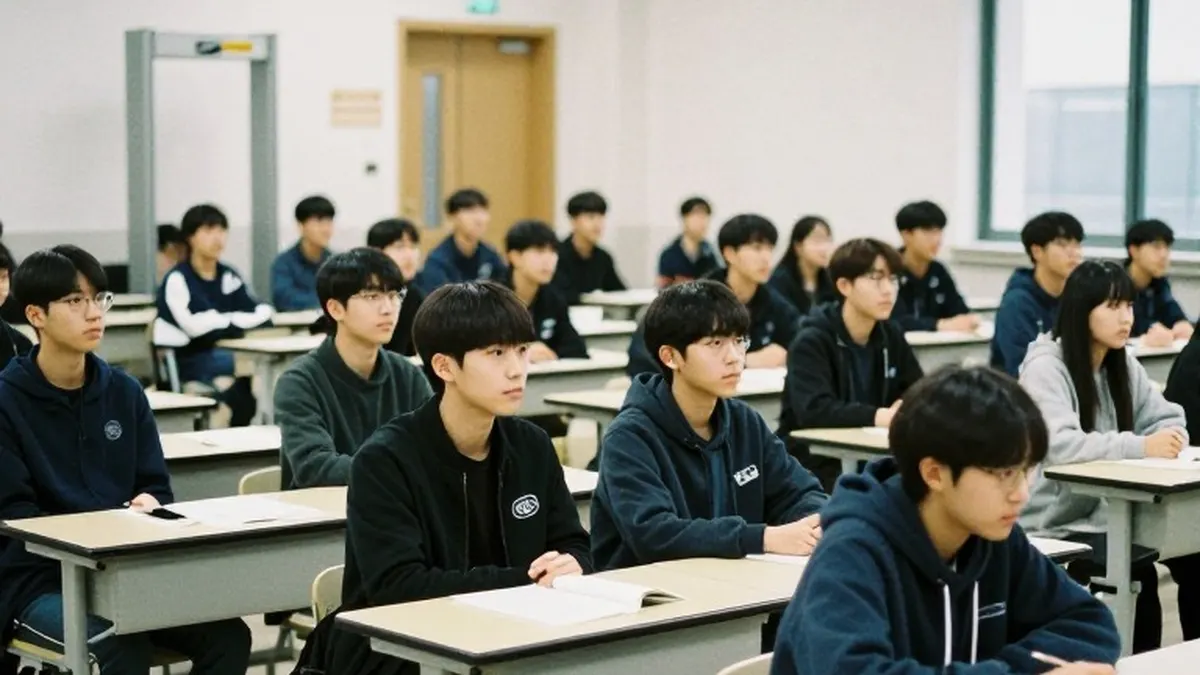
To prevent similar incidents, the government will require exam takers to undergo detailed inspections. Authorities plan to place stickers on the buttons of candidates' clothing to conceal any miniature cameras that might be hidden inside. Additionally, officials will use metal detectors to scan for concealed devices and will closely inspect eyeglasses to verify that they are not smart glasses capable of recording or photographing material.
Prime Minister Han addressed the students directly during a news conference, acknowledging the intensity of the new measures. She stated that the goal is not to burden the candidates but to provide a minimum level of protection that guarantees a fair competitive environment. The government aims to restore public confidence in a test that is widely viewed as a critical determinant of social mobility and career paths in South Korea.
The Suneung, as the exam is locally known, carries immense cultural weight. The pressure to succeed is so profound that air traffic in the country often pauses for several minutes during sections that require active listening. Critics have long argued that this intense focus on performance contributes to negative impacts on the mental health of many teenagers in the region.
President Lee Jae Myung also weighed in on the matter, posting on the social media platform X to emphasize the seriousness of the situation. He described cheating with advanced equipment as equivalent to stealing the hard work of other students. He urged any candidates currently considering dishonest methods to abandon the idea before the exam begins.
Further logistical changes include a requirement for participants to leave bags and personal belongings in the corridors outside the examination rooms. This measure is designed to minimize the number of items brought into the testing area and reduce opportunities for concealment.
The government is also seeking cooperation from technology companies to investigate potential past instances of cheating. Officials hope to determine if there is evidence that exam questions were previously captured and sent to generative AI applications during test periods.
To reinforce the crackdown, nearly 8,400 additional exam inspectors are scheduled to be deployed at testing sites across the nation. These extra personnel will help manage the increased scrutiny and ensure that all security protocols are strictly followed during the exam period.
Finally, the penalty for those caught cheating is being significantly increased. The ban on retaking the exam for individuals found guilty of dishonesty will be extended from one year to ten years. This change underscores the government's commitment to maintaining the credibility of the national assessment system.