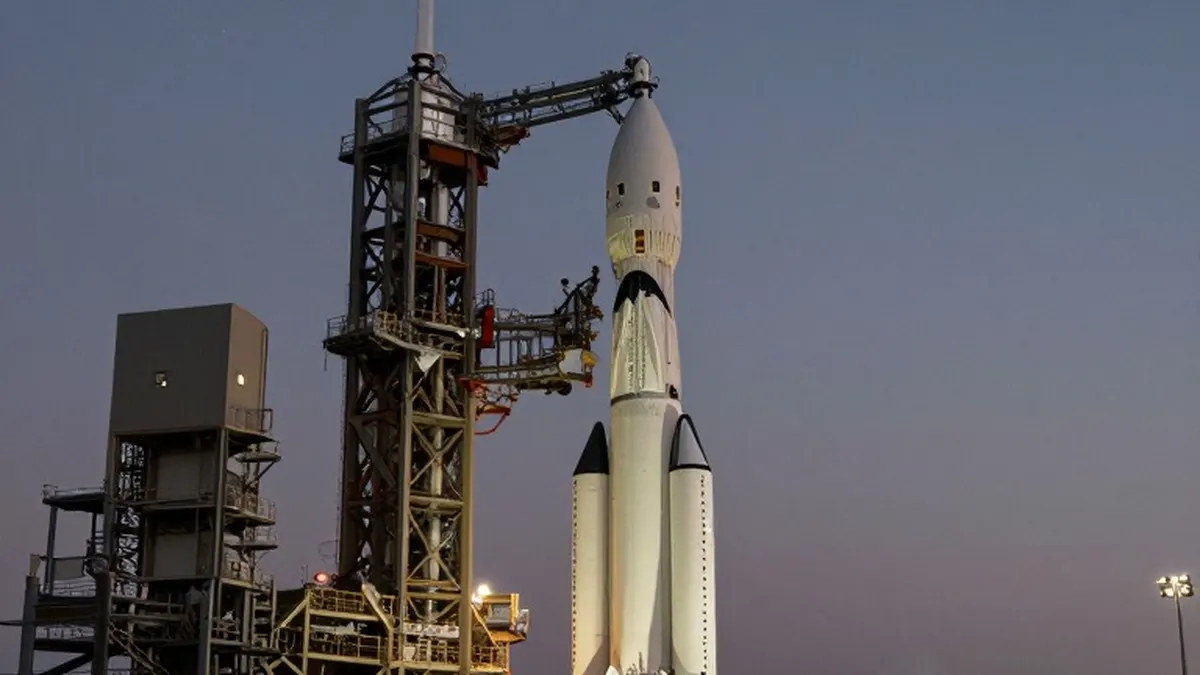
SpaceX demonstrated its continued dominance in the commercial launch sector this weekend, achieving a significant milestone despite a minor setback during the mission. The company successfully launched its Starship rocket to orbit on Friday, marking the second time the vehicle has reached space. During this flight, SpaceX deployed 26 Starlink satellites into position, a key step in expanding its global internet network.
In a historic first, the company managed to capture the 407-foot-tall upper stage of the rocket. This achievement is a critical component of SpaceX’s goal to create a fully reusable launch vehicle. However, the mission was not without issues, as the Super Heavy booster failed to recover cleanly. The booster exploded and splashed down in the ocean, a deviation from previous successful landings.
Wall Street generally viewed the event as a positive outcome for the company. Analysts noted that the successful catch of the upper stage moves SpaceX closer to its long-term objectives. The company has attributed the booster mishap to a fuel shortfall, pending a full investigation. This explanation has helped mitigate concerns among investors who had been watching the mission closely.
Raymond James analyst Brian Gesuale described the Starship Flight 15 as one of the most consequential technological achievements in modern aerospace history. In a client note, he characterized the event as a major de-risking moment for the stock. He further described the booster issue as manageable, suggesting it would not significantly derail the program’s trajectory.
Evercore ISI analyst Kutgun Maral emphasized that the mission serves as a reminder that SpaceX remains fundamentally a rocket company. This perspective is relevant as investors continue to debate the firm’s expansion into telecommunications and its emerging role as a provider of artificial intelligence computing power. The ability to make Starship fully reusable is expected to lower costs and increase the frequency of launches.
Mizuho’s Brett Linzey also labeled the weekend’s activities as a clear positive for SpaceX shares. The firm’s long-term goals, including the operation of orbital data centers, are heavily dependent on the success of the Starship platform. The ability to launch more frequently and cheaply is seen as essential for realizing these ambitious projects.
Despite the operational success, SpaceX’s stock price fell by more than one percent on Monday. This decline occurred within the context of a broader selloff in the technology sector, which weighed on many tech stocks regardless of individual company news.
The performance of SpaceX stands in contrast to recent events involving its competitor, United Launch Alliance. The joint venture between Boeing and Lockheed Martin had to delay a planned mission for Amazon.com twice last week before finally launching its Vulcan rocket on Sunday. The flight encountered an anomaly ten minutes after liftoff, preventing the delivery of dozens of satellites to orbit for Amazon’s internet service.
Preliminary reports suggest the issue with Vulcan’s first stage may involve engines built by Blue Origin, Jeff Bezos’s rocket company. Blue Origin is currently repairing a launch pad damaged in a May explosion caused by an oxygen-valve failure. The company has stated that a modified version of the BE-4 engine’s oxygen valve has completed qualification testing and is being rolled out across its fleet. An investigation into the May incident is expected to be completed by the end of November.
RBC analyst Ken Herbert noted that the failure of the Vulcan launch makes SpaceX’s continued execution and deployment of its V3 satellites appear incrementally positive. With Amazon relying on multiple providers for its satellite network, the reliability of SpaceX’s operations is becoming a more distinct advantage in the competitive space economy.