Spanish Prime Minister Pedro Sanchez expressed strong confidence that he will secure a left-wing majority in the snap general election scheduled for Sunday. This assertion comes despite recent public opinion polls that have consistently indicated a potential advantage for the right-wing opposition. On Friday, the Socialist leader told radio station SER that he could not imagine his side losing, a comment made as political parties finalized their campaigning efforts ahead of the vote.
The outcome of this election is being closely monitored by international observers. Europe is entering a significant electoral cycle over the next twelve months, a period that has the potential to reshape the political balance within the European Union. Because of a legal prohibition on publishing opinion surveys within five days of an election, Sanchez relied on internal data to support his claims. He stated that his party, the Spanish Socialist Workers' Party, or PSOE, was on track to win the most votes. This result would allow him to maintain power with the support of smaller leftist allies.
Sanchez argued that left-leaning voters are increasingly mobilizing to turn out in large numbers. He described this high turnout as a prerequisite for achieving a progressive majority. Such a majority would be essential for tackling major domestic issues, including the country's severe housing crisis. In contrast, nearly all polls released before the survey ban showed a clear lead for a potential coalition between the conservative People's Party and the far-right Vox party. These two groups aim to end the eight-year tenure of the current government.
The final days of campaigning featured a heated televised debate where Sanchez clashed with his main rivals. The discussion included Alberto Nunez Feijoo of the People's Party, Santiago Abascal of Vox, and Ada Colau, a left-wing politician associated with the Sumar alliance. Key topics included immigration, the housing shortage, and foreign policy. Sanchez criticized the Madrid regional government, which is controlled by the People's Party, for awarding an honorary medal to Israel while the conflict in Gaza continued.
During the debate, Sanchez described the Madrid government's decision as shameful and accused his opponents of lacking humanity. He also interrupted Feijoo when the conservative leader referred to actions in Gaza as a massacre, insisting that the term genocide was more accurate. Sanchez framed the election as a choice between regression and progressivism. He argued that the opposition parties wanted to replicate the political styles of US President Donald Trump and Argentinian President Javier Milei.
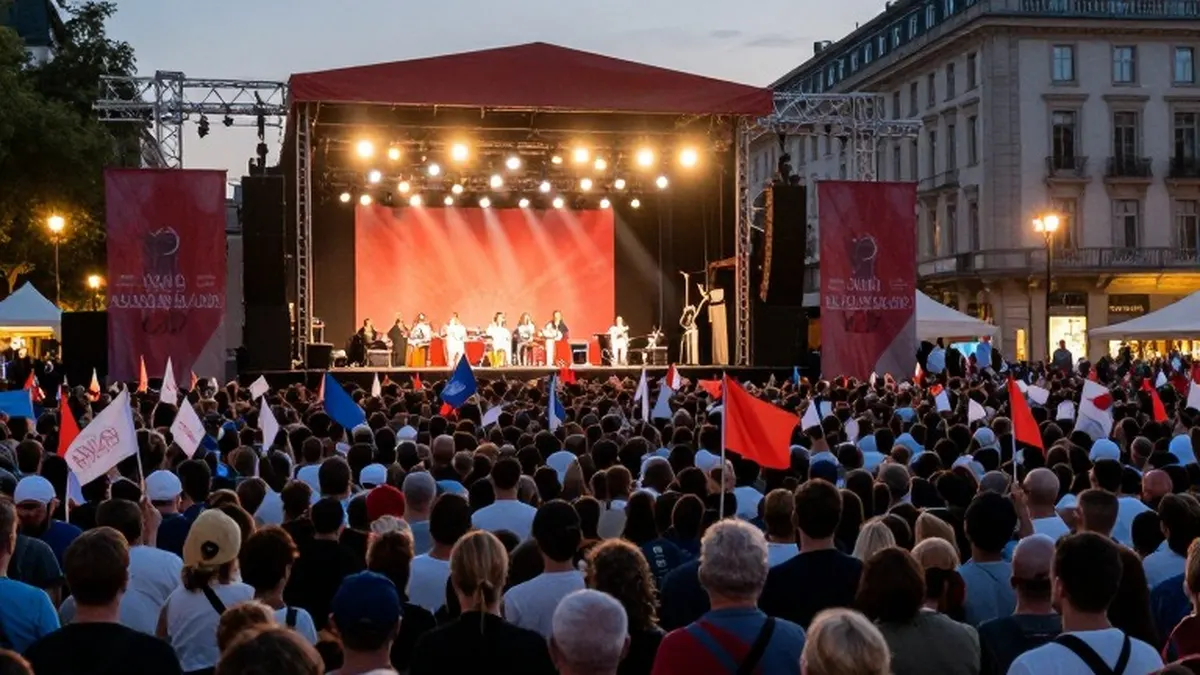
The prime minister has highlighted his record on the international stage, citing his defense of immigration and his critical stance toward Israel. He also pointed to the economic performance of Spain, the European Union's fourth-largest economy, under his leadership. However, his polarizing status at home has put his position at risk. On Friday, Sanchez held a final large rally in Madrid, aiming to mobilize left-wing voters in a late surge against what he called the regression of a possible right-wing coalition.
In a separate appearance in the western city of Plasencia, Sanchez told supporters that the coalition was unstoppable and destined to win. Wearing a red T-shirt with the slogan the power of women, he contrasted a Spain of prosperity and values against a reactionary coalition. He warned that the opposition would question women's rights, cut pensions, and reduce public services. In response, Feijoo told supporters in Barcelona that his party would succeed in forming a government this time, having failed to do so after winning the most seats in the 2023 election.
Feijoo dismissed Sanchez's strategy as a campaign of fear and planned to hold his own campaign finale in Seville, the capital of the Andalusia region. Meanwhile, Vox leader Abascal addressed reporters in Valencia, where he accused Sanchez's government of acting in a mafia-like style. He claimed the administration had betrayed, robbed, and lied to the Spanish people. Spaniards will observe a day of reflection on Saturday, the eve of the vote. On this day, all campaigning, rallies, and political advertising are banned, allowing voters time to weigh their choices before heading to the polls.