
New reports surfaced on November 23 suggesting that Russia is preparing to launch a nuclear-armed satellite, designated as Sputnik-S, into orbit within the coming weeks. The claims indicate that the alleged weapon has been stored in the Moscow region for several years. The Kremlin quickly denied these reports, a move that occurred against a backdrop of growing concern regarding the increasing militarization of space.
Tomas Nagy, a senior research fellow at the Slovakia-based security think tank GLOBSEC, noted to RFE/RL that while evidence of a space-capable Russian nuclear weapon remains inconsistent, the potential consequences are significant. He explained that such a device might not destroy every satellite in orbit but would likely cause indiscriminate damage. Western, Russian, Chinese, and other spacecraft could all suffer from the physical and radiative effects of an explosion in space.
The primary danger of a high-altitude nuclear detonation is the electromagnetic pulse, which travels at the speed of light and can disable electrical systems in its path. Following the initial blast, radiation in orbit can further degrade sensitive satellite components. Victoria Samson, chief director of space security at the Secure World Foundation, stated that many satellites within the line of sight of such a blast would be damaged or disabled. Since most satellites are not hardened against nuclear radiation, systems like Starlink, which provide critical internet access, could become unavailable in such a scenario.
Ukraine relies heavily on the American Starlink system for battlefield coordination during the ongoing conflict with Russia. On the ground, an electromagnetic pulse could devastate electrical infrastructure across large areas, leading to unpredictable results. The United States and the Soviet Union both conducted powerful nuclear tests in space during 1962, which resulted in unexpected damage and eventually led to bans on further testing.
One of the most notable American tests, codenamed Starfish Prime, took place on July 9, 1962, approximately 400 kilometers above the Pacific Ocean. The effects were felt more than 1,200 kilometers away in Hawaii, where streetlights failed, air raid sirens activated spontaneously, and hundreds of burglar alarms triggered throughout Honolulu. Several satellites in orbit, including the United Kingdom's first satellite, Ariel 1, were damaged or disabled by the explosion.
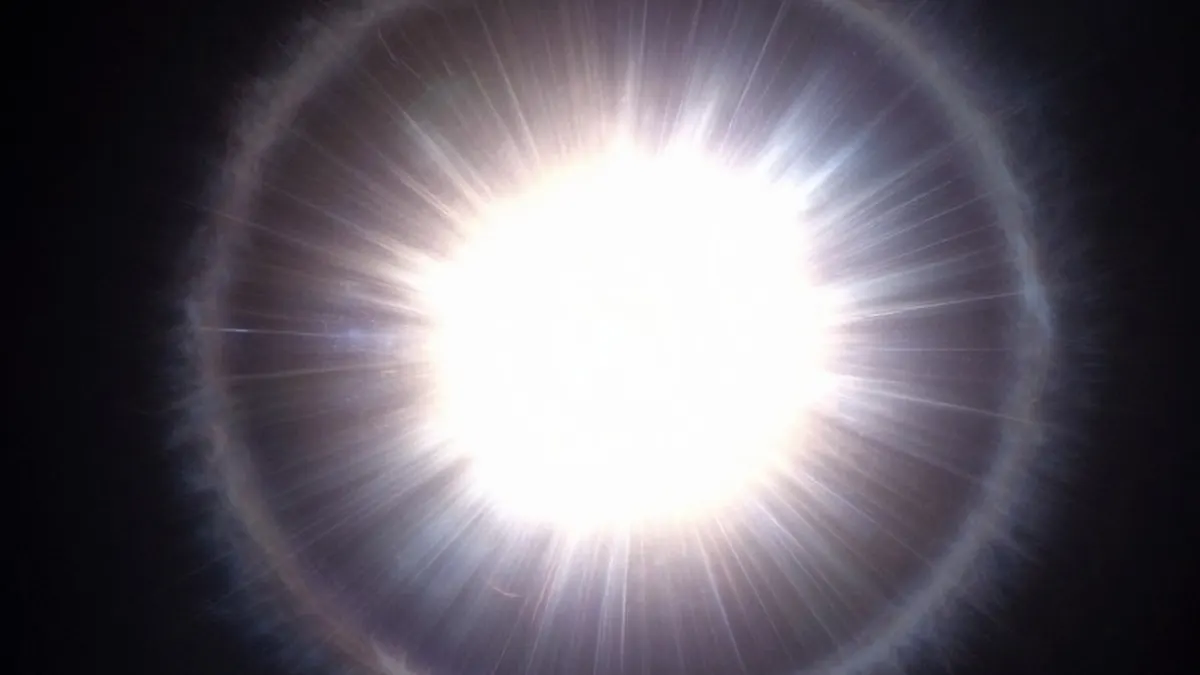
Months after the American test, Soviet scientists observed a similar phenomenon over Kazakhstan. The flash, described by one observer as a second sun, originated from a Soviet nuclear test designed to study the effects of high-altitude explosions on communications and missile defenses. The bomb was twenty times more powerful than the weapon that destroyed Hiroshima. While observers on the ground felt no shockwave and heard no sound, the electromagnetic pulse caused power lines to spark and burn out, and a fire broke out at a power station.
The electromagnetic blast also disabled a buried power cable running between two cities, which was located about one meter underground. Many of the specific impacts of these Soviet tests have never been fully disclosed. In 1963, the Partial Nuclear Test Ban treaty was ratified by the US, UK, and USSR, prohibiting nuclear detonations in space. A subsequent treaty later banned the placement of nuclear weapons in orbit.
Experts remain uncertain about how modern infrastructure, which is far more dependent on delicate electronics than in the 1960s, would withstand such an event today. Samson suggested that a repeat of the Starfish Prime test now would have an even greater impact on lower Earth orbit due to the higher number of satellites and their reliance on electronic components. A 2010 report on EMP damage to satellites noted significant uncertainties due to a lack of modern data.
At a recent summit in New York, American weapons manufacturer Palmer Luckey advocated for the resumption of nuclear testing to better understand the impact of electromagnetic pulses on modern infrastructure. He pointed to the archaic nature of the data collected during tests that ended decades ago. Luckey stated that the precise effects on phones, critical infrastructure, and military systems in the event of an EMP attack remain unknown.





