
Ras al-Ahmar, a small Bedouin community located east of Tubas in the northern West Bank, is experiencing a significant population decline due to the construction of an Israeli security barrier. According to Jordan Valley Activists, a group of Israeli supporters of the local Palestinian communities, only 25 families remain in the village. This represents a sharp drop from the approximately 60 families, or 200 residents, who lived there until recently. Local sources indicate that in the few homes still occupied, most residents have departed, leaving behind only adult men.
The displacement has accelerated over the past three months. Jamil Suleiman, who resided in the area for seven decades before moving to the nearby town of Atuf, described the deteriorating conditions. He noted that construction of a trench and a limited-access security road began in early March, followed by the closure of all roads in September. These closures made it difficult to transport vehicles, donkeys, school children, and livestock feed into the community.
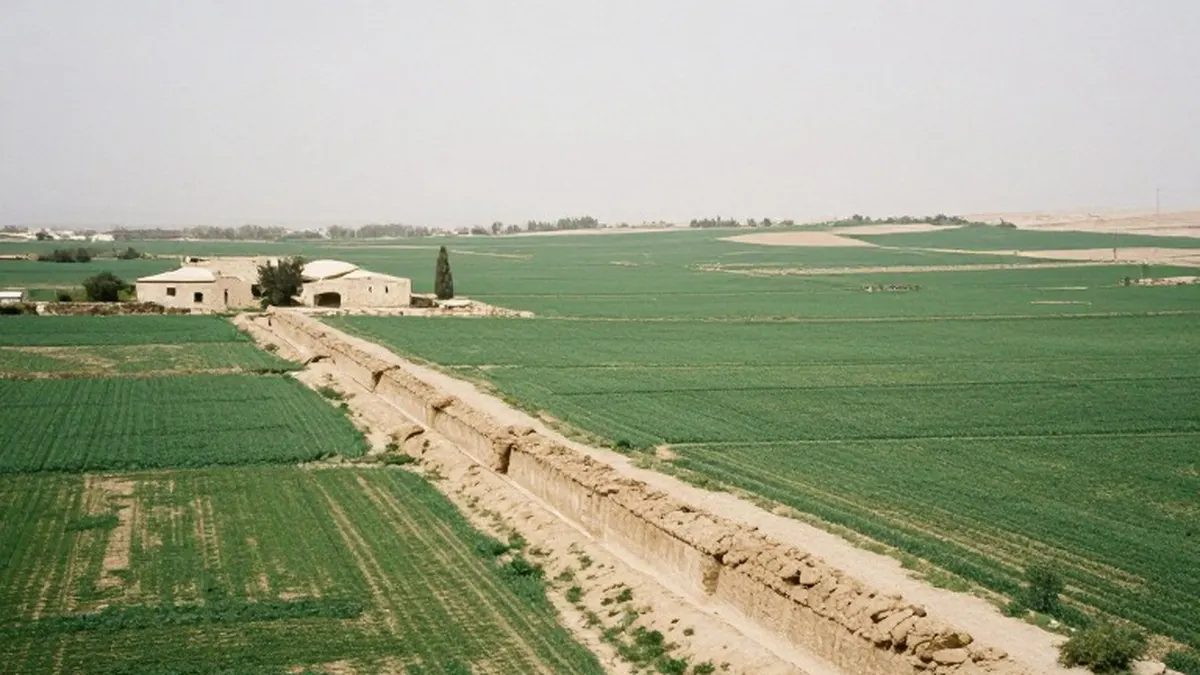
The Israel Defense Forces initiated the barrier project in July to establish a defensive line between the northern Jordan Valley and the interior of the West Bank. The structure is designed to prevent weapons smuggling and terrorist attacks. It includes a paved patrol road, natural barriers, and earth embankments. To build this infrastructure, the military issued orders to seize 1,160 dunams, or 287 acres, of privately owned land in the region.
Residents of Ras al-Ahmar hold formal registration for their land, a rare status in the West Bank. They sustain themselves through agriculture, greenhouse farming, and livestock herding. Water is supplied via pipes from neighboring communities or delivered by tankers, while electricity is generated by solar panels. Despite their ownership, the area was declared an Israeli firing zone in 1972, though the residents were not expelled at that time.
The situation intensified in September when the military installed yellow metal gates on roads connecting the village to towns like Tammun and Tubas. Activist Ilan Volkov reported that four of these gates were kept permanently closed, blocking vehicle access. Tubas, the closest city, is located 20 kilometers away. In mid-November, one gate began opening for 30 minutes daily, split between morning and afternoon, to allow water tankers to enter.
Abdullah Basharat, a resident who has remained in the village, stated that authorities permit the entry of water and livestock feed but restrict other goods. He noted that all children and young women have recently relocated to Tammun or Atuf to attend school. Basharat also highlighted ongoing tensions, mentioning that settlers have frequently entered the hamlet over the past year, damaging solar panels and animal housing equipment.
A petition challenging the barrier was filed in January, and the High Court has not yet issued a final ruling. In an interim decision in April, the court allowed construction to proceed on specific sections, noting that roads remained open to Palestinian vehicles and access to agricultural land was permitted. The military stated that work is being conducted according to court rulings and that residents can travel by vehicle during designated hours.
Legal representative Tawfiq Jabareen estimates that the barrier will cause $200 million in losses for local growers and could render up to 50 square kilometers of private land unworkable. Despite these projections, the military maintains that residents are allowed to maintain their daily lives, subject to security considerations, while water and feed deliveries continue to enter the area.





