St. Louis Mayor Tishaura Jones and the aldermen behind two rival proposals for spending $294 million in Rams settlement money have reached a tentative agreement on a single bill. The deal was announced Tuesday morning.
Joining the mayor at the announcement were Ward 7 Alderwoman Alisha Sonnier, Ward 13 Alderwoman Pamela Boyd, Board of Aldermen President Megan Green and Dustin Allison, interim CEO of Greater St. Louis Inc. The compromise merges Sonnier's Transform STL Act with Boyd's alternative, and the result will carry the Transform STL Act name under Board Bill 153.
The combined measure sets aside $40 million for citywide water infrastructure and another $40 million for streets and sidewalks. It directs $50 million to the city workforce, including a $30 million pilot to share child care costs with city workers, a $10 million pilot offering financial help for post-secondary training or education, and $10 million for new and existing employee training. Housing production and preservation would receive $35 million, and small business and nonprofit development would get $15 million.
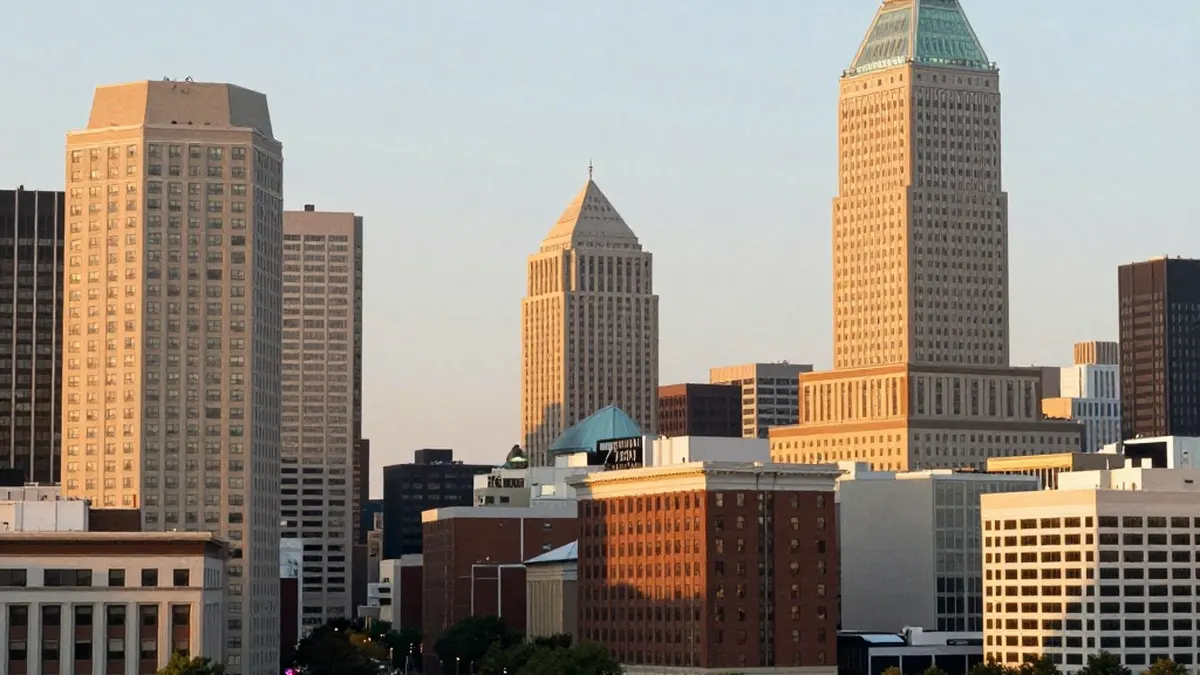
Two areas receive dedicated money. North St. Louis would get $40 million for streets and sidewalks, vacant property redevelopment, housing and small business support. Downtown would get $74 million, including $30 million for streets and sidewalks and $11 million for the Railway Exchange Building.
Jones called the revised bill "governing at its best." She said it reflects that every resident deserves to benefit, recognizes areas with greater need and those that can draw private investment, and puts more emphasis on the city workforce. She acknowledged the path had been bumpy, noting that the press conference introducing Boyd's original legislation surprised some board members and aides in the mayor's office. "This is part of that sausage making," Jones said.
Boyd said her original proposal was meant to ensure long-neglected parts of the city see real investment, and she credited Sonnier with extending an "olive branch." Sonnier said the sponsors have more in common than not. Green said the substitute bill carries the public's feedback into the legislation.
Green said the pot of money is about $17 million larger than earlier proposals indicated because of interest earned since the city's initial settlement payment was invested. Under the bill, the funds would be administered by existing city departments rather than new oversight boards, which she said are often hard to staff. The comptroller would set up the individual funds, and interest would accrue to each one, according to Casey Millburg, policy director for the mayor. Only the child care and youth post-secondary funds would be structured as endowments, with just the interest available for programming.
Citywide funds for housing, small business, nonprofits, water, streets and sidewalks could not be spent downtown, given the separate downtown allocation. Those funds would also require a 1:1 match of private money. Allison said Greater St. Louis Inc. investors are prepared to contribute up to $100 million in private funds to match the city's commitments. "We will not grow if we do not address depopulation in north St. Louis," he said. "We will not grow if we do not revitalize downtown. Period."
The board's Housing, Urban Development and Zoning Committee is scheduled to meet Thursday to consider the changes, and Green hopes it will vote the bill out of committee this week. Three full board meetings remain before the aldermen break for the spring election season, and Green said she can call additional sessions if needed. She said she remains optimistic the bill will pass before the break.