General Motors laid out a new technology roadmap at an event in New York City last week, tying together AI-driven vehicle development, advanced battery technology, powerful in-car computers and autonomous driving. Under what it calls an "intelligence-defined vehicle" approach, the automaker hopes to shorten a typical four- to five-year development cycle to just over two years.
The overhaul comes at a difficult time. Chinese EV makers are expanding aggressively around the world, and softer EV demand in the US has forced GM to recalibrate its electrification plans while it balances multibillion-dollar battery plant investments against ongoing software costs. If the new AI systems falter or schedules slip, GM could fall further behind software-first rivals such as Tesla.
In an interview with The Verge after the event, Sterling Anderson, GM's chief product officer, said the unifying theme is simple: "The car's getting smarter." He argued that faster development does not come at the expense of safety. Where GM once could afford a limited number of prototypes for crash tests that took six months, he said, "I kick off thousands of tests in the virtual world that give me feedback much quicker."
Anderson said GM uses transformer-based foundation models for generative design, trained on decades of in-house design files and analyses and co-trained with data from outside the company. Anything safety-critical runs on board the vehicle to avoid latency and dropouts. Features like the OnStar AI assistant are not safety-critical and currently make round trips to the cloud, though GM is considering distilling them into onboard models.
A common electrical system with centralized computing is a major enabler of faster software, Anderson said, because complexity is one of the biggest threats to software speed. Once the hardware rolls out across the portfolio, engineers will be able to work as if the company had just two models in production. Brands will still differ in aesthetics, features and interaction patterns, he said, while engineering remains a single organization and shares underlying components such as the T1-2 truck platform.
On autonomy, Anderson said he avoids the term "eyes off" because it draws what he called nonsensical distinctions between levels of automation. GM is designing its systems so that a driver falling asleep would not create a safety risk. Rather than the regionally specific, speed-limited approach used by robotaxis, personally owned vehicles will start with road-type specific settings and expand from there. He said the system will not hand control back in a dynamic, safety-critical moment, and that it is not Level 3. Instead, it will give a countdown, such as 10 minutes remaining, and if the driver does not take over, bring the vehicle to a safe stop off an off-ramp.
Asked about trust, given past FTC orders over GM's sale of customer data to third-party brokers, Anderson said privacy has to be designed in. He described end-to-end encryption, aggregate and anonymized data at the company level, simplified permission choices, and the ability for customers to revoke access, delete or port their data. He acknowledged that decisions by people who no longer work at GM still weigh on the company, and said the architecture is meant to prevent anyone internally from accessing raw user data.
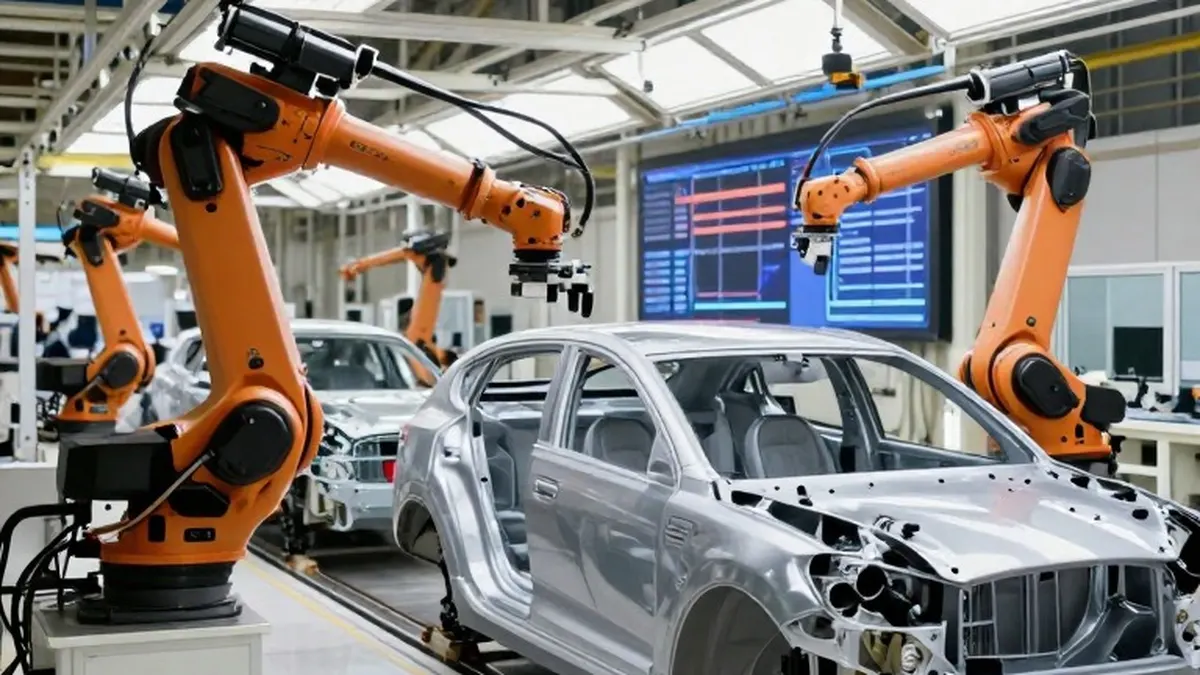
Anderson was also blunt about humanoid robots in factories, which companies such as Tesla and Rivian have promoted. He called the enthusiasm a kind of "religion," noting that the human form evolved to run from lions on the African savanna and that factories were no more built for human bodies than roads built for horses meant cars should have four legs. He said GM would rather start with unusual form factors, like an octopus-style arm hanging from a gantry that reaches into a moving vehicle line, and focus on AI that can operate specialized robots for specific tasks.