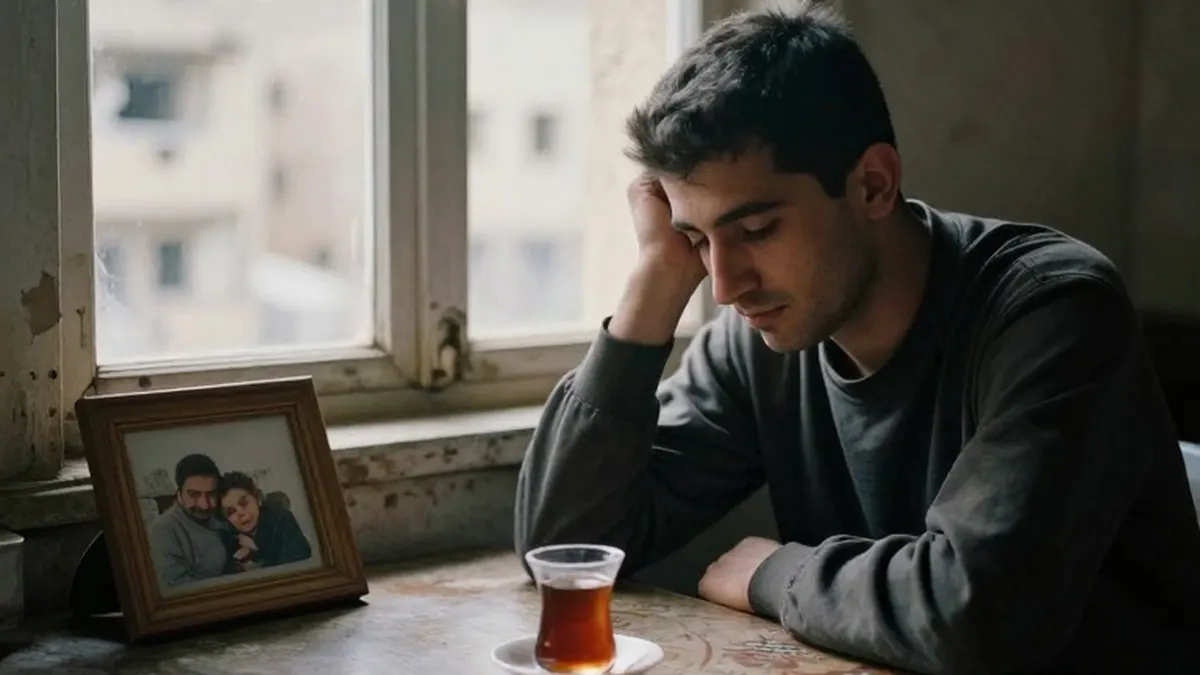
For nearly 15 years, Hussein al-Tawil and his family have waited for word about his brother, Ali Ahmad al-Tawil. The 29-year-old civilian from Jabal al-Zawiya in the Idlib countryside disappeared in Damascus in late 2011. According to Hussein, Ali was taken by militias loyal to former President Bashar al-Assad.
When Assad's government collapsed, the family hoped Ali might be found among released detainees or in newly accessible prison records. They found nothing, not even a death certificate or any official document explaining his fate. Meanwhile, Hussein sees figures who once backed Assad returning to public life, some of them seeking closeness to the new authorities.
"We had hoped for transitional justice that would hold criminals accountable, and for moral justice that would remove from public life those who supported Assad through the media, arts, politics, and sports," he told The Media Line. He fears that influence networks built under Assad could survive by shifting loyalty to the new leadership, and that without real institutional change the same practices could return.
Political activist and former opposition figure Jubair al-Sukkari shares some of that frustration. He criticized what he described as the appointment of Futah Saqr, whom he characterized as having a Baathist background and family ties to the former government, to a role involving historical memory and archives at the National Commission for Transitional Justice. The Media Line has not verified her position, her responsibilities or the background he described, and his statements are allegations rather than established findings. He also raised concerns about Fadi Saqr, once associated with the pro-Assad National Defense Forces, and called for investigations into those suspected of abuses.
Al-Sukkari nonetheless drew a line between support and guilt. "There is a difference between a supporter and a criminal," he said. Allegations alone, it should be noted, do not establish individual criminal responsibility, which requires evidence and legal proceedings.
Financial settlements with businessmen tied to Assad have become another flashpoint. President Ahmad al-Sharaa defended them at a September meeting with Syrian diaspora members in New York, saying authorities confiscated about 80 percent of businessman Mohammed Hamsho's assets and let him keep the portion deemed lawfully acquired. He said Hamsho's companies employ roughly 40,000 people, and that a settlement would not shield him from prosecution for other offenses.
Bishr al-Hawi, a member of the People's Assembly, said former political figures have not regained their positions, while some businessmen negotiated settlements and kept part of their wealth. He said they are less prominent than before and that Syria needs some of their resources. He also conceded that "the transitional justice file has not received the momentum we had hoped for," adding that the assembly has not yet received a draft transitional justice law from the National Commission for Transitional Justice.
Al-Moutassim al-Kilani, a researcher in international criminal law, said reintegration must follow clear legal standards. Criminal responsibility, he said, depends on specific conduct and evidence, not past political affiliation, and he rejected collective punishment. But he warned that settlements could bring de facto impunity if money or connections obstruct investigations. "Recovering the money is a duty, but it does not pay the price of torture, killing, or enforced disappearance," he said.
The commission has previously said settlements are not pardons and grant no immunity. Questions remain over how that will be enforced. The Media Line sought comment from the commission's chairman, who referred it to the media office. The office said it would respond later but gave no timeline, and no reply had arrived by publication.
For Hussein al-Tawil, the debate comes down to one missing person. The government he blames for Ali's disappearance has fallen, yet his family still has no answer, and he is left asking what political change means for those still waiting for the truth.