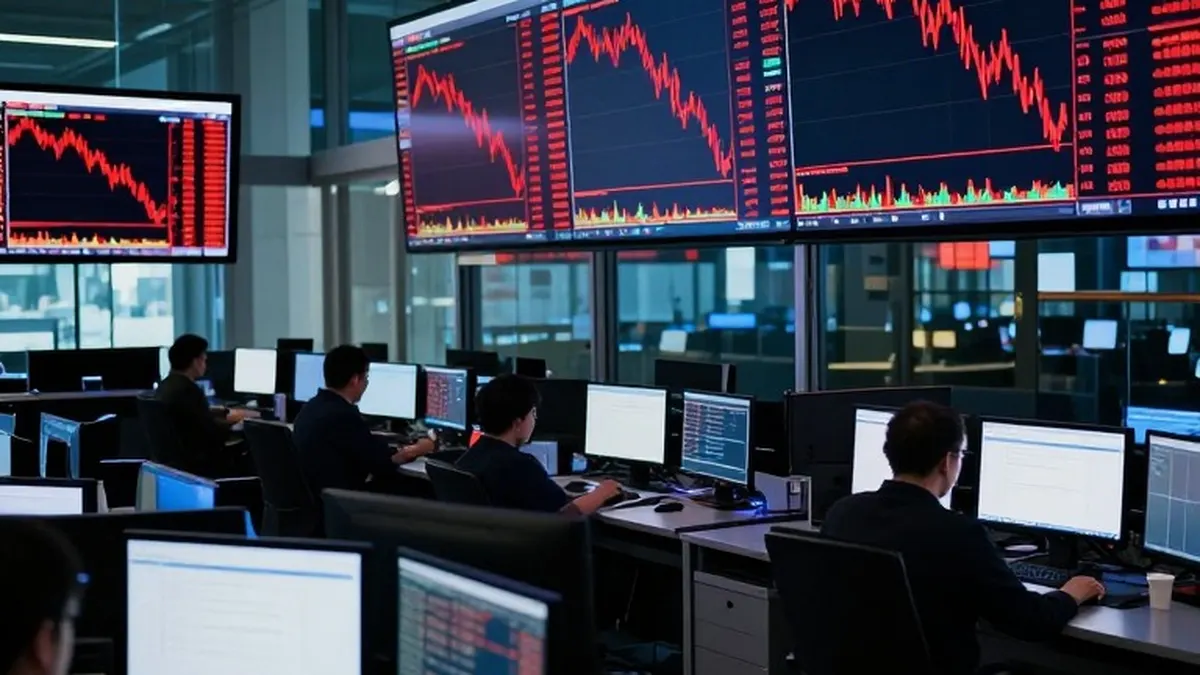
Technology stocks experienced a sharp decline on Friday, dragging broader market indices into negative territory across the globe. The sell-off occurred after AI company Anthropic failed to calm investor nerves despite a strong initial market debut. Although the firm saw a significant price spike on Thursday, the enthusiasm faded quickly, leaving many analysts questioning the sustainability of current valuations in the artificial intelligence sector.
Anthropic shares initially surged from an offering price of $83 to over $110 on Thursday. However, the momentum reversed on Friday as the stock price plunged back below $89 by the close of trading. This volatility occurred against a backdrop of a wider sell-off on Wall Street, where the tech-heavy Nasdaq index closed down more than five percent. The S&P 500, which includes major technology firms, also shed 3.7 percent, continuing a streak of losses for the index.
Market experts suggest that the recent performance offers a critical test of investor confidence. Dan Coatsworth, head of markets at AJ Bell, noted that the coming days will reveal whether investors believe the massive capital being injected into AI will yield attractive returns. Briefing.com analysts added that neither Anthropic’s public offering nor Nvidia’s recent strong earnings report has been enough to restore full confidence, with sellers continuing to target rebound attempts.
James Reilly of Capital Economics warned that the decline in tech stocks might have further to go. He identified the prospect of an AI bust in 2027 as his central forecast. Reilly clarified that this does not imply the technology itself is flawed or that demand will collapse, but rather that the revenue levels required to justify the scale of current investment are extremely demanding for companies to achieve.
Additional factors have contributed to trader anxiety. The US Commerce Department moved to close a loophole that previously allowed Chinese companies to access Nvidia’s powerful AI chips remotely. This regulatory shift has heightened concerns that a new Democratic-led Congress may impose further restrictions on the sector. These worries were compounded by news regarding Nvidia’s leadership, with CEO Jensen Huang resigning following revelations of extramarital affairs, including one with a woman accused of being a Chinese spy.
Nvidia shares reflected this mixed sentiment, slumping by 14.01 percent in New York on Friday. This drop occurred despite the chip giant reporting massive profits earlier in the week. The company has endured a period of losses, and the recent leadership change and regulatory pressures have weighed heavily on investor sentiment.
The impact of the tech sell-off was felt in Asia as well. Stock markets in Tokyo, Seoul, and Taipei, which are home to leading AI-linked firms, all tumbled between five and 6.2 percent during Friday’s trading session. The decline signaled that the concerns surrounding AI valuations are not limited to Western markets but are a global phenomenon.
In Europe, major stock markets also fell significantly by the close of trading. The video game sector was particularly hard hit, with shares in French developer Ubisoft dropping more than 20 percent. The decline followed the company’s announcement of a larger first-half loss than expected. This news arrived amidst widespread excitement for the upcoming release of Grand Theft Auto VI, which recorded $3.79 billion in opening day retail sales earlier in the week, highlighting the contrast between consumer hype and corporate financial realities.
The overall market reaction underscores a growing divergence between the rapid expansion of AI capabilities and the financial metrics required to support such growth. Investors appear to be reassessing their positions as they weigh the potential for future returns against the substantial risks of overvaluation and regulatory changes.