Tesla has put a timeline on when customers may be able to get their hands on the Cybercab. On the company's third-quarter 2026 earnings call on October 21, Vice President of Engineering Lars Moravy said Tesla is aiming to start delivering the purpose-built robotaxi to customers before the year ends.
"We're trying to get Cybercabs to customers by the end of this year, 2026," Moravy said. He noted that production is already running on the line at Gigafactory Texas, but that for now "all of those are currently going to our own internal Robotaxi fleet."
According to Moravy, Tesla expects to shift toward "mainly deliver fully designed autonomous vehicles to our customers" as its operations grow, with the Cybercab serving as the first of those vehicles. The first customer handovers are expected to be small in scale. Tesla plans to use that period to build experience with delivery logistics, ownership models, fleet management, and running autonomous vehicles that are outside its direct control.
CEO Elon Musk stressed that private sales will remain limited. He described the Cybercab mainly as a "transport-as-a-service" product, rather than a car for personal ownership in the vein of the Model 3, Model Y, or the upcoming Roadster. "The vast majority of the Cybercab stuff will be Tesla-owned and transport-as-a-service," Musk said.
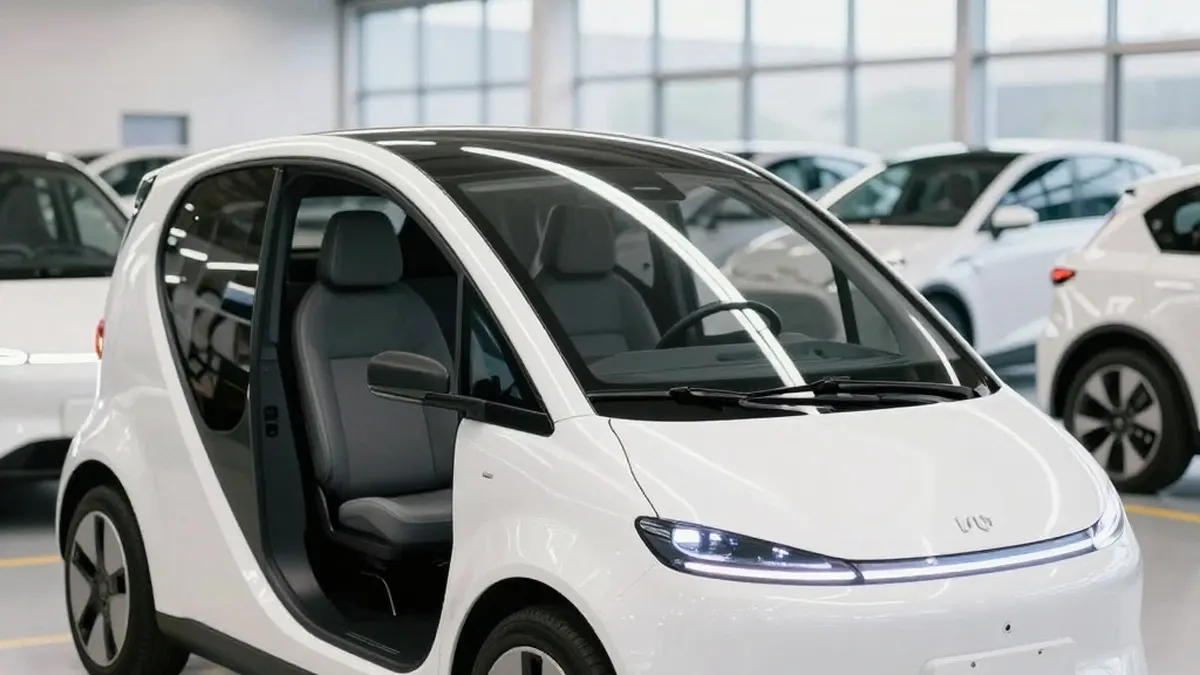
The Cybercab is a two-seat vehicle with no steering wheel and no pedals. It depends entirely on Tesla's Full Self-Driving suite and has been in production since February. Early units joined Tesla's Robotaxi service in early September, when the company opened rides to the public. Tesla has previously said it aims to sell the Cybercab for about $30,000.
The call also touched on the broader outlook for self-driving software in consumer vehicles. Ashok Elluswamy, Tesla's Head of AI, indicated that unsupervised Full Self-Driving is expected to ship to consumer cars in the second quarter of 2027.
Early buyers or fleet operators may find that autonomous operation in their vehicles is limited to certain geographic areas, because regulatory agencies are moving more slowly. Some hurdles therefore remain before Cybercab deliveries can expand.