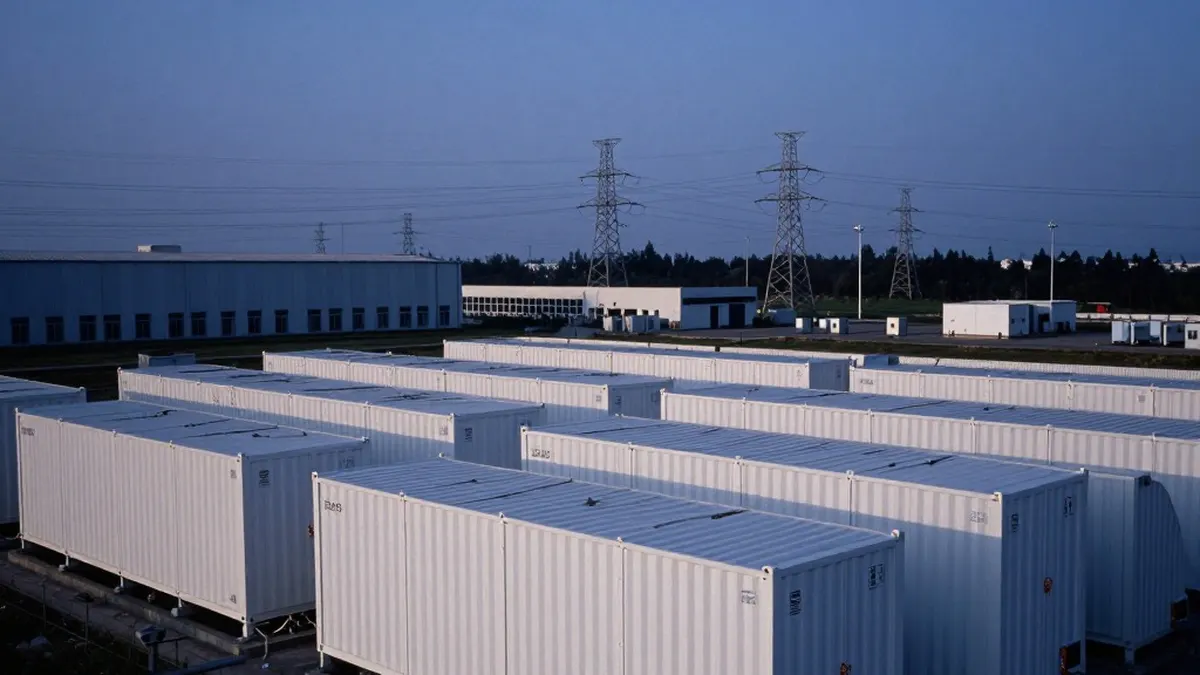
Tesla's energy division installed more batteries in the third quarter of 2026 but earned less for them. Revenue from energy generation and storage fell 16% from a year earlier to $2.88 billion, even as storage deployments grew 10% to 13.7 GWh.
In its shareholder letter, Tesla attributed the decline "partially" to "tariff-related customer refunds." The company did not say how large the refunds were, which customers received them, or why they were booked as a reduction in revenue.
Profitability in the segment recovered from the previous quarter but remained weaker than a year ago. Gross margin rose to 33.1% from 20.4% in the second quarter. Even so, energy gross profit slipped to $954 million from $1.07 billion in the same period last year. Tesla named lower energy gross profit among the reasons its operating income dropped 56%.
For the first nine months of the year, Tesla has deployed 36 GWh of storage, an 11% increase from 32.5 GWh over the same stretch of 2025. Energy revenue for the period is down 6% to $8.43 billion. Third-quarter deployments also fell well short of the roughly 15.9 GWh analysts had anticipated.
Tariffs have affected the segment's results before this year. In the first quarter, Tesla cited "energy one-time benefits related to tariffs" as a factor behind improved profit, and energy gross margin reached 39.5%. The company never put a dollar figure on the energy portion of that benefit. Margins have since swung to 20.4% in the second quarter and 33.1% in the third.
Tesla does not explain the refunds. One plausible reading, which the letter itself does not confirm, is that some storage customers had paid tariff-related charges that Tesla no longer owed after the Supreme Court struck down the IEEPA tariffs in February.
The rest of the letter's energy discussion centered on reducing tariff exposure in the supply chain. Megafactory Texas has begun production with 50 GWh of planned capacity, joining facilities with 40 GWh in California and 20 GWh in Shanghai. Tesla also shipped its first Megapacks built entirely with its own LFP cells from Nevada, where it has 7 GWh of cell capacity in early ramp-up.
Tesla said storage demand is at its "highest-ever order rate and backlog," driven by data centers that need power faster than the grid can supply it. One such customer is xAI, now part of SpaceX and linked to Tesla CEO Elon Musk, which bought another $269 million of Megapacks this year after $430 million in purchases from Tesla in 2025.