The Cat in the Hat will arrive in theaters on Nov. 6 in the character’s first feature-length animated movie, expanding Theodor Seuss Geisel’s 1957 book into a 107-minute adventure with music and comedy. The Warner Bros. Pictures Animation production gives the mischievous feline an origin story while exploring how he helps children navigate change.
The project is part of a three-film agreement between Dr. Seuss Enterprises and Warner Bros. Pictures Animation. Susan Brandt, president and CEO of Dr. Seuss Enterprises, told The Hollywood Reporter that the success of Illumination’s animated Grinch adaptation showed there was an audience for a different approach to an already filmed Seuss story. The company spoke with every major studio before choosing Warner Bros. for the Cat’s animated feature.
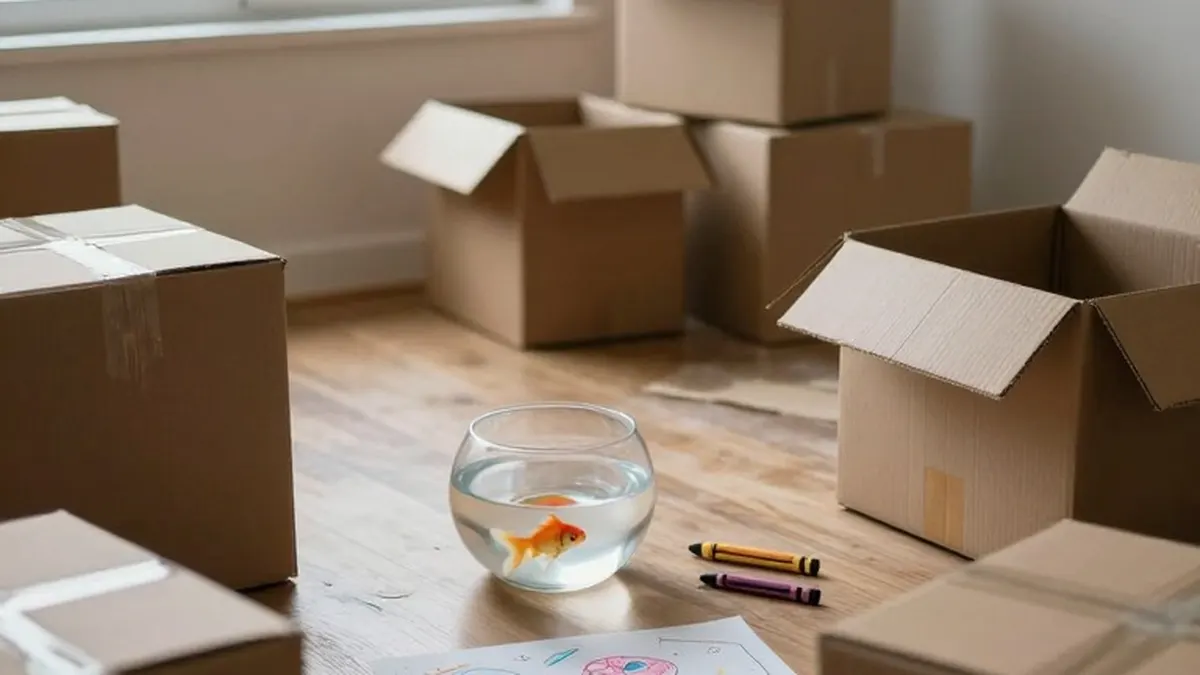
Writer-directors Erica Rivinoja and Alessandro Carloni built their story around a question suggested by the book: Does the Cat’s disruptive visit give children something they need? Their adaptation follows tween Gabby, voiced by Xochitl Gomez, and younger brother Sebastian, voiced by Tiago Martinez. The siblings are surrounded by moving boxes in a new apartment when their mother, Carmen, voiced by America Ferrera, leaves for work. Their goldfish Waffles is voiced by Matt Berry.
The Cat enters through a tiny hole in the apartment wall, carrying a problem of his own. He works for the Institute for the Institution of Imagination and Inspiration, LLC, where his messes have put his employment at risk. Another mishap could cost him his job and his signature striped hat. His assignment leads the children on an interdimensional trip through worlds accessed through their moving boxes.
The filmmakers use three animation styles to distinguish the children’s surroundings, the Institute and the worlds inside the boxes. An opening sequence recalls the book’s familiar rainy-day setting and begins in black and white before color broadens the visual world. The apartment initially has a grounded appearance, while the Cat’s presence gradually introduces distortions associated with Seuss’s artwork. The Institute uses more saturated colors and different line weights.
Inside the boxes, the design reflects each sibling’s emotional perspective. Sebastian’s world draws on simple, pure colors resembling a small collection of crayons. Gabby’s uses more complicated shades. Art director Amos Sussigan said the book’s red and blue palette provides a connection across these spaces, with warmer colors emerging as the Cat’s influence grows.
The film also adapts Geisel’s characteristic rhyming meter into the Institute’s workplace language, including its human resources documents. Elsewhere, dialogue is more natural to accommodate the performers’ individual styles. The Institute introduces other animal employees with striped accessories, establishing a broader organization that visits children when they need help.
New Things join the Cat’s familiar companions, with designs that move beyond identical appearances. Dr. Seuss Enterprises is preparing merchandise featuring those additions. For Brandt, however, the film’s central idea remains its understanding of childhood. As she told The Hollywood Reporter, “Childhood is not sitting pretty. It’s messy,” describing the Cat as a figure who makes room for that experience.