Latin American distributor Cineplex has acquired the Colombian and Latin American rights to "The Cry of Serankwa" ("El grito de Serankwa"), the sophomore feature from Colombian multi-hyphenate Yull Núñez. The Indigenous eco-thriller won three industry prizes at the Santiago Film Festival (Sanfic), where it competed in the WIP Iberoamericana section. Sanfic ran Nov. 2 through Nov. 8.
"From the moment we read the script for 'The Cry of Serankwa,' we felt a strong connection to its story and its portrayal of the sacred territories of Colombia's Iku, Wiwa, Kogui and Kankwamo communities in the Sierra Nevada de Santa Marta," said Cineplex's Elba McAllister. She said the film explores humanity's relationship with nature, the preservation of ancestral traditions and the challenges these communities face in the modern world. Much of it is spoken in the Iku language, and Cineplex believes it will resonate with audiences within and beyond the region, generating plenty of conversation in 2027.
The drama follows Marcelo and Aníbal, two friends of the Indigenous Iku tribe who are preparing to become spiritual leaders, known as Mamus, in order to save Mother Earth from the destruction wrought by humans, particularly the mining companies laying waste to their sacred lands. After failing to become a Mamu, Aníbal leaves for the city and returns years later as an engineer with a mining firm, jeopardizing his village and his friendship with Marcelo, by then the new guardian of the Sierra. Serankwa is the god of these Indigenous communities.
Núñez, who hails from Colombia's Caribbean coast and is of Afro-Colombian descent, began writing the story in 2017. "I've always had deep ties with this community as my father would take me along on visits when I was a child," he told Variety.
Large-scale films about Colombia's Indigenous communities have been few and far between, with Cristina Gallego and Ciro Guerra's 2018 "Birds of Passage" among the last examples. Núñez's own credits include "Birds of Passage" and Guerra's 2009 "The Wind Journeys," in which he played the lead, and with "The Cry of Serankwa" he aims to approach the scale and ambition of those films.
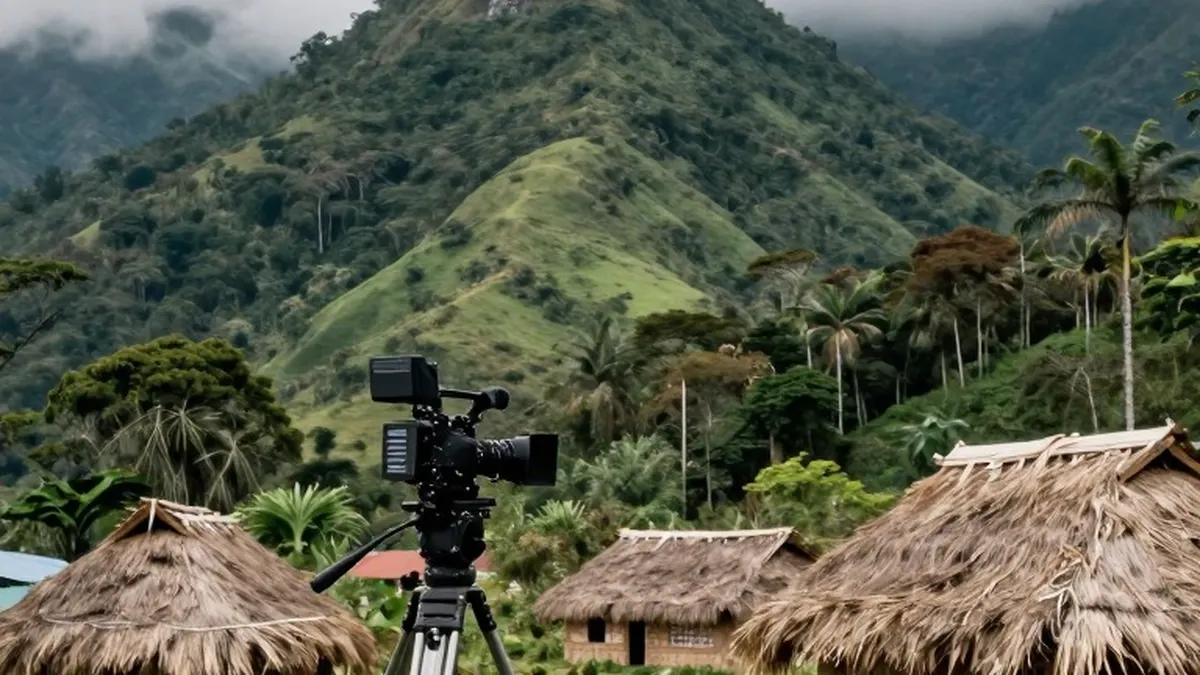
The production filmed for 40 days in Nabuzimake, a remote mountain village closed off to the rest of the world. Núñez wears beaded bracelets that allow him access to the territory, where the Iku language is spoken. To prepare his mostly natural actors, he held a three-month acting workshop, putting his acting coach and casting skills to work, and he has also run an audiovisual collective over the last four years to train aspiring crew members.
The three Sanfic Industria prizes will help Núñez complete the film, which has moved through a development trajectory that included a script development residency with the Desde la Raíz foundation, Lenguas Originarias in Lima, Peru, MAR at the Cartagena Film Festival, the Regional Office of Colombia's Ministry of Culture and Berlinale Talents Toolbox. The project also received funding from Colombia's Film Development Fund (FDC) and the ERA Fund of the Manos Visibles Foundation. As always, Núñez produces alongside his producing partner Daylín Vega of Cinequipos Prods.
Environmental issues have long been front and center in Núñez's work. His debut feature, "The Palafite's Silence" ("El silencio de los palafits"), which world premiered at the Havana Film Festival, follows Elías, a young fisherman who struggles to earn enough to survive after an environmental disaster devastates his stilt-house village. It opens Nov. 12 in Colombia. His third feature, "The Mystery of the Guatapuri" ("El misterio del Guatapuri"), now in development, centers on a solitary shaman who sabotages efforts to divert the Guatapurí River to irrigate rice fields, threatening the river's fragile ecosystem.
"This is more than just a film; it is a cinematic offering that invites us to reflect on our relationship with the environment and with life and death," Núñez said.