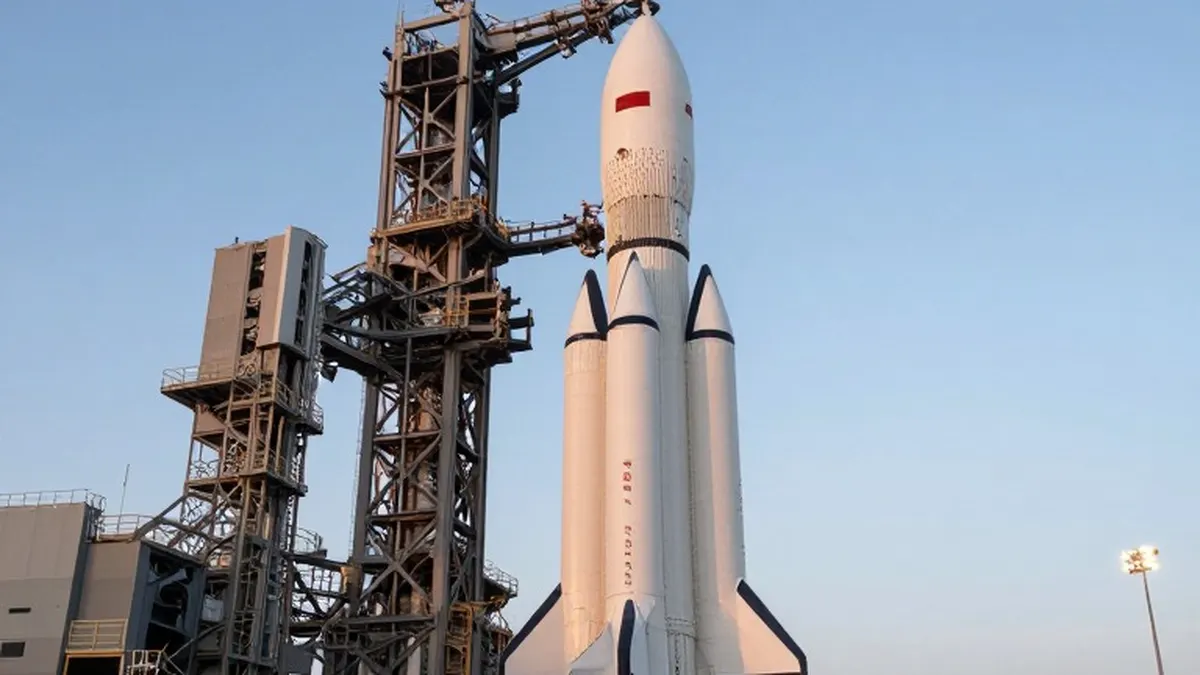
United Launch Alliance confirmed on Tuesday morning that its return-to-flight mission for the Vulcan rocket encountered significant issues during the very early stages of the launch. The company stated that while telemetry and the mission were lost approximately ten minutes after liftoff, early signs indicated the vehicle suffered from low booster performance immediately after launch.
This initial underperformance caused the stage separation to occur at a lower altitude and below the minimum velocity required to reach orbit, according to ULA. The launch provider also confirmed reports that the Centaur V upper stage and the solid rocket boosters functioned nominally throughout the flight sequence.
A key element of the ongoing investigation is the lack of specific details provided by ULA regarding the nature of the low booster performance. This ambiguity is significant because the Vulcan core stage is powered by two BE-4 engines manufactured by Blue Origin. Blue Origin utilizes a similar, slightly more powerful variant of the BE-4 engine in its New Glenn rocket, which suffered a catastrophic failure during a ground test in May. That previous incident was later attributed to a main oxygen valve issue on one of the engines.
Both ULA and Blue Origin are closely withholding detailed information about the failure, acknowledging only that they are collaborating to determine the root cause. According to two sources familiar with the matter, the investigation is described as incredibly complicated and remains in its preliminary stages.
However, preliminary data reviewed by independent sources indicates that the problem likely originated within the launch vehicle systems rather than the engines themselves. The issue may be connected to the infrastructure responsible for feeding methane and liquid oxygen propellant to the power units.
Engineers at ULA are currently examining the possibility that one of the two BE-4 engines generated lower thrust shortly after liftoff and failed to return to full throttle for the rest of the burn. Video footage captured by high-zoom tracking cameras appeared to show one engine glowing slightly dimmer than the other after the solid rocket boosters were jettisoned nearly two minutes into the flight.
Additionally, an asymmetric shutdown of the BE-4 engines could have contributed to the sudden attitude motion observed in ULA's telemetry-driven real-time animation near the point of stage separation. These observations support the emerging theory that the fault lay in how the vehicle managed engine performance rather than a mechanical failure within the engine hardware itself.
The distinction is critical for the future of the Vulcan program, as it may shift the focus of repairs and upgrades toward the propellant delivery systems. While the data remains preliminary, the consensus among early investigators suggests that the BE-4 engines themselves performed as expected until the fuel supply or control systems failed to maintain consistent thrust.
As the investigation continues, both aerospace companies are working to reconstruct the exact sequence of events that led to the loss of the vehicle. The outcome of this analysis will be vital for determining when the next flight attempt can be safely scheduled and what modifications are necessary to ensure future mission success.
For now, the aerospace community awaits further updates from the joint investigation team. The findings from this return-to-flight attempt will serve as a crucial benchmark for the reliability of the new generation of launch vehicles entering commercial and government service.