Anthropic made a historic entrance into public markets on Thursday, defying a broader technology sector selloff as investors paid a premium for its shares. The five-year-old company raised $81.3 billion during the listing, marking one of the first opportunities for public investors to value a pure-play artificial intelligence laboratory. While many view the initial public offering as a potential savior for the AI trade after several shaky months, significant questions remain regarding the company's long-term operational capabilities.
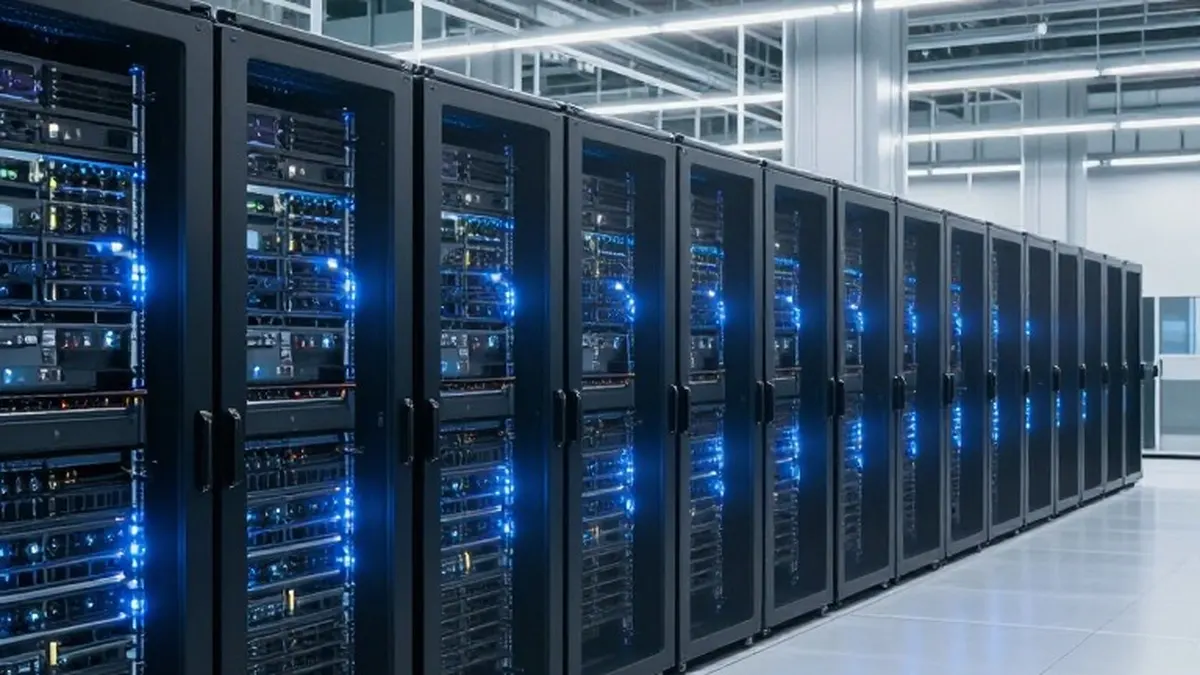
A primary concern for analysts is the company's ability to secure sufficient computing power to support its rapid expansion. Gil Luria, head of technology research at D.A. Davidson, noted that securing enough compute to match Anthropic's steep growth trajectory will be one of its biggest challenges. This issue is complicated by growing public opposition to major data centers and delays in various AI infrastructure projects. Anthropic did not respond to a request for comment on the matter.
The scale of Anthropic's infrastructure commitments is immense. The company has entered into purchase commitments and lease agreements for compute and infrastructure valued at approximately $900 billion. It expects to incur roughly half of this cost before the end of 2030, with the remainder spread between 2031 and 2045. However, around $186 billion of that total spend is tied to deals that can be terminated or are subject to conditions such as securing financing, facilities, or regulatory approvals.
Recent filings have revealed hurdles in accessing some of this capacity. Anthropic stated that Lambda missed a deadline to secure a facility lease for a $34.9 billion agreement. Additionally, Nscale disclosed that it had not yet secured binding financing commitments for its contracts with Anthropic, which are worth up to approximately $44 billion. Neither Lambda nor Nscale responded to requests for comment regarding these developments.
Nick Patience, AI lead at Futurum Group, explained that in both cases, the financing risk falls on the neoclouds and their lenders rather than on Anthropic directly. However, he emphasized that the critical question is whether that capacity will arrive on time. Patience warned that because demand is running ahead of supply, missing capacity can quickly turn into lost revenue. He also noted that margins could suffer due to the increased costs associated with short-term compute commitments.
Anthropic has stated that long-term capacity is significantly cheaper than short-term commitments, which the company would need to utilize when customer demand or research needs exceed its long-term capacity. The company has major cloud infrastructure commitments with Amazon and Google worth more than $100 billion each, extending into the 2030s. It could also spend more than $100 billion with SpaceX to access AI compute, ensuring no shortage of big-money deals for graphics processing unit access.
Malik Ahmed Khan, a senior equity analyst at Morningstar, expects Anthropic to remain compute constrained throughout 2027 and 2028. He anticipates the firm will use a mixture of short-term compute to augment longer-term deals with hyperscalers as they come online. Patience added that while some slippage in AI infrastructure delivery is likely, a serious shortage is unlikely because the company's biggest suppliers are also its biggest investors.
Google and Amazon both hold stakes in Anthropic worth well over $100 billion each, providing strong incentives to ensure the company remains supplied. This financial alignment offers a layer of security for Anthropic's infrastructure needs, even as it navigates the complexities of scaling its operations.
The successful listing has also resulted in a significant windfall for Anthropic employees. According to SEC filings and investors, the average Anthropic employee could now be worth over $40 million. More than 400 employees are likely to be worth over $100 million following the company's move to the public market.