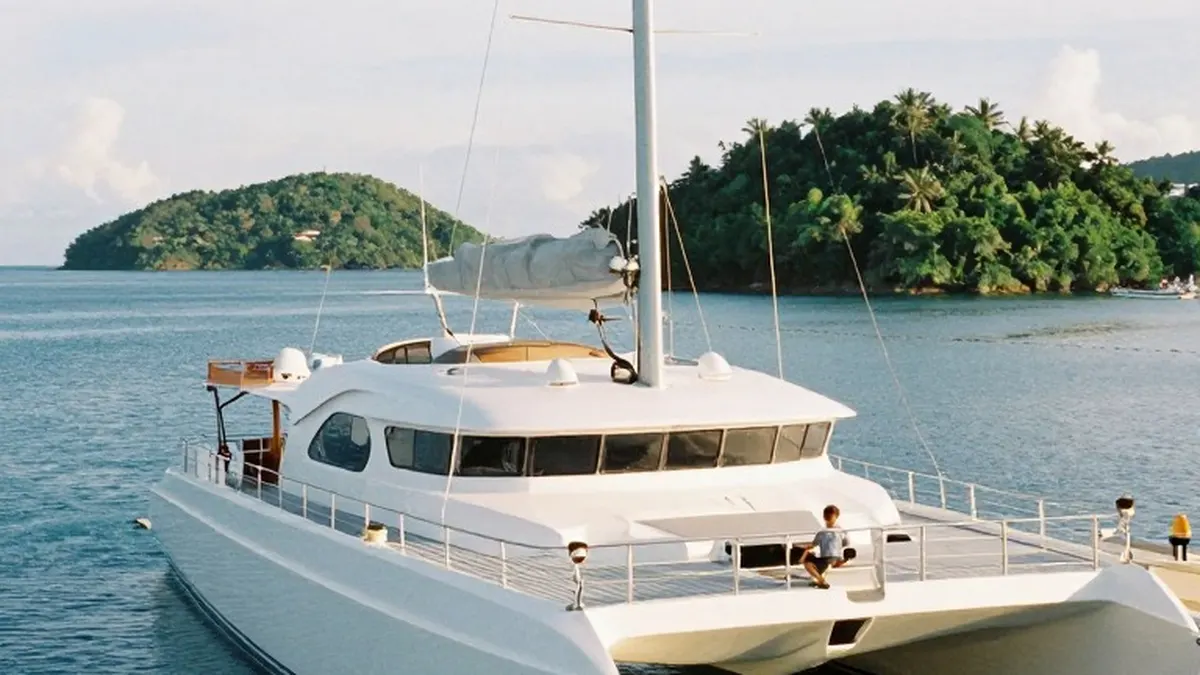
Three-time world surfing champion John Florence finds himself at a crossroads while docked in Papeete, Tahiti. On his Gunboat 60 catamaran, named Vela, Florence is raising his two-year-old son, Darwin, alongside his wife Lauryn. The family has spent the last year and a half traveling, a break from the professional tour that Florence initially planned to last only one year. Now, with the 2028 Los Angeles Olympics approaching, he is grappling with whether to return to competition.
Florence left the World Surf League tour in 2024 after winning his third world title. He had promised fans and himself that he would be back in 2026. However, after accepting a wild card for the 2026 season, he decided in February to defer his return for another year. To facilitate this extended journey, he sold his previous 48-foot sailboat and purchased the current 60-footer. This decision allowed him to spend the better part of two years at sea, prioritizing family time over the rigors of the tour.
The decision to step away was not simple. Florence describes the mental challenge of separating his identity from the goal of winning a world title, a pursuit that had defined his life for 13 years. He noted that competition requires a level of focus that conflicts with the demands of raising a young child. He also cited past injuries, including ACL and MCL tears, as factors that stemmed from burnout during his competitive years. He compared his situation to that of Kelly Slater, who took a break in 1998 and subsequently extended his career significantly.
Life aboard Vela offers a stark contrast to the tour. Florence and his family have explored diverse locations, from the Galápagos Islands to Panama. In the Galápagos, they joined a larger family group, including Florence’s mother and brothers, for a week of hiking and snorkeling. These experiences allow Florence to be a father and husband rather than just a professional athlete. He has learned to navigate offshore passages and surf uncrowded breaks, embracing a beginner’s mindset in sailing.
Lauryn Florence notes that while life on the boat can sometimes feel lonely due to the lack of other adults, it provides a unique opportunity for family bonding. They are not separated by travel schedules, allowing them to share daily experiences. The couple plans to have more children and values the time they are currently spending together. For Florence, seeing Darwin explore the world, such as when the child was fascinated by marine iguanas during a snorkel trip, is a rewarding part of this new chapter.
The upcoming decision is critical for Florence’s career. To qualify for the U.S. Olympic team, he must return to the tour full-time. He has until November 1 to apply for a 2027 wild card. Returning would mean chasing a fourth world title and a third Olympic appearance, a goal he has not yet achieved, having finished tied for ninth in his previous two Olympic attempts. Slater believes this break could recharge Florence’s competitive drive and set him up for success in 2028, suggesting that an Olympic gold medal would be a significant addition to his legacy.
Florence acknowledges that while he misses the process of competing, he is reluctant to give up the moments he is currently experiencing with his family. He describes the uncertainty of whether he would return if asked now, noting that his answer might change depending on the day. The balance between his passion for surfing and his desire for a family-centered life remains the central tension of his current situation.
As the family continues their voyage, Florence is learning to navigate both the ocean and his future. The journey has provided him with new skills and perspectives, reminding him that the process of problem-solving and exploration is often more valuable than the final result. Whether he returns to the tour or stays at sea, the decision will shape the next chapter of his life as both an athlete and a father.