Takeo Hisamatsu, a veteran of the Japanese film business, did not expect to be running the Tokyo International Film Festival again. Now back at the head of the country's largest cinema celebration, he calls the return a surprise, but also an honor and a chance to finish work he could not complete before.
Hisamatsu spent long stretches as an executive at Shochiku and Warner Bros. before being named festival director in 2017, a post he held until 2021. Hiroyasu Ando, a veteran diplomat who became chairman in 2019, then took charge with a mandate to reshape the event. Ando moved the festival to the Ginza and Hibiya districts, reworked the programming staff, added more filmmaker talks and revived the Kurosawa Akira Award. Earlier this year he stepped down abruptly, and Hisamatsu was reinstalled. Hisamatsu declined to discuss the internal developments behind his exit and comeback.
He is upbeat about the timing, saying there is "considerable tailwind behind Japanese cinema." He cited Ryusuke Hamaguchi's Oscar win for best international feature with Drive My Car, the historic visual effects victory of Godzilla Minus One, and the growing worldwide popularity of anime. Japan was the country of honor at the Marché du Film in Cannes in May, and more than 30 Japanese films played at this month's Busan International Film Festival.
The home market is strong too. Japan's box office reached a record ¥274.5 billion ($1.8 billion) in 2025, topping the previous high set in 2019. Global streamers are investing heavily in Japanese productions, Hisamatsu noted, and the government has named the content industry a priority growth sector and is increasing its backing.
Hisamatsu wants Tokyo to do more than bring international films to Japanese audiences. He hopes it can become a stronger launchpad for domestic filmmakers seeking overseas exposure. This year the festival introduced competitive prizes for Nippon Cinema Now, its showcase of contemporary Japanese work, and launched TIFF Work-in-Progress, which links Japanese productions with international festival programmers and industry figures.
Doing all of this, he says, requires more money. "We need more money," he said plainly, explaining that the weaker yen and rising inflation mean the previous budget for flying in and hosting filmmakers and talent no longer stretches as far. He stressed that the aim is to expand the festival, not shrink it.
He is optimistic the government will increase its support before next year's landmark 40th anniversary edition, but is not counting on it. The festival is working to attract more sponsors and show them the anniversary will be a valuable showcase for their brands.
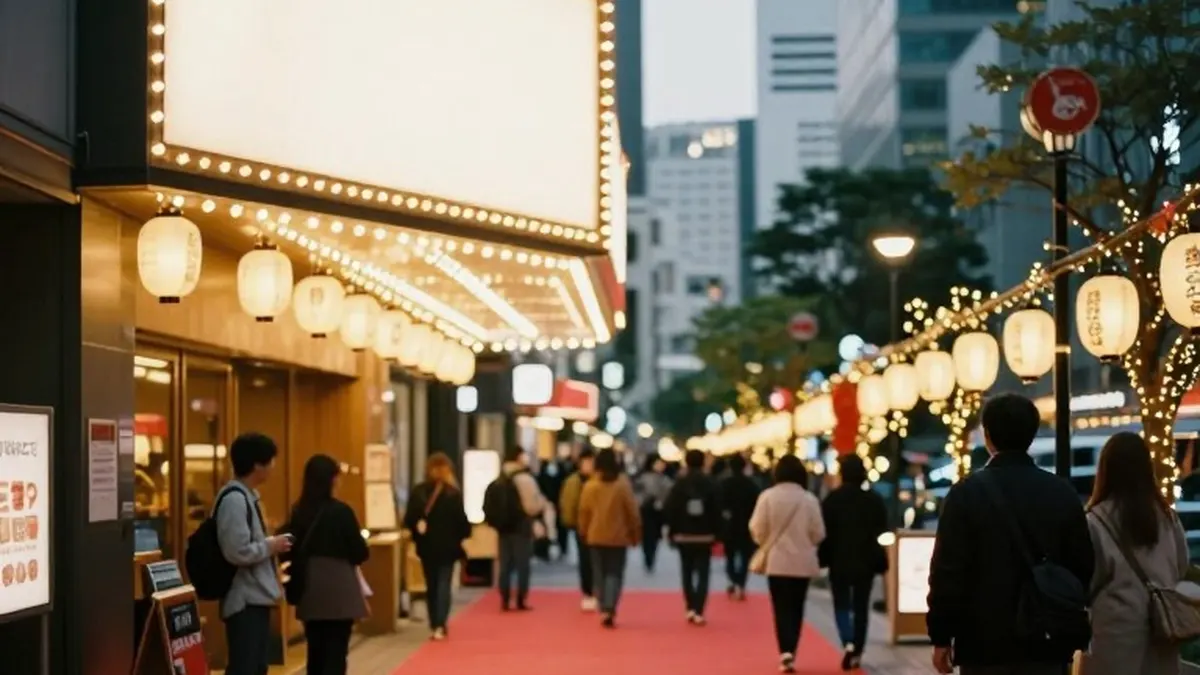
Hisamatsu also wants the major Japanese studios to use the festival as a platform. "We need to create a more festive vibe around the festival, and to do that we need more parties," he said, pointing to Cannes, where parties help professionals network and build business ties, and to Busan, where Korean studios host their own events. This year Toho is holding its first invitation-only "Toho Izakaya Night" to promote its projects to international guests. Hisamatsu approached the other major studios, but they could not organize events in time. He hopes they will be ready for the 40th edition.
He plans to use the anniversary as a rallying point for his team to assess where the festival stands and where it wants to go. Although Tokyo is seen as competing with Busan, he noted that Asia accounts for about 40 percent of the global box office, and said there is no reason the two events cannot work together to showcase Asian cinema to the world.