The Department of Justice has sent letters to roughly 20 Democrats, including prominent election lawyer Marc Elias, telling them they could be targets in a criminal investigation into how a candidate who shares the name of incumbent Republican Sen. Dan Sullivan ended up on the ballot in Alaska's Senate race, The New York Times reported on Tuesday afternoon.
NBC News reported that the batch of letters includes both target letters and preservation requests directing third parties to retain records. Along with Elias, at least one official at the Democratic Senatorial Campaign Committee received a target letter, according to The Times. The department is investigating possible donor fraud and conspiracy charges, the paper reported, citing a person familiar with the investigation. Receiving a target letter does not mean a person has been charged with a crime or necessarily will be.
Elias has represented Mary Peltola, the Democratic nominee in the Alaska contest. In a statement, he said, "No one should be surprised that President Trump's Department of Justice is targeting me and my law firm on Election Day."
President Donald Trump attacked Elias during an interview on Fox News' "Fox and Friends" earlier Tuesday, calling him a "very bad guy" who "should go to jail, in my opinion." Trump also claimed that "you had the Democrat Party look all over Alaska for somebody named Sullivan."
The reported letters landed amid a months-long Trump administration campaign to challenge how states run elections, an effort that has included lawsuits, an attempt to impose a new U.S. Postal Service rule for mail-in ballots, threatening letters to state election officials and a plan to expand poll monitoring. On Sunday, a federal judge dismissed a DOJ lawsuit that sought to delay certification of Alaska's Senate election if Sen. Sullivan loses by a margin that could be attributed to voter confusion caused by a second Dan Sullivan on the ballot. The DOJ is appealing.
In her ruling, District Court Judge Sharon Gleason said the administration's requests involved "the time, place, and manner of Alaska's election, which are the responsibilities of the State, not the executive branch of the federal government." A bipartisan group of former election officials echoed that point in a Monday filing to the 9th Circuit U.S. Court of Appeals, citing "increased federal pressure and threats on election officials" as part of a pattern of attempting to assert authority over elections.
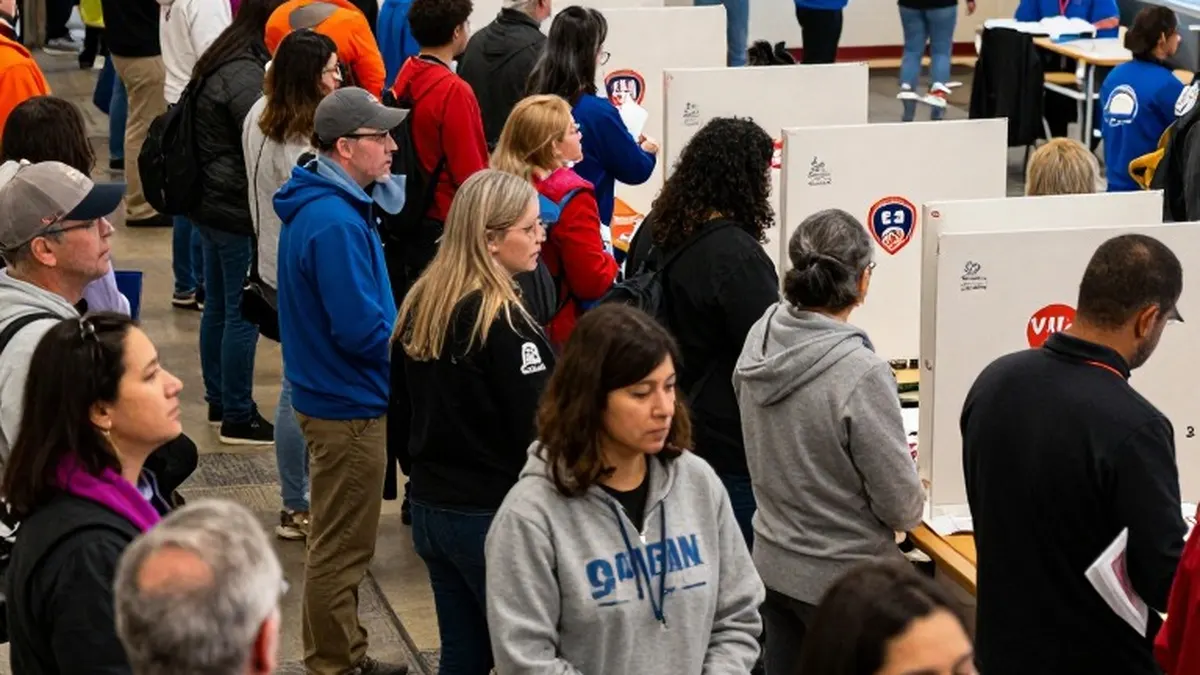
The legal battles stretched across the country on the eve of voting. The DOJ on Monday asked the Supreme Court to stop California from counting about 20,000 mail-in ballots from voters the department suggested might not be U.S. citizens; the high court rejected the request hours later without any noted dissents. In Washington, DOJ lawyer Kathryn Barragan told Judge Reggie Walton that about 900 people would be deployed to monitor polling places in all 50 states, compared with about 100 monitors in 2024. The DOJ said Tuesday it was sending approximately 1,000 election monitors and observers nationwide, focused primarily on urban areas that vote Democratic. Walton was weighing an emergency NAACP request to bar the department from using federal law enforcement personnel as monitors.
Democrats said they have been bracing for interference for months. Senate Minority Leader Chuck Schumer convened the full Senate Democratic Caucus on Sunday night for a briefing by him and Elias on what an aide called the "current landscape of election threats from Trump and his allies." California Attorney General Rob Bonta told CNBC on Monday that he and the 23 other Democratic state attorneys general have "war-gamed and tabletop- and scenario planned all the possibilities," adding, "Each of Trump's attempts has failed." He noted it is a criminal offense under California law to remove ballots from the custody of an election official.
John Cusick, assistant counsel at the Legal Defense Fund, said the administration's actions are aimed first at intimidating voters and election officials, second at sowing confusion about election rules, and third at laying the groundwork for challenging post-election counting and certification. "That has created such a chilling effect," Cusick said. "There's no doubt that the threats are threats to our democracy."
The DOJ did not respond to CNBC's request for comment but has previously defended its efforts, saying on X on Oct. 12 that "voting by noncitizens and other ineligible voters is a federal crime." Attorney General Todd Blanche, asked on Oct. 22 whether the department could ever try to block states from certifying results, said, "Yes, of course," while insisting the DOJ never intends to improperly interfere. Bonta said he expects the pressure to continue through the 2028 cycle. "We can't be naive about it," he said. "I expect him to escalate as he gets more desperate."