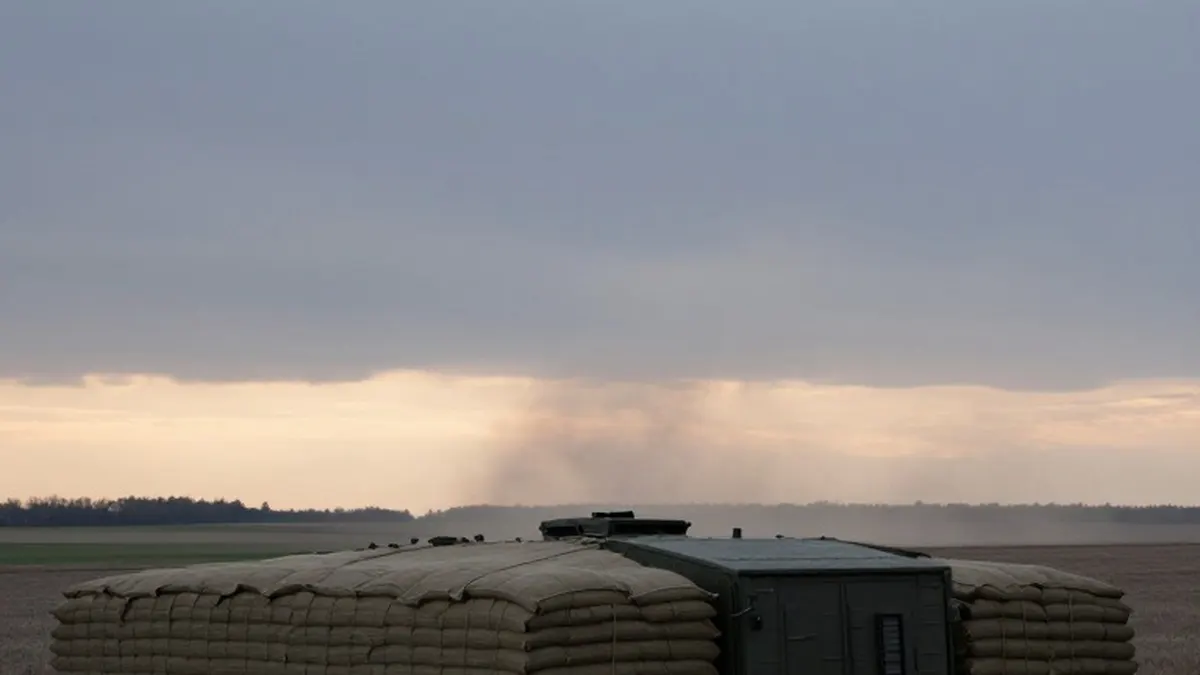
President Donald Trump announced on Monday that he has ordered the U.S. Army to halt the planned detonation of a bunker in Iowa containing drums of lead azide. The decision comes as federal courts review a lawsuit challenging the military's environmental permit to destroy the materials. The explosion, originally scheduled for Wednesday, would have released a plume of lead dust across the state and potentially into neighboring regions.
In a post on Truth Social, Trump explained that while he believes the proper course is to eliminate the long-term problem, he has instructed the military to wait for the Eighth Circuit Court of Appeals to agree that the operation can proceed. He also stated that his decision is fully subject to the approval of Rob Sand, the incoming governor of Iowa. Trump noted that military leaders advised him that detonating the material soon was the safest option and that the weather conditions on Wednesday were optimal for the response.
The timeline for the detonation has shifted multiple times in recent weeks. It was initially set for Friday but was delayed to Monday and then pushed back to Wednesday following public outcry and a lawsuit filed by environmental groups. The lawsuit is currently pending in the Eighth Circuit, where the court granted an administrative stay last week. This stay placed the Army's permit on hold, though the Army informed the court that it could proceed in an emergency without a final ruling.
The Army has stated that it must destroy the 68 drums of deteriorating lead azide, a chemical used in bomb triggers, because the material has undergone recrystallization, making it highly unstable. Military officials argue that moving the drums is unsafe and that cold weather could further destabilize the chemical, potentially causing a spontaneous explosion. To mitigate the blast's effects, the Army covered the bunker with two stories of sand in collapsible modular barriers.
Local residents have expressed concern that they did not have sufficient time to prepare for the event. While officials told residents of Middletown that the blast might break windows and shake homes, people in other parts of Iowa and nearby states reported learning about the plan only last week. They voiced worries about the well-being of their families, crops, and pets. Lead is a potent neurotoxin with no safe exposure level, and airborne lead poses an acute health risk. Once deposited in soil, the metal can remain indefinitely unless physically removed.
Rachel Rintelmann, managing attorney for community partnerships at the environmental law nonprofit Earthjustice, commented on the presidential decision. She noted that it is not yet clear how the post will impact the case in the Eighth Circuit. Rintelmann described the situation as adding further confusion to a scenario that has already caused chaos for impacted communities, stating that the people of Iowa deserve better.
Jill Holler, a resident of Muscatine, Iowa, which lies approximately 50 miles from Middletown, shared her frustration with the shifting schedule. Her family owns a farm where they raise cattle and grow soybeans and corn. Holler said she was working to gather soil samples on Sunday night in case the blast happened the next day. These samples are crucial for determining if a property is affected and what remediation may be needed.
Holler expressed sympathy for the people of Middletown, who are living with the threat of a potential spontaneous explosion in their backyards. She questioned the logic behind the repeated delays if the threat is truly imminent. The trajectory of the dust plume depends on wind direction and strength, meaning each delay places a different group of residents in the path of the expected hazard. The campaign and transition team for Governor-elect Sand did not immediately respond to requests for comment.
As of Monday, the exact schedule for the detonation remains unclear. The Army has not yet confirmed a new date, and the legal and political landscape surrounding the operation continues to evolve. Residents in the affected areas remain on edge, waiting for official answers regarding the safety of the environment and their long-term health.