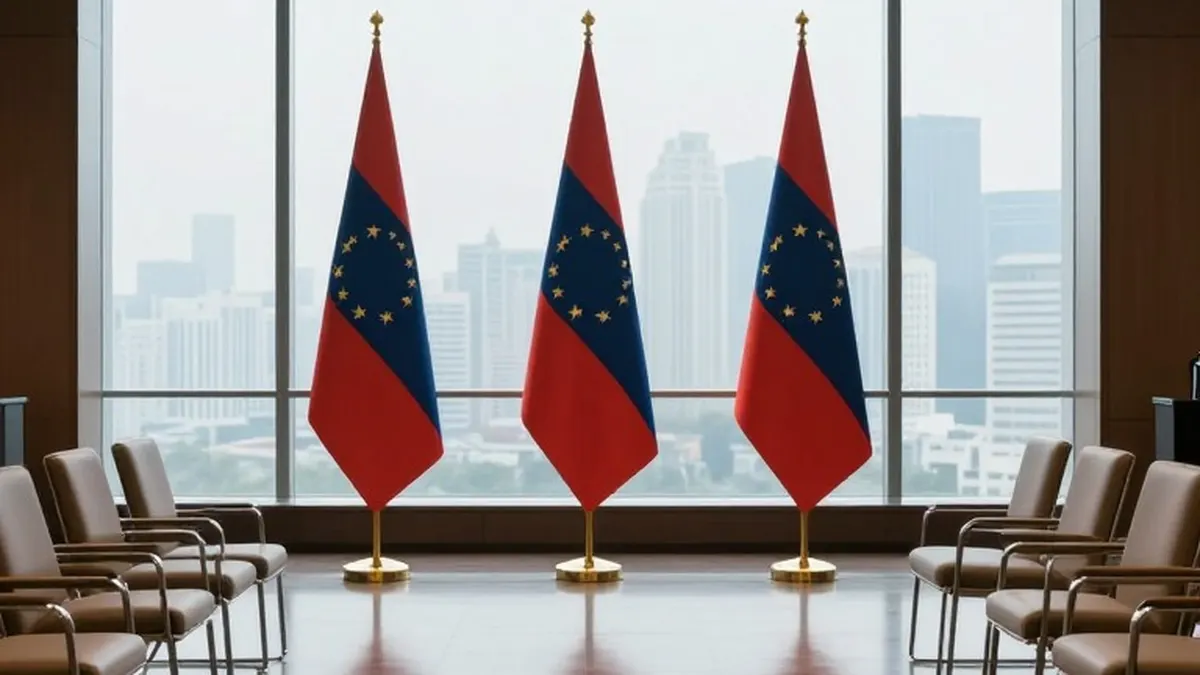
The White House presented President Donald Trump's trilateral meeting with Chinese President Xi Jinping and Russian President Vladimir Putin as a historic moment. The image of the leaders of the world's three largest nuclear arsenals gathering together drew comparisons to the Yalta Conference in 1945. However, analysts note that while the symbolism was potent, the summit yielded few tangible results for global policy or trade.
Despite the high profile of the event, no concrete agreements were reached regarding nuclear proliferation, trade disputes, or critical minerals. China and Russia issued statements that acknowledged the lack of formal accords. The meeting was widely interpreted as a signal to the world, showing the U.S. leader standing alongside Xi and Putin without explicit references to human rights, press freedom, or political prisoners.
The physical warmth displayed during the summit drew mixed reactions from international allies. Trump's embrace of Xi in Shenzhen was seen as a necessary step to maintain dialogue between the two dominant economies. In contrast, his affectionate greeting for Putin, whom he called his friend, was more difficult for NATO partners to justify. Poland's Prime Minister Donald Tusk reacted on social media by saying, God protect us from such friends.
Critics suggest the summit may have served to bolster Trump's political standing following a significant midterm defeat and ongoing frustrations with foreign conflicts. During his 2024 campaign, the President had pledged to end the war in Ukraine quickly. More recently, he predicted that the conflict with Iran would conclude within weeks. The appearance with the two long-term leaders may have been a strategic move to project strength.
Ukrainian President Volodymyr Zelenskyy expressed concern about being excluded from key discussions. He told NBC News that one cannot decide matters regarding a country without that country's participation. Zelenskyy noted that U.S. representatives would provide information on the negotiations, reaffirming that European and Ukrainian interests must be central to any decisions concerning their regions.
The timing of the summit coincided with renewed Russian military activity. Russia attacked Kyiv and other Ukrainian cities during and after the meeting in Shenzhen. In response, Ukraine struck a key bridge linking Russia to Crimea, a site of significant strategic and symbolic importance to the Russian leadership. This exchange highlighted the ongoing tension despite the high-level diplomatic engagement.
The 2026 midterm elections resulted in a substantial loss for the Republican Party, which surrendered at least 42 House seats. However, the party's performance was even more precarious than the final numbers suggest. A large number of Republican candidates won their races by narrow margins, indicating a fragile majority in several districts.
Specifically, 26 House Republican candidates won by less than three percentage points. This figure is significantly higher than in previous midterm cycles. In 2018, only 13 GOP candidates won by such a slim margin. The disparity in vote totals further illustrates the shift in political power, with far more Democrats securing strong majorities in their respective districts.
Only 41 House Republicans managed to secure at least 60 percent of the vote in the 2026 elections. By comparison, 174 House Democrats achieved that threshold. In the 2022 midterms, 153 Republicans and 126 Democrats had surpassed the 60 percent mark. This data underscores the depth of the Democratic gain and the vulnerability of the remaining Republican representatives.
In a recent development, Republican Nick Begich won the race for Alaska's at-large House district following a ranked choice tabulation. This victory provided a rare bright spot for the GOP. As of now, Democrats hold 257 seats while Republicans hold 173. Five House races remain undecided, including two in Louisiana that will proceed to runoffs in December.