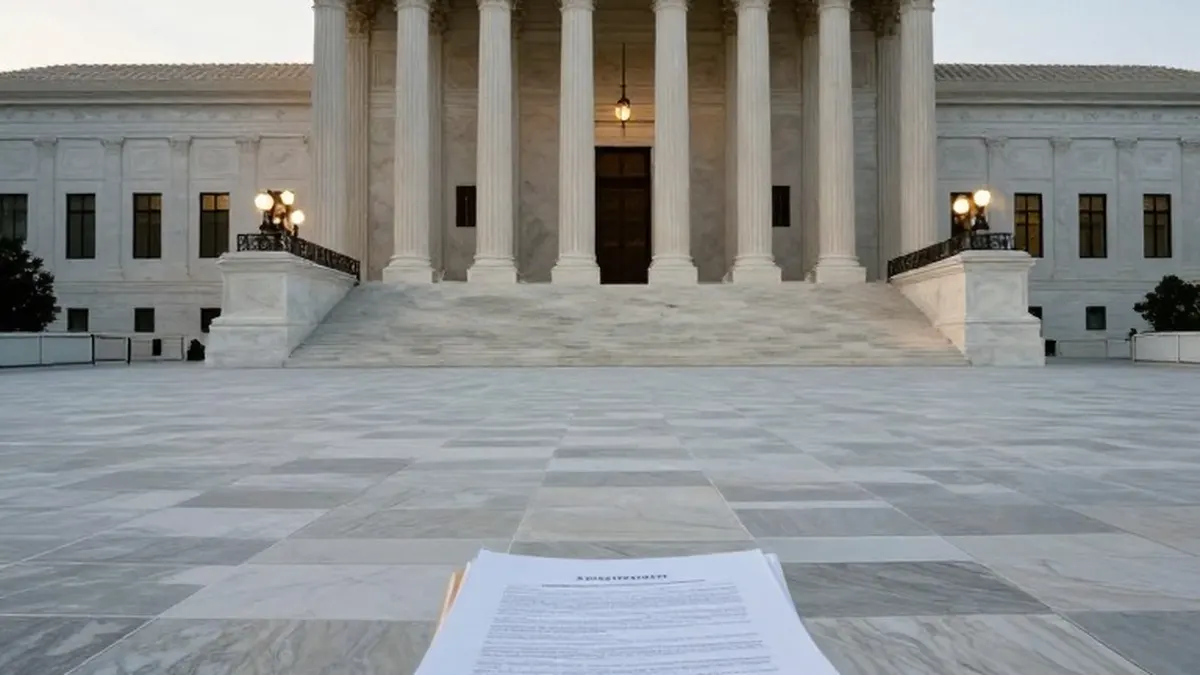
The Supreme Court has allowed an agreement between Texas and the Department of Justice to take effect, ending a Biden-era immigration rule. The court acted with no noted dissents.
The decision leaves in place a lower court ruling that eliminated the rule. The Biden administration adopted it in 2024 to formally set out how immigration judges could temporarily pause certain deportation proceedings, a practice known as "administrative closure." That included cases in which migrants were pursuing immigration relief through other federal proceedings. With the rule gone, that procedure for putting certain deportation cases on hold has been removed.
Texas filed suit against the federal government in June, arguing that the rule had been adopted without proper legal authority.
The Department of Justice sided with Texas. It asked the judge handling the case to vacate the rule and to bar similar rules from being adopted in the future.
Opponents accused Texas and the Justice Department of colluding to get rid of the rule, saying the two parties worked together even though they were formally on opposite sides of the lawsuit. U.S. District Judge Reed O'Connor, an appointee of President George W. Bush, granted the request on the same day the Justice Department made it.
In August, three cities with large immigrant populations, Baltimore, Maryland; New Haven, Connecticut; and Columbus, Ohio, joined the immigrant legal advocacy group Centro Legal de la Raza in trying to intervene. They wanted to defend the rule on appeal. The cities argued that eliminating it could lead to residents being deported, which would reduce their tax revenues and give them legal standing to challenge the agreement. O'Connor rejected that argument.
On Oct. 9, the cities and Centro Legal de la Raza asked the Supreme Court to temporarily block the lower court's judgment while their appeal went forward. They accused Texas and the federal government of engaging in "egregious collusion" to eliminate the rule.
Federal lawyers countered that the cities and their allies lacked standing to challenge the agreement. In their view, the groups had not shown the concrete injury a federal court requires before it can consider their claims. The Supreme Court's decision to let the judgment stand leaves the Biden-era rule eliminated while the dispute over the process that ended it continues to draw criticism from opponents.