President Donald Trump said he wants to "get Cuba done" before leaving office in 2029 and added that he would "certainly consider" military intervention against the communist-run Caribbean island.
Speaking in an interview with conservative radio host Hugh Hewitt on Thursday, Trump said his administration was watching the situation in Havana "very closely" and described Cuba as a "failed" state.
"I want to get Cuba done before I leave," Trump said. According to Politico, the remarks were the first time he has attached a timeline to possible military action aimed at toppling Cuban authorities.
Trump said Secretary of State Marco Rubio, whose parents are from Cuba, "would love to do it," and confirmed he would "certainly consider" a short military operation.
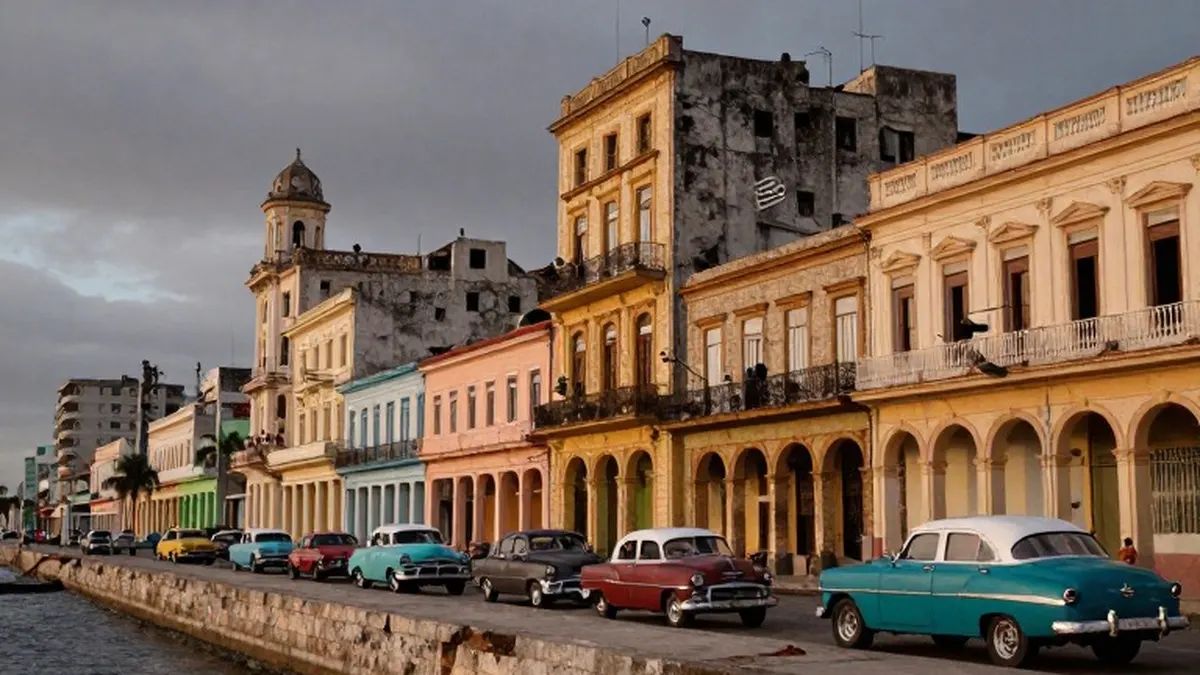
The comments come as the United States continues to enforce a comprehensive economic embargo against Cuba, a campaign that has contributed to a deepening energy and economic crisis on the island. Cuba has suffered repeated nationwide blackouts in recent months, along with fuel and food shortages.
The Cuban Embassy in Washington, D.C., estimated on Thursday that the U.S. blockade cost Cuba $8 billion between March 2025 and February 2026.
Earlier this month, the Treasury Department imposed additional sanctions on Cuban oil tankers and shipping companies and threatened to target any international entity or person doing business within its marine or maritime industries, as part of a push "to end the Cuban regime's malign activities, both in Cuba and across our hemisphere."
Cuba's Embassy in Washington, D.C., responded that the steps "deepen an energy siege that already leaves hospitals without reliable power and families facing blackouts. The blockade is not targeted at a government. It is collective punishment that hits ordinary people every day."
Trump has previously raised the prospect of a "friendly takeover" of Havana and said the White House could turn its sights on Cuba after the Iran war. He has also said he could do anything he wanted with the country and that he believes he will have the "honor" of "taking Cuba." In May, Cuban Energy Minister Vicente de la O Levy said the nation of roughly 10 million people had run out of fuel oil and diesel, calling the situation "extremely tense."
Analysts have generally been skeptical about the prospect of a U.S. military campaign against Cuba, suggesting that further economic pressure on the island's authorities appears more likely.