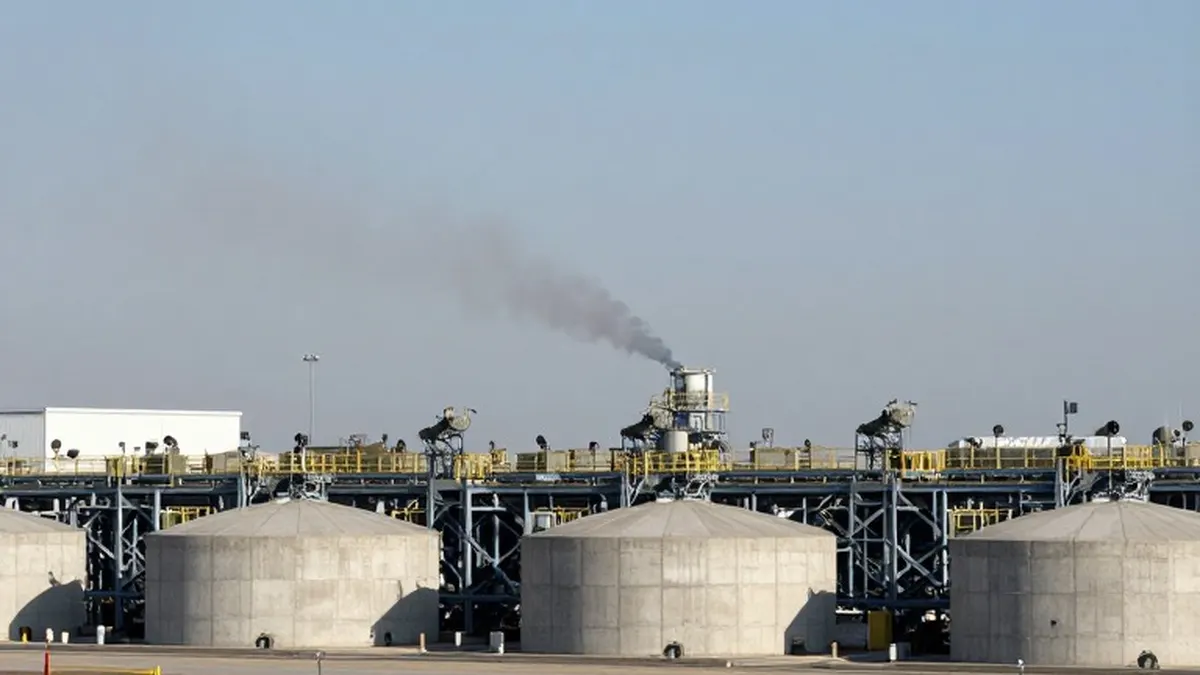
The U.S. Army has announced its intention to proceed with a controlled detonation at a munitions facility in Iowa on or before Tuesday, according to recent court filings. The military plans to move ahead with the operation despite a federal court order that indefinitely paused the detonation. Army officials argue that the immediate safety risks posed by the potential for an uncontrolled explosion justify bypassing the court's directive.
In documents filed late Saturday, the Department of the Army stated it will utilize an emergency munitions and explosives exclusion to the Environmental Protection Agency's permit. The government contends that performing a controlled detonation is necessary to shield the public from the greater threat of the explosives detonating spontaneously without intervention.
The legal pause was granted on Friday by the 8th U.S. Circuit Court of Appeals. This decision came after environmental groups filed an emergency motion to stop the Army's plan to demolish material containing lead azide at the plant in Middletown. The legal action followed significant community concerns regarding the potential for toxic lead particles to spread across parts of Iowa and Illinois in a dust plume.
The Army had originally scheduled two controlled explosions for Friday but delayed them to Monday. The court intervened before the Monday date arrived. In a statement released on Friday, the military noted that it is collaborating closely with the Department of Health and Human Services and the EPA to ensure the explosion is conducted as safely as possible.
Army officials emphasized that meticulous planning has been underway since March. A statement from the military noted that all involved agencies are prepared to implement the most extreme mitigation measures available. The goal is to ensure there is no risk to the public and that any disruptions are kept to a minimum.
In its Saturday filing, the government warned that the controlled explosion must be completed by Tuesday. This deadline is driven by weather forecasts indicating that temperatures are expected to drop below 30 degrees in the coming days. The Army explained that the lead azide has deteriorated, and the cold temperatures could cause crystals in the waste to break, increasing the risk of instability.
The court filing further explained that a controlled detonation allows the Army to minimize public risk. This includes reducing the danger from partial unexploded ordnances being ejected, which could explode later. The Army stated it intends to follow the terms of the Emergency Permit and its mitigation measures, even if the permit is not technically in effect. These measures are designed to minimize the dispersal of lead dust. The filing concluded that a controlled detonation is significantly safer than an uncontrolled explosion.
In response to the Army's filing, the Iowa Environmental Council and the Sierra Club submitted a motion on Sunday. They are seeking to supplement their emergency request to block the planned detonation. The new filing includes declarations from three experts and local government officials. These documents challenge the Army's assessment of the risks associated with delaying the detonation. They also raise concerns about public notice and potential health and environmental impacts.
The issue traces back to March of this year, when the Army discovered that 68 drums of lead azide at the site had begun to recrystallize. The lead is stored in bunkers at the Iowa Army Ammunition Plant. This munitions plant was built in 1941 and is responsible for producing medium and large caliber munitions.