The United States military announced Wednesday that it has identified the remains of a soldier who belonged to one of the most storied units of World War II, more than 80 years after he disappeared during a mission overseas.
Joseph Gala, of Lynn, Massachusetts, was declared killed in action on July 14, 1944, two months after he went missing in what was then Burma, now Myanmar, according to the Defense POW/MIA Accounting Agency. He was 21 years old when he died.
The circumstances of Gala's death were never recorded. The military said he was last seen advancing with his battalion toward a heavily fortified Japanese area near the village of Mankrin.
Gala had fought alongside a volunteer infantry unit that came to be known as Merrill's Marauders, named after its commander. The battalion was solicited by President Franklin D. Roosevelt to carry out a "secret and dangerous mission" in the China-Burma-India Theater, the war's so-called "forgotten theater," as the Army described it in a 2016 article. About 3,000 young men volunteered for the mission, and just 200 returned home.
"Those that volunteered had no idea what the mission was going to be," Robert Passanisi, one of the troops who did survive, said in 2013. Recalling his unit's 1,000-mile march through the Burmese jungle to disrupt Japanese supply lines, Passanisi added: "It's pretty well-known that nobody else ever did anything as strenuous, as enduring and as difficult in such miserable terrain."
The mission where Gala was last seen alive marked his unit's "final objective" overseas, the Army said in a 2016 article spotlighting surviving Merrill's Marauders troops. On May 17, 1944, the unit captured Burma's Myitkyina airstrip after defeating the elite, and much larger, Japanese army in five major battles and 30 minor ones.
"We were expendable," Sam Wilson, a former Marauder, told the Army in 2016. "A plan existed on paper to get us into Burma, but no plan existed to get us out." Every soldier who was part of Merrill's Marauders was later awarded the bronze star, and the Pentagon ordered that none of them would ever be placed in combat again. A dramatized version of their ordeal in the Burmese jungle reached the big screen in a 1962 war film named after the unit.
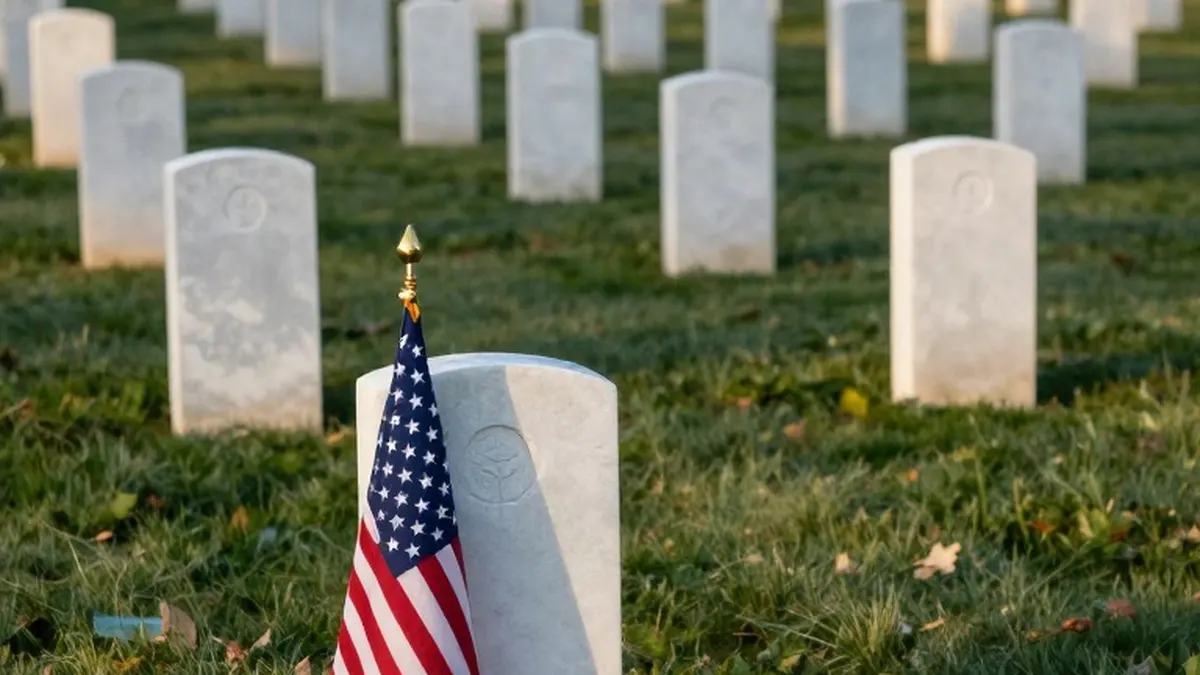
Gala's remains were buried at various U.S. military cemeteries in Burma and India. They were later transferred, alongside other unidentified remains of soldiers, to the National Memorial Cemetery of the Pacific, known as the Punchbowl, in Honolulu, Hawaii.
The DPAA said officials began exhuming unidentified remains from the Punchbowl in 2018 in an effort to identify more soldiers killed at Myitkyina. Scientists were eventually able to identify those belonging to Gala through dental and forensic tests, as well as "anthropological and circumstantial evidence," the agency said.
Gala will be buried Thursday in his hometown, according to the DPAA.