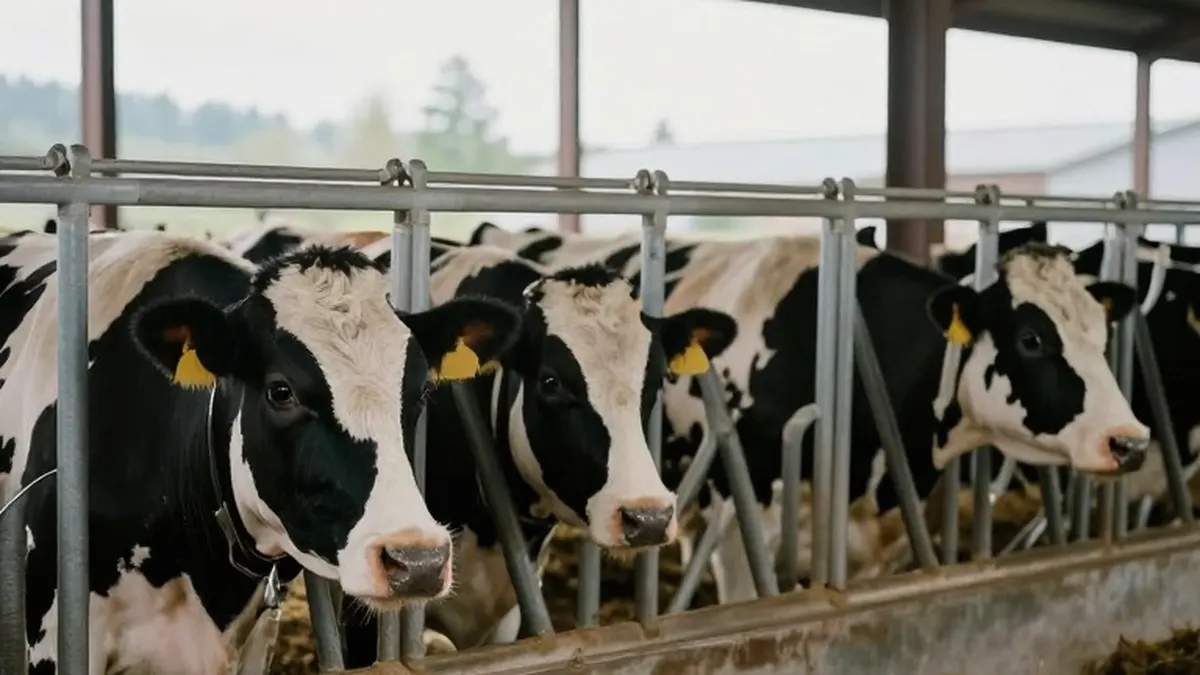
A Washington state resident has died from bird flu complications after exposure at a dairy where cattle were infected, marking the first U.S. death associated with the disease in a year. Yakima County health officials announced the death on Sunday, saying the person had underlying health conditions and had been hospitalized.
Officials in the county provided no further details about the resident. The U.S. Centers for Disease Control and Prevention identified the infection as H5N1, a version of avian influenza that has circulated widely among wild birds, poultry, cattle and other animals for several years.
The death follows two others linked to bird flu in the United States since the disease became a national public health concern in 2024. An elderly Louisiana resident whose death was announced in January 2025 had H5N1. A Washington state resident died in November 2025 after infection with H5N5, a less common version of the virus.
In Yakima County, officials have reported recent positive H5N1 tests in 33 dairy herds. They have also identified three human infections associated with exposure at a dairy. The Yakima Health District and the state health department are working together to locate close contacts of those infected and watch for symptoms.
Concern about the virus increased in early 2024 as infections spread through U.S. livestock. Officials have said that the virus's presence in the environment creates more opportunities for people to encounter it and potentially become infected. Farm workers are considered to face a higher risk.
The CDC has recorded more than 70 human bird flu infections in the United States since the start of 2024. Despite those cases, the agency says there is no known transmission between people and continues to assess the risk to the wider public as low.
Testing of the virus from the Washington resident did not identify genetic changes that would allow it to transmit more readily or produce more severe disease, a CDC spokesperson said Monday. The findings came from the agency's analysis of the virus's genetic sequence.
Health officials continue to recommend protective measures for anyone who comes into contact with sick or dead birds. Their advice includes using respiratory protection, eye protection and gloves while handling poultry.