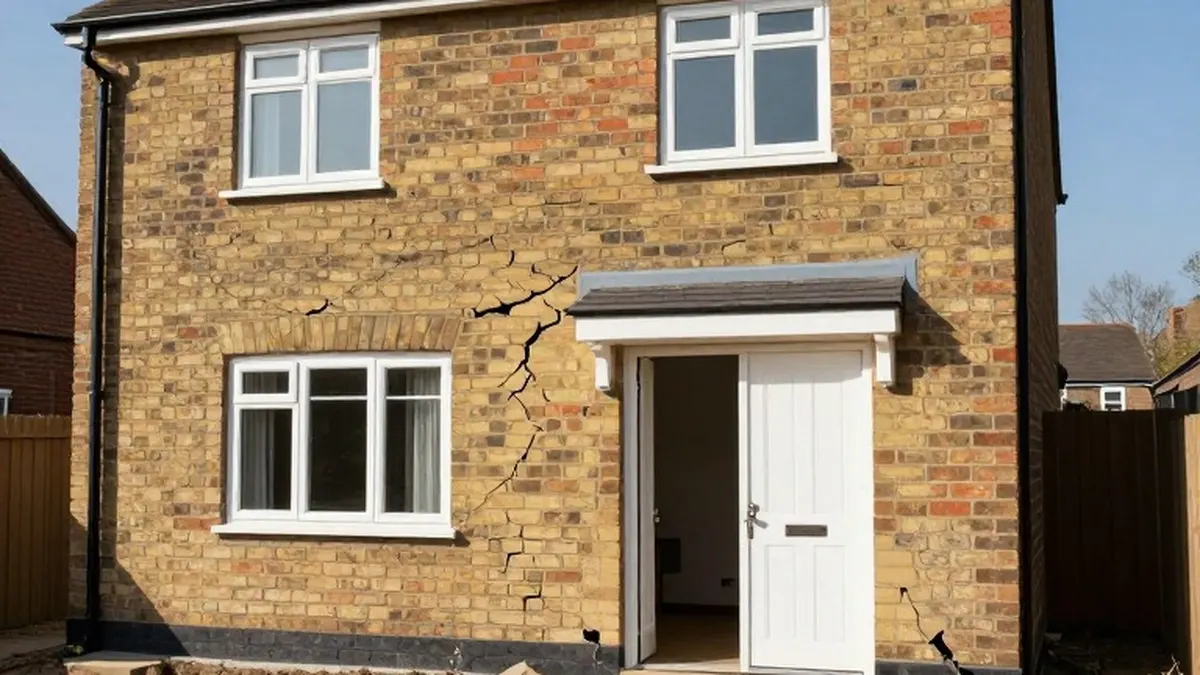
Aviva, the United Kingdom’s largest insurance provider, has reported a significant increase in subsidence claims following an exceptionally hot summer. The company disclosed the rise on Friday, noting that the trend reflects a broader industry-wide surge in households seeking coverage for structural damage. Repairs for these issues typically address problems such as cracked walls, sloping floors, and doors or windows that no longer align properly.
The spike in claims follows two consecutive record-breaking summers in the UK. August of this year was recorded as the joint hottest month in global history. Prolonged dry conditions cause the soil beneath properties to shrink, which can undermine building foundations. When wetter weather returns in winter, the ground expands again, often causing further damage to structures that have already been compromised.
Amanda Blanc, the chief executive of Aviva, stated in an interview with Bloomberg that the company experienced a peak period for subsidence claims between July and September. She confirmed that the volume of claims continued into October. While the insurer acknowledged the upward trend, it did not disclose specific figures regarding the scale of the increase.
Blanc advised homeowners to take proactive steps to mitigate the risk of ground movement. She emphasized the importance of monitoring drains, pipes, and gutters, as well as promptly fixing any leaks that could affect the soil under a house. She summarized the key maintenance areas by stating, “It’s about managing trees and plumbing.”
Other major insurers have reported similar trends in recent months. Hastings Direct announced that it received a record number of subsidence claims in August, a figure that was 140 percent higher than the amount recorded in the same month last year. Axa, another prominent home insurer in the UK, described the current period as a “surge year” for subsidence-related issues.
The financial impact of these claims has reached unprecedented levels. According to the Association of British Insurers, the average cost of a subsidence claim in the UK peaked at 20,000 pounds between April and June. This represents an increase of more than 2,000 pounds compared to the same period in the previous year. In total, insurers paid out 72 million pounds for domestic subsidence claims, up from 60 million pounds in the corresponding period last year.
The British Geological Survey warns that the worsening climate crisis places millions of homes at risk of subsidence. The agency estimates that up to 11 percent of UK households, which amounts to more than 4.2 million houses, could be vulnerable by the year 2070. Older properties with shallow foundations are particularly at risk, especially those built on clay-rich soil. Areas such as London, Essex, Kent, and the region around Oxford are considered the most susceptible to these effects.
Despite the rise in claims, Aviva reported strong financial performance. The company announced a 19 percent increase in general insurance premiums, reaching 11.8 billion pounds in the third quarter. Blanc described the company as being in “rude health” despite the challenges posed by the changing climate.
In a statement released alongside the financial results, Blanc highlighted the company’s strong performance over the first nine months of 2026. She noted that the results demonstrate the benefits of scale across the company’s diversified business operations. Aviva continues to deliver profitable growth, particularly in capital-light sectors such as general insurance and wealth management.